Soroush Pakzad and Roza Asadi,bbc news farsi

 reuters
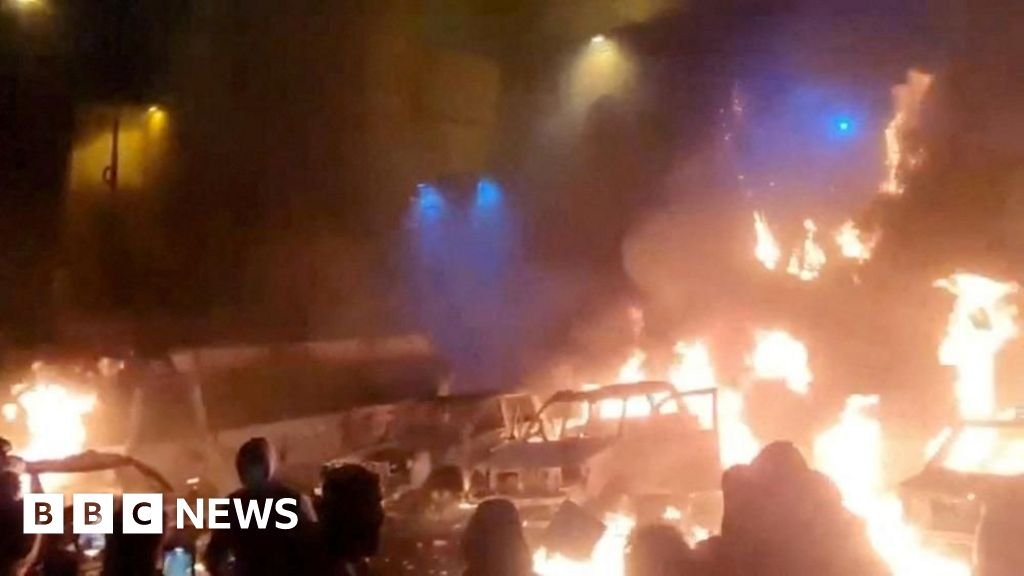
As protests continue in Iran and Iranian authorities issue coordinated warnings to protesters, a doctor and therapist from two hospitals told the BBC that their facilities were overwhelmed with injuries.
A doctor said an eye hospital in Tehran had gone into crisis mode, while the BBC also received a message from a doctor at another hospital saying it did not have enough surgeons to deal with the influx of patients.
On Friday, US President Donald Trump said Iran was in “big trouble” and warned that “you better not start shooting because we’ll start shooting too”.
In a letter to the UN Security Council, Iran blamed the US for turning the protests into “violent subversive acts and widespread barbarism”.
Meanwhile, international leaders called for the right to peaceful protest to be protected.
Anti-government protests, which continued Friday, have taken place in dozens of cities, with two human rights groups reporting that at least 50 protesters have been killed.
The BBC and most other international news organizations are blocked from reporting inside Iran, and the country has been under an almost complete internet blackout since Thursday evening, making it difficult to obtain and verify information.
An Iranian doctor, who contacted the BBC via Starlink satellite internet on Friday night, said Tehran’s main eye specialist centre, Farabi Hospital, had gone into crisis mode as emergency services were overwhelmed.
Non-urgent admissions and surgeries were said to be suspended, and staff were called in to deal with emergency cases.
The BBC also obtained a video and audio message from a doctor at a hospital in the south-western city of Shiraz on Thursday. The doctor said that a large number of injured people were being brought in and the hospital did not have enough surgeons to deal with the rush. He claimed that many of the injured had bullet injuries on the head and eyes.
According to the US-based Human Rights Activist News Agency (HRANA), at least 50 protesters and 15 security personnel have been killed since the protests began on December 28. The group said more than 2,311 people have also been arrested.
Norway-based Iran Human Rights (IHRNGO) said at least 51 protesters, including nine children, were killed.
BBC Persian has spoken to the families of 22 of them and confirmed their identities.
Stephane Dujarric, spokesman for the UN Secretary-General, said the UN was deeply troubled by the loss of life and property.
“People anywhere in the world have the right to demonstrate peacefully and governments have a responsibility to protect that right and ensure that that right is respected,” he said.
French President Emmanuel Macron, British Prime Minister Sir Keir Starmer and German Chancellor Friedrich Merz issued a joint statement saying: “The Iranian authorities have a responsibility to protect their population and must allow freedom of expression and peaceful assembly without fear of reprisals.”
Iran’s supreme leader Ayatollah Ali Khamenei said in a televised address on Friday, “The Islamic Republic has come to power with the blood of millions of honorable people and it will not retreat in the face of those who deny it.”
In later remarks, made at a gathering of supporters and broadcast on state television, Khamenei reiterated the message, saying Iran “will not shy away from dealing with subversive elements”.
In contrast, Reza Pahlavi, the son of Iran’s last Shah, described Friday’s protests as “fantastic” and urged Iranians to hold more targeted protests over the weekend.
“Our goal is no longer just to take to the streets. The goal is to prepare to occupy city centers,” Pahlavi, who lives in the US, said in a video message on social media.
Pahlavi, one of the most well-known opposition figures, said he was preparing to return to the country.
“We really shouldn’t get too ahead of ourselves,” Sir Simon Gass, the former British ambassador to Iran, said on BBC Radio 4’s Today program when discussing regime change.
He said the lack of organized opposition within Iran means people have no one to rally around who can offer an alternative to the current regime.
However, he further said that these protests are different from previous protests in the country, bringing “a far more widespread movement of protesters than we have seen in the past”, making it “almost impossible to make ends meet due to the disaster it has wreaked on the economy”.
Trump said at the White House on Friday that his administration is carefully monitoring the situation in Iran.
“I feel like people are taking over some cities that just a few weeks ago no one thought would really be possible,” he said.
“We will hit them hard where it hurts,” he said, reiterating earlier warnings to Iran’s leadership. He said any US involvement does not mean “boots on the ground”.
On Thursday, Trump said that if they “start killing people” he would “hit them very hard.”
Later on Friday, the US said Iran’s foreign minister was “delusional” after accusing Israel and Washington of instigating the protests.
A US State Department spokesperson said in response to Secretary of State Abbas Araghchi’s comments, “This statement represents a misleading attempt to divert attention from the significant challenges facing the Iranian regime domestically.”
Earlier Saturday, US Secretary of State Marco Rubio posted on Twitter: “The United States supports the brave people of Iran.”
Iranian political activist Taghi Rahmani, who spent 14 years in an Iranian prison and whose wife, Nobel Peace Prize winner Nargess Mohammadi, was re-arrested in December, told the Today program that he was skeptical of American support.
“We believe that foreign interference will make the opposition dependent,” he said. “When the opposition is dependent, you have to sacrifice national interests for that government. This will not be acceptable to the Iranian people.”
Iranian security and judicial officials issued a series of coordinated warnings to protesters on Friday, toughening their rhetoric and reiterating an earlier message of “no leniency” from Iran’s top security body, the Supreme National Security Council.
Iran’s National Security Council said “decisive and necessary legal action will be taken” against the protesters, whom it described as “armed rioters” and “disrupting peace and security”.
The intelligence arm of Iran’s Islamic Revolution Guards Corps (IRGC) said it would not tolerate what it described as “terrorist acts”, adding that it would continue its campaign “until the complete defeat of the enemy’s plan”.
Additional reporting by Soroush Negahdari
<a href