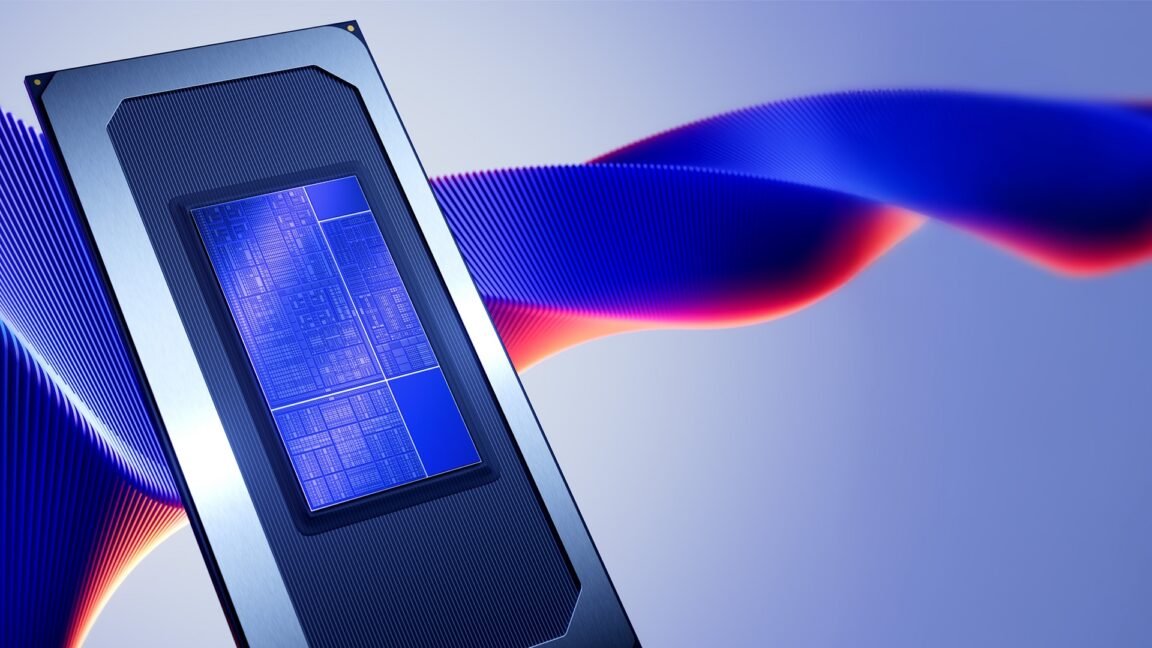
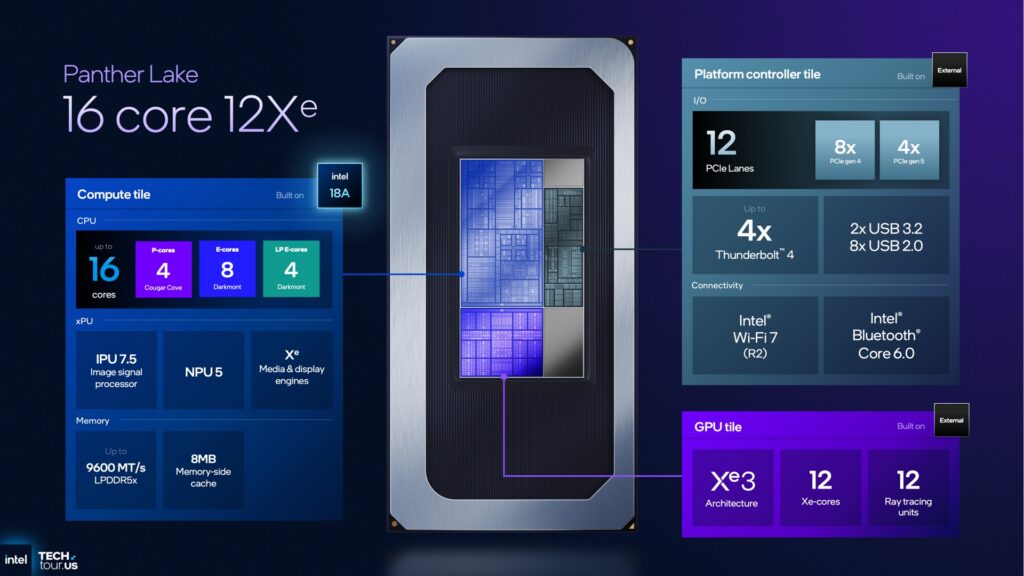
Like previous Core Ultra generations, the Core Ultra 3 chips use a chiplet-based approach, combining several different silicon tiles onto a basic “base tile” using Intel’s Fovros packaging technology. The compute tile contains the CPU cores and the neural processing unit (NPU), and it is this piece that is built using 18 A – there are two versions of this tile, one with a maximum of 16 CPU cores and one with 8. The platform controller tile, which handles most of the I/O, is still being made at TSMC, as is the high-end 12-core version of the graphics tile. A simpler four-core version of the graphics tile is being built using the older Intel 3 process, which has been used mostly for Intel’s Xeon server CPUs to date.
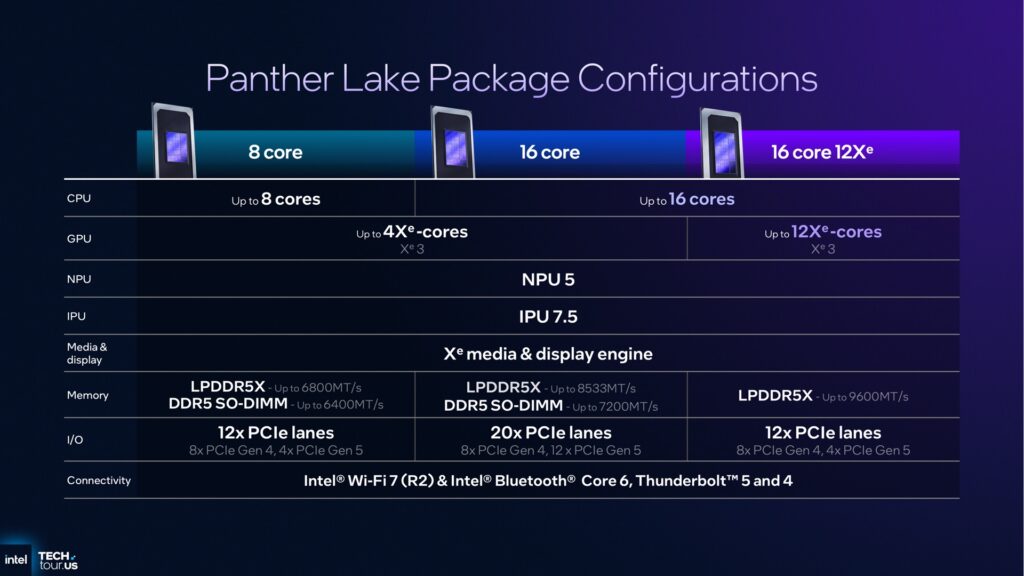
Comparing three different Panther Lake configurations.
intel
Comparing three different Panther Lake configurations.
intel
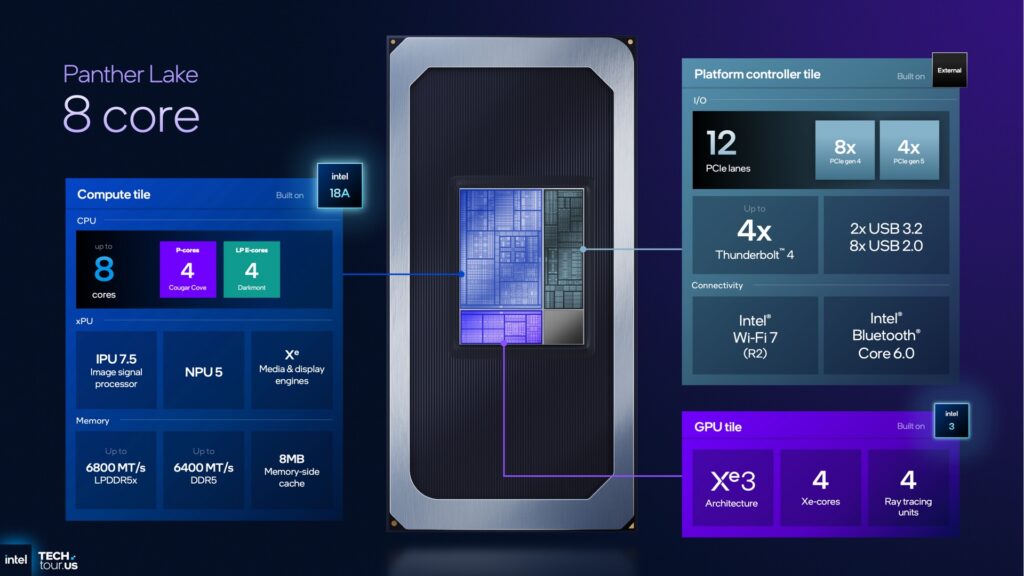
8-core Panther Lake.
intel
8-core Panther Lake.
intel
Comparing three different Panther Lake configurations.
intel
8-core Panther Lake.
intel
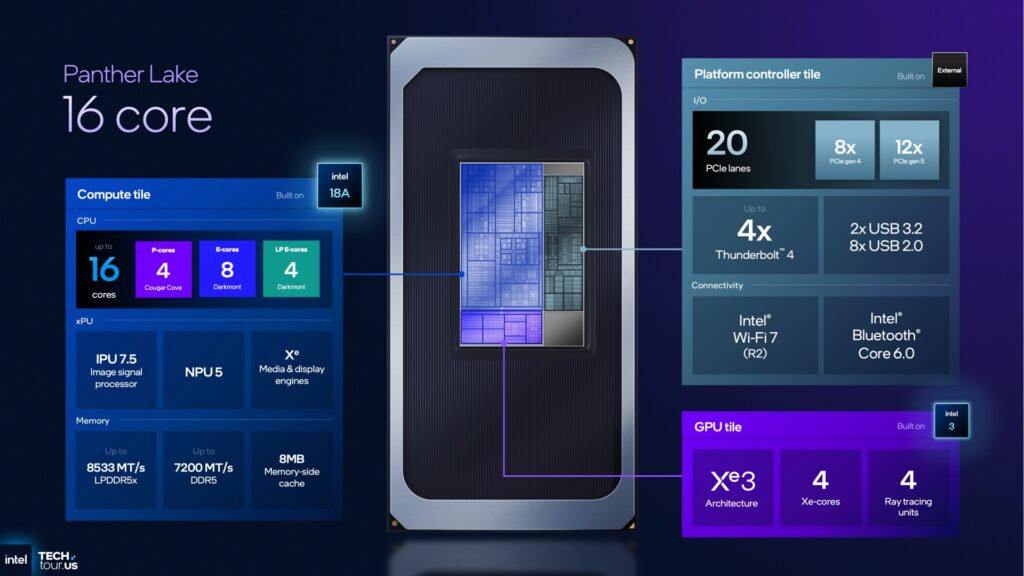
16-core Panther Lake.
intel
16-core Panther Lake.
intel
A version of the 16-core chip with less I/O but a larger GPU.
intel
A version of the 16-core chip with less I/O but a larger GPU.
intel
16-core Panther Lake.
intel
A version of the 16-core chip with less I/O but a larger GPU.
intel
The chiplet-based approach allows Intel to mix and match these tiles to offer three different iterations of Panther Lake: 16-core CPU and 12-core GPU, 16-core CPU and 4-core GPU, and 8-core CPU and 4-core GPU. Versions of these chips with a few CPU and GPU cores fill out the rest of the Core Ultra Series 3 lineup.
Intel is making big performance claims about the highest-end Core Ultra Series 3 processors: up to 60 percent faster multi-core CPU performance than the outgoing Core Ultra 200V chips, and up to 77 percent faster integrated GPU performance. Intel also says that a “Lenovo IdeaPad Reference Design” using the Core Ultra
All Panther Lake chips will also include the same neural processing unit (NPU), capable of up to 50 trillion operations per second (TOPS). This puts it well above the 40 TOPS requirement for Microsoft’s Copilot+ PC label, if a little less than the 60 TOPS that AMD is claiming for its Ryzen AI 400 series and the 80 TOPS that Qualcomm says its Snapdragon X2 chips are capable of. The most important connectivity features are Wi-Fi 7, Bluetooth 6.0, and up to four Thunderbolt 4 ports.
It remains to be seen whether the Core Ultra Series 3 chips mark a turning point for Intel’s fortunes or a temporary rebound amid years of missed deadlines (Panther Lake came a month after Intel said it would be in October, though that’s not bad by its recent standards). But their launch later this month shows that the company’s 18A facilities are up and running, opening the door to the kind of third-party chip manufacturing that former CEO Pat Gelsinger started nearly five years ago.
<a href