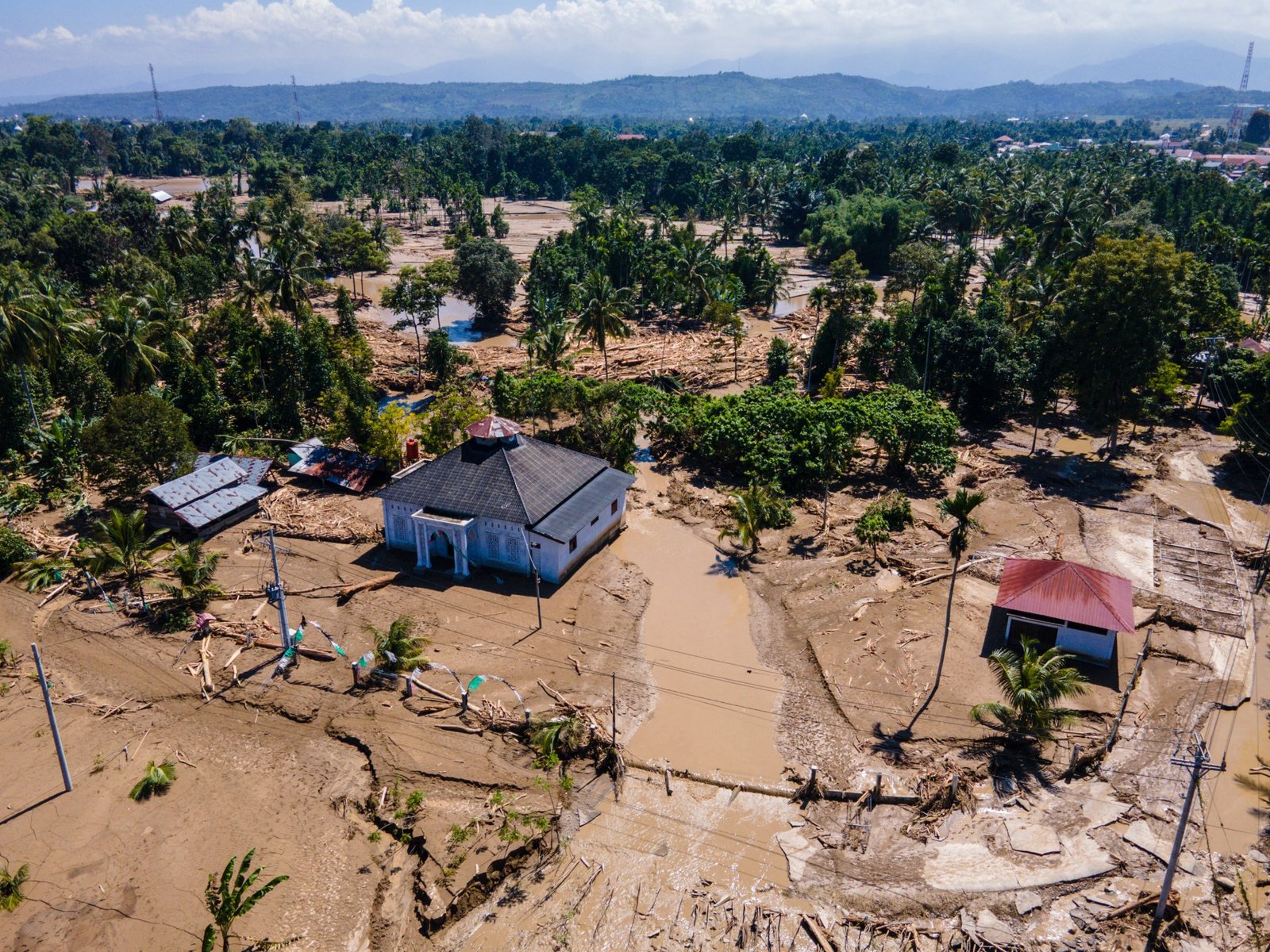
At least two areas of the country’s worst-hit Sumatra island remain inaccessible as authorities struggle to deliver aid.
The death toll from devastating floods and landslides in Indonesia has risen to 442 as desperate people search for food and water, according to a report published by the national disaster agency.
The National Disaster Management Agency (BNPB) said on Sunday that 402 others were still missing as authorities raced to reach parts of the hardest-hit Sumatra island, where thousands of people were stranded without vital supplies.
Recommended Stories
4 item listend of list
Another 402 people are missing in three Indonesian provinces: North Sumatra, West Sumatra and Aceh, according to the agency.
At least 600 people have died in Southeast Asia as heavy monsoon rains lash parts of Indonesia, Thailand and Malaysia. The floods caused landslides, damaged roads and destroyed communication lines.

Flooding in Indonesia displaced thousands of people, with at least two towns on the island of Sumatra still inaccessible on Sunday. Officials said they had deployed two warships from Jakarta to deliver aid.
“There are two cities that require close attention due to their isolation, namely Central Tapanuli and Sibolga,” BNPB chief Suharyanto said in a statement.
The ships were expected to reach Sibolga on Monday, he said.
hopeless situation
Rescue efforts were also hampered by challenging weather conditions and lack of heavy equipment.
There have been delays in aid reaching the worst-hit city of Sibolga and the central Tapanuli district of North Sumatra.
Videos on social media showed people wading through collapsed barricades, flooded roads and broken glass to get food, medicine and gas.
Some people even waded through waist-deep flood water to reach damaged convenience stores.
The annual monsoon season, usually between June and September, often brings heavy rains, causing landslides and flash floods.
A tropical storm has made conditions worse, and the death toll from floods in Indonesia and Thailand is the highest in those countries in recent years.
Climate change has affected hurricane patterns, including the duration and intensity of the season, causing heavy rainfall, flash floods and strong wind gusts.
<a href