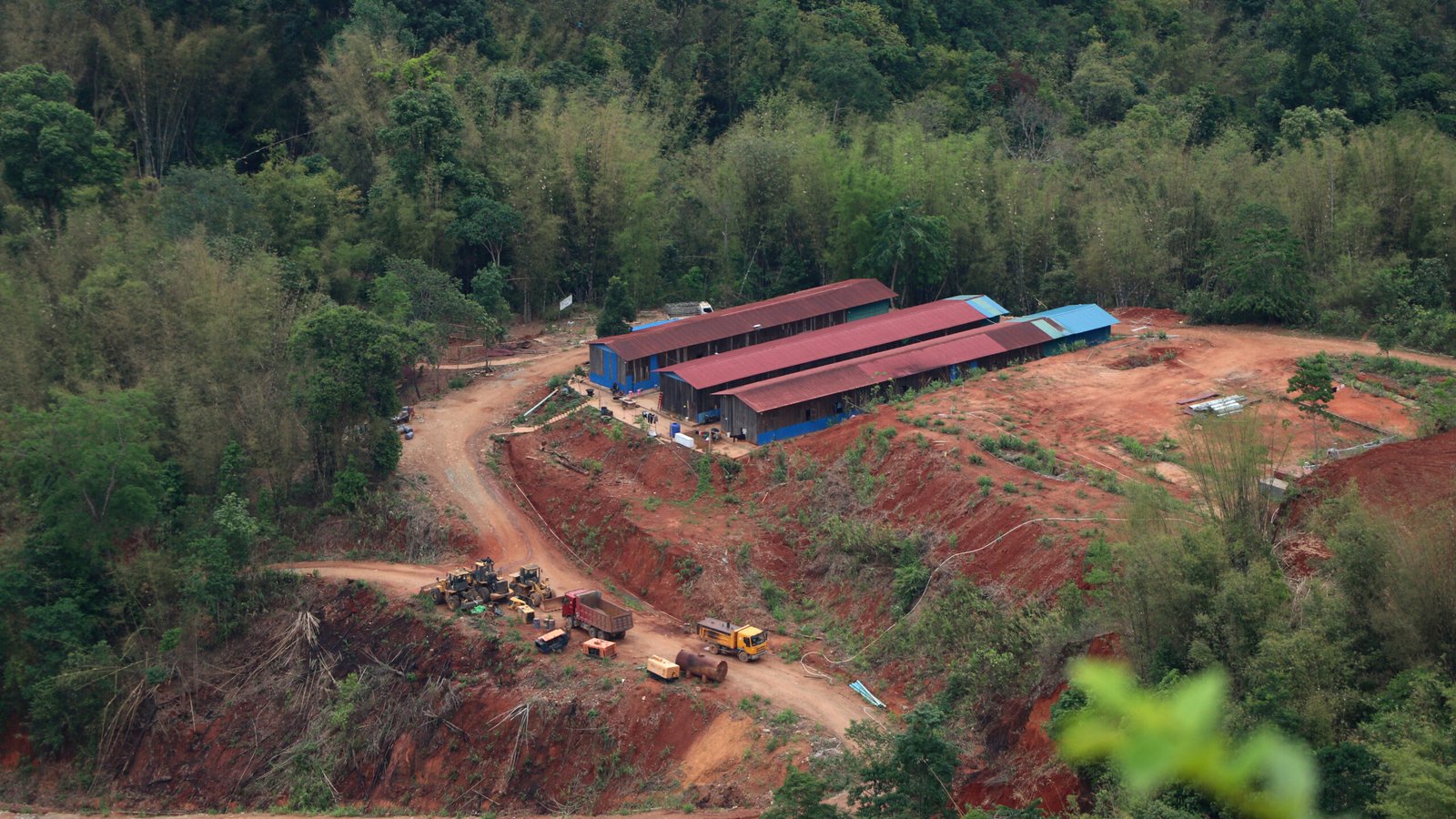
Research conducted by Myanmar Resource Watch, a civil society organization, found that companies mining rare earths in Myanmar rely on a wide range of chemicals classified as hazardous – including sulfuric, nitric and hydrochloric acids – and that these companies routinely violate regulations on the import, transport, storage, use and disposal of the chemicals. Hydrochloric acid can not only kill aquatic life, but it also leaches heavy metals such as cadmium, lead, arsenic and mercury and radioactive materials such as thorium and uranium from soil and rocks.
While no quantitative studies have been published on the environmental impacts of rare-earth mining in Shan State, research from Kachin State provides some indications of potential risks. In April, Tanapon Phaenrat of Naresuan University in Thailand published a study based on analysis of surface water and topsoil samples taken at or downstream from rare-earth mining sites in Kachin. They identified “severe contamination” of the water, “extremely acidic pH levels” and “alarmingly high concentrations” of ammonia, chloride, radioactive elements and toxic heavy metals.
They also found that metals and metalloids present in water samples pose “substantial risks” to aquatic ecosystems and that water at some test sites is “completely unsuitable for human consumption, irrigation or fish farming without extensive treatment.”
The rare-earth elements themselves may also have adverse effects on human health, according to secondary research published in 2024 in the journal Toxics. This review found that exposure to rare-earth elements through inhalation, swallowing or skin contact can destroy organ structure and function, affecting the respiratory, nervous, cardiovascular, reproductive and immune systems.
“At the moment, the way these minerals are controlled often ignores a bigger problem,” said Thaw Htoo, a PhD candidate in geography and sustainability at the University of Lausanne, who conducts his research using a pseudonym due to security concerns. “They are essential to the global green transition, yet their extraction is occurring almost without regulation. The case of Myanmar shows why we need to rethink the meaning of ‘critical minerals’ and ensure we consider not only supply security, but also the safety and well-being of communities and the environment.”
Emily Fishbein is a freelance journalist who currently serves as a Pulitzer Center Rainforest Investigations Network Fellow. Jouman Naw is a freelance investigative journalist from Kachin State, Myanmar, focusing on environmental issues. He writes under a pseudonym for his safety. This article was originally published on Undark. Read the original article.

<a href