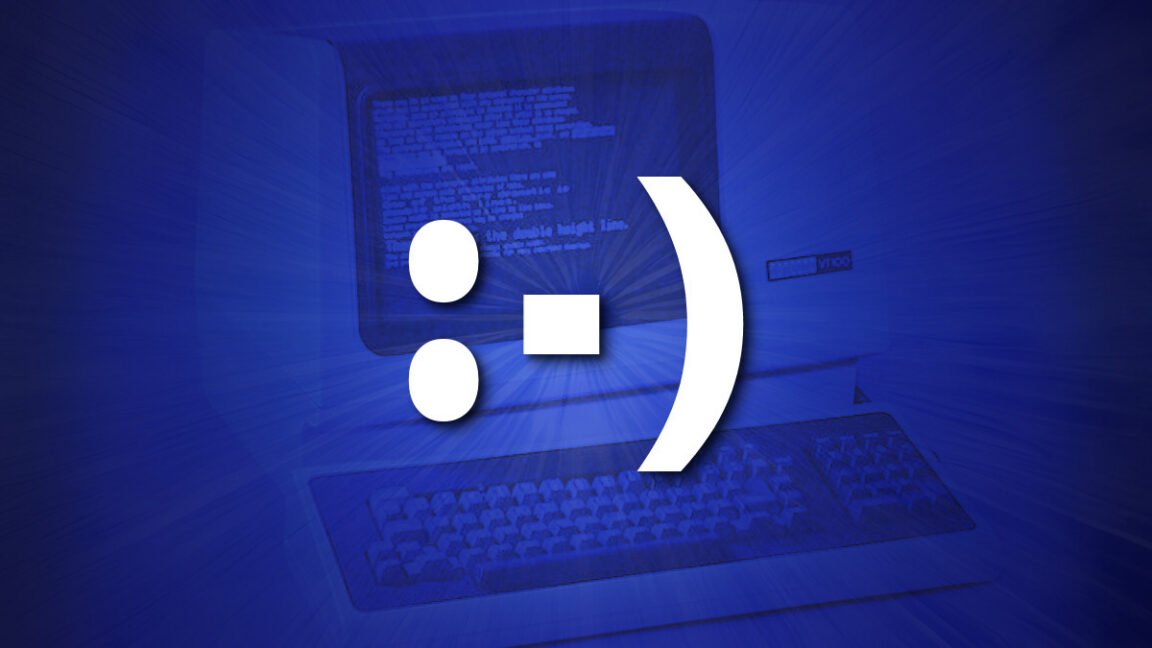
The recovered messages, which you can read here, show how collaboratively the emoticon was developed – not a single moment of genius but an ongoing conversation to propose, refine and build on the group’s ideas. Fahlman had no idea that his synthesis would become a fundamental part of how humans express themselves in digital text, but neither did Swartz, who first suggested marking jokes, or the Gandalf Wax users, who were already using their own smiley symbols.
From emoticon to emoji
While Fahlman’s text-based emoticons spread into Western online culture that long remained text-character-based, Japanese mobile phone users in the late 1990s developed a parallel system: emoji. For years, Shigetaka Kurita’s 1999 set for NTT DoCoMo was widely cited as the original. However, recent discoveries have revealed an earlier origin. SoftBank released a picture-based character set on mobile phones in 1997, and the Sharp PA-8500 personal organizer featured selectable icon characters as early as 1988.
Unlike emoticons, which require reading sideways, emoji were small pictorial images that could express emotions, objects, and ideas in more detail. When Unicode standardized emoji in 2010 and Apple added an emoji keyboard to iOS in 2011, the format exploded globally. Today, emoji have largely replaced emoticons in informal communication, although Fahlman’s oblique faces still regularly appear in text messages and social media posts.
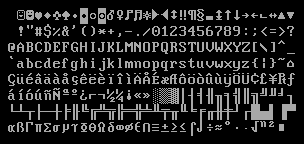
IBM’s Code Page 437 character set included a smiley face as early as 1981.
Credit: Matt Giuca
As Fahlman himself writes on his website, he “may not have been the first person to type these three letters in order.” Others, including teletype operators and private correspondents, may have used similar symbols before 1982, perhaps as far back as 1648. The writer Vladimir Nabokov suggested as early as 1982 that “there should exist a special typographic sign for a smile.” And the original IBM PC included a dedicated smiley character as early as 1981 (perhaps this should be considered the first emoji).
What made Fahlman’s contribution important was not complete originality, but proposing the right solution at the right time in the right context. From there, the smiley could spread across the emerging global computer network, and no one would ever misunderstand the online joke. ,