Insiders told the Guardian that the ongoing impasse over guidance from the UK human rights watchdog on access to single-sex spaces is diverting attention from other important issues, including the rise of the far right.
Some members of staff at the Equality and Human Rights Commission (EHRC) have been described as “desperate for regime change” ahead of new chair Mary-Ann Stephenson taking up her post in December.
It comes as Labor backbenchers and equalities experts say the appointment of four new board members to the EHRC should be an opportunity to broaden its perspective and potentially appoint the watchdog’s first trans commissioner.
The EHRC is waiting for UK ministers to approve its official guidance on how public bodies, businesses and other service providers should respond to the Supreme Court’s April ruling that the legal definition of a woman is based on biological sex.
The new guidance is expected to closely mirror interim advice stating that transgender people should not be allowed to use toilets of that gender, as published by the EHRC shortly after that decision.
Trans rights campaigners and some inside the commission have criticized it as being too literal.
The current chair, Lady Kishwar Faulkner, who will leave her post on November 30, has expressed frustration at the time it is taking ministers to approve vital new guidance.
But Equalities Minister Bridget Phillipson has insisted they are “taking time to get this right” and that the final draft must be considered “fully and carefully”, with other ministers denying any deliberate delay.
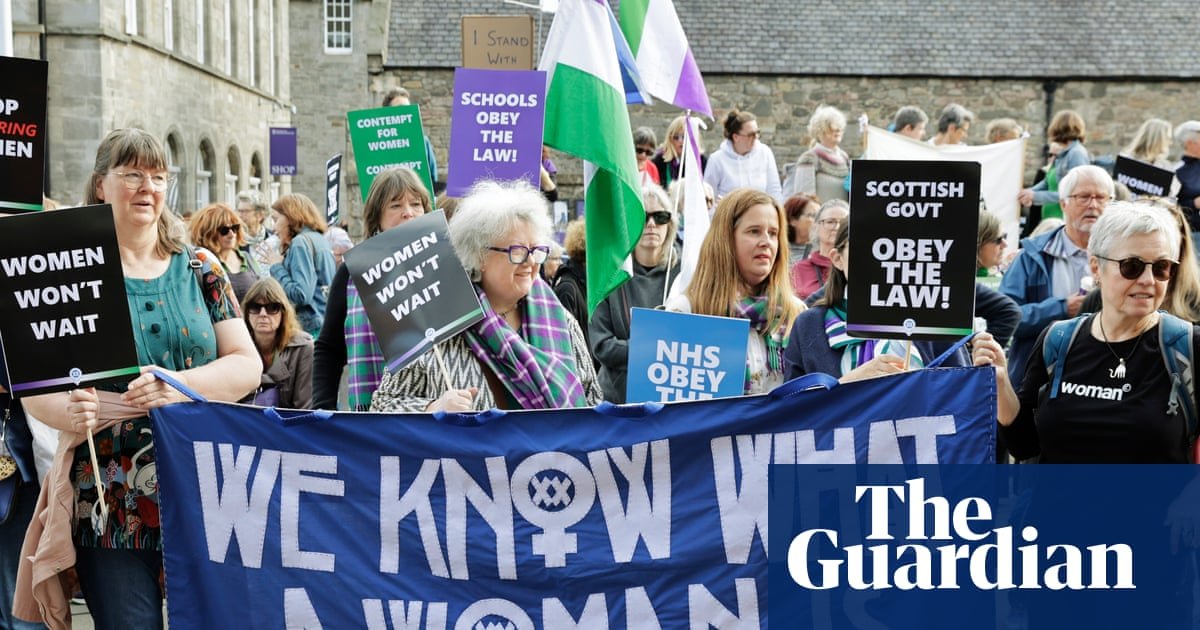
For Women Scotland, the campaign group that brought the original case that resulted in the Supreme Court decision, also warned that “all the fights over codes of conduct are obscuring the important point that the law stands regardless of any guidance”.
The Guardian has previously reported significant unease among rank and file commission staff over the way it handled the reaction to the Supreme Court decision.
An EHRC source said: “It’s stalled, stalled, stalled, but we’re in danger of not being core or functional any time soon. I understand the strategy, but there’s not much use if we can’t do any work until they sort out recruitment.”
Meanwhile, the government is advertising for four new commissioners to join Stephenson. The EHRC, which is required by statute to have between 10 and 15 commissioners, now has only eight, all but one of whom were appointed during the previous Conservative government.
Deputy Chairman and Commissioner for Scotland Leslie Sowers and Commissioner Joan Cash will also complete their terms on 30 November. Akua Reindorf’s term expires on December 31.
It is understood that some Labor MPs, as well as those across the broader policy sector, believe the current impasse is a distraction from other important issues, including the rise of the far right and its impact on the communities served by the EHRC.
They are encouraging applications for commissioner roles from people they believe take a more nuanced approach to trans inclusion.
One Labor backbencher said: “As these posts are coming up, it is important to have a wide range of experience and expertise on board, and within those discussions we are saying please encourage people from the trans community to consider it, or have you thought about applying?
“This broader scope was necessary when the EHRC was first established, but may have been limited with more political appointments under the Conservatives.
“When a group of us met with some of the current board members and the current president, we felt very strongly that there was a lack of understanding of the impact of the Supreme Court decision on the trans community.”
Another Labor backbencher said he hoped more people would apply: “We need commissioners with real-world experience of the issues they are grappling with.”
Stonewall said that the arrival of the new President and Commissioners was “an opportunity to rebuild the EHRC in a way that re-establishes impartiality, balance and respect at its core”.
CEO Simon Blake said: “We are living in a time of uncertainty and unrest for many people; this is an opportunity to review the strategic approach of our national human rights institution so that everyone – including trans people – can benefit from the rights and freedoms that the EHRC is set up to protect and defend.”
But Suzanne Smith of For Women Scotland called on Phillipson to “stop arguing” over approving the EHRC guidance.
“Trying to block the issuance of the code or attempting to force the EHRC to misrepresent the law will not change the Supreme Court’s decision,” he said.
“If MPs are unhappy they have the ability to amend or repeal the Equality Act, but since the majority of voters supported the decision they may realize it will impact their re-election chances.
“The Minister must stop dilly-dallying and put an end to this once and for all. During this 16-day period of activism against gender-based violence, the government must remember that women are half the population and our human rights to dignity, privacy and safety matter.”
An EHRC spokesperson said: “Appointments to our Board of Commissioners are made by the Minister for Women and Equalities through the standard public appointment process.
“Our commissioners come from all walks of life and bring with them a wide range of skills, expertise and experience.
“This diversity helps us make fair and independent decisions, and ensures we continue to uphold the rights of all people in the UK, including trans people.”
<a href