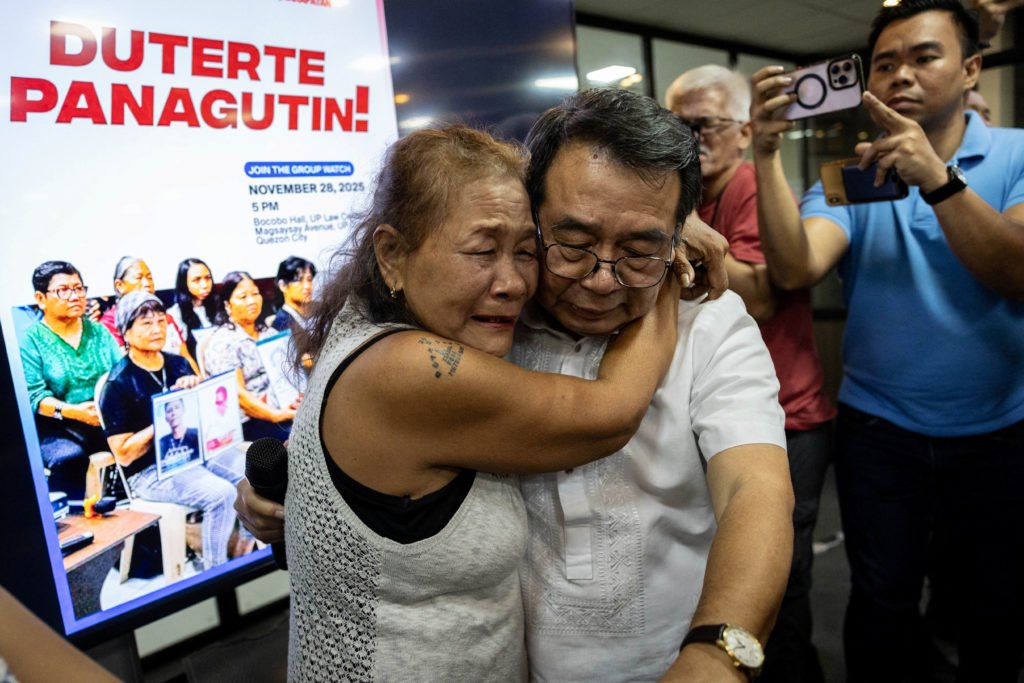
The octogenarian is facing charges of crimes against humanity for his alleged involvement in dozens of killings while in office, first as mayor of a southern city and later as president, as part of the so-called war on drugs.
Read more: International Criminal Court details crimes against humanity charges against former Philippine President Duterte
Addressing a packed courtroom in The Hague, Judge Luz del Carmen Ibáñez Carranza said Duterte’s lawyers had failed to show that the lower house’s October decision was unfair.
The former President was not in court on Friday.
The defense said it plans to “re-present its request for release” to Duarte following the results of a medical examination, expected next month, attorney Nick Kaufman said in a statement.
Duterte’s lawyers say he is “disabled and debilitated” and that detaining him pending trial is cruel. In September the court postponed the pre-trial hearing until a full medical evaluation could take place. According to defense filings, Duarte’s cognitive abilities have declined to the point where he cannot assist his lawyers.
Last month, judges decided to keep Duarte in custody, noting that he could refuse to return for trial and use his freedom to intimidate witnesses.
According to court filings, Duterte directed and authorized violent acts, including assassinations, against alleged criminals, including alleged drug dealers and users. The charges against him date from November 1, 2011, when he was mayor of the southern city of Davao, and March 16, 2019, when the country withdrew from the court. He was the President from 2016-22.
Estimates of the death toll during Duterte’s presidency vary. The National Police put the figure at more than 6,000, while human rights groups claim up to 30,000. Families of the victims hailed Duterte’s arrest in March.
The legal team requested that he be transferred to the custody of another member state while the proceedings continued. However, the appeals judge agreed with the lower house that the risk posed by his release “cannot be minimized” by the unidentified country, Judge Ibáñez said.
ICC prosecutors announced in February 2018 that they would launch a preliminary investigation into the violence that occurred during Duterte’s term in power. Human rights activists say the move was intended to avoid accountability, with Duterte, who was still president, announcing a month later that the Philippines would leave the court.
The judges cannot abuse their right to depart from the Rome Statute, which is the court’s founding document, “by shielding individuals from justice in respect of alleged crimes that are already under trial,” the judges wrote in an October ruling. Duterte’s legal team has also appealed against this decision.
The current government of the Philippines acknowledged Friday’s decision in a statement. “The International Criminal Court has already made its decision and the Palace respects it,” presidential communications secretary Claire Castro said in a statement.
Duterte’s family and allies have blamed current President Ferdinand Marcos Jr. for the illegal arrest and detention of the former president by the global court.
The Duterte family said it accepted the decision “with a peaceful heart.”
“We will continue to work with the defense team on the case and will continue to support former President Rodrigo Duterte in his daily interactions. We thank all who prayed with us today,” he said in a statement.
Associated Press journalist Jim Gomez in Manila contributed to this report.
A free press is the cornerstone of a healthy democracy.
Support credible journalism and civil discourse.
<a href=