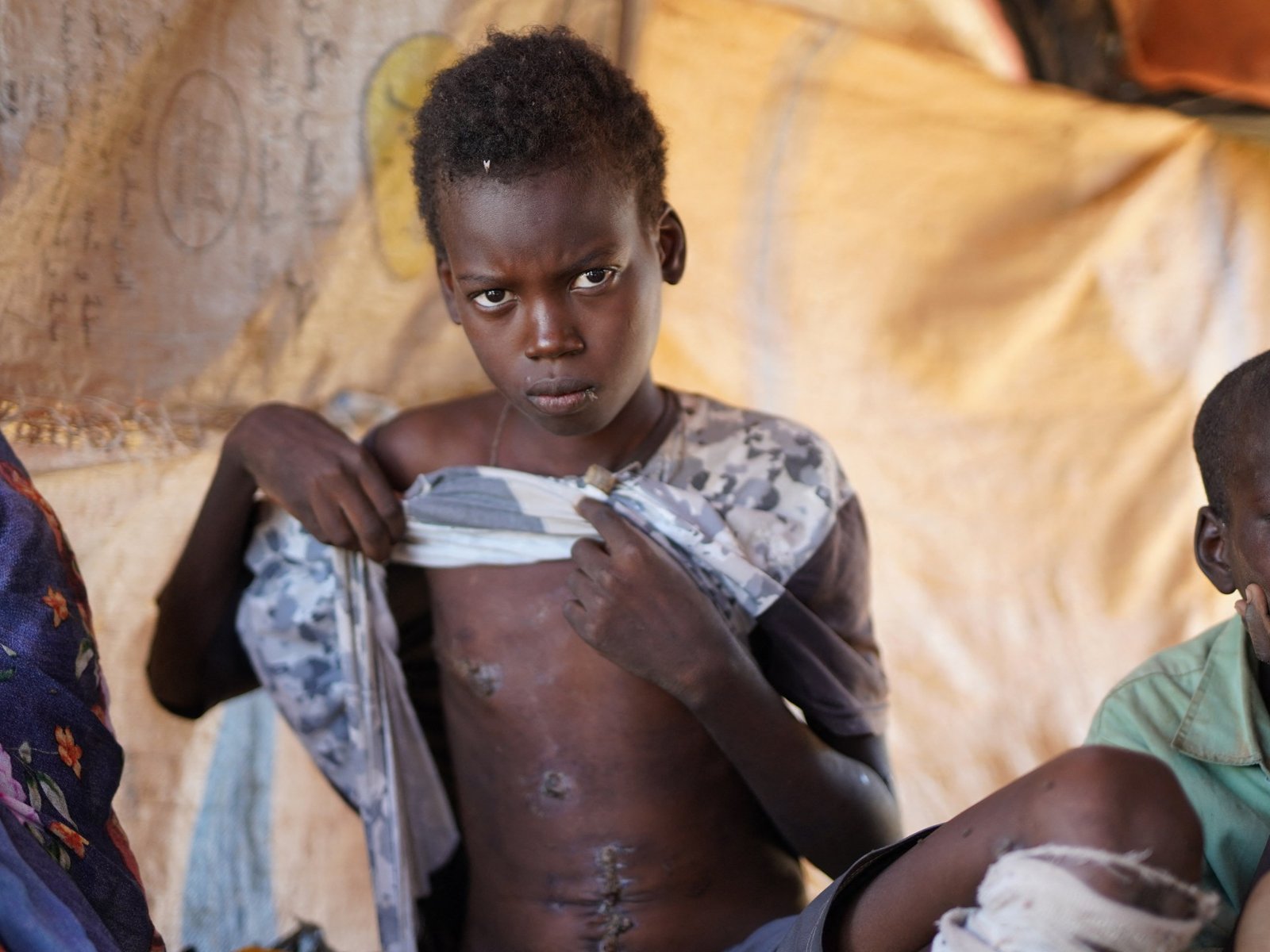
Humanitarian groups say at least 400 children reached Tawila without their parents after Rapid Support Forces advanced.
The Norwegian Refugee Council (NRC) said on Thursday that at least 400 unaccompanied children had reached Tavilah, but the actual number was likely much higher.
Recommended Stories
list of 3 itemsend of list
“Children are often arriving at Tawila tired and extremely distressed after walking for days in the desert,” the group said.
“Many come back fearful of the armed groups they fled or of those they might encounter on the street. Many became separated from their parents during the chaos of flight, while others’ parents are believed to be missing, detained or killed.”
The RSF captured El-Fashar, the capital of Sudan’s North Darfur state, on 26 October after an 18-month siege that deprived residents of food, medicine and other vital supplies.
The paramilitary group, which has been battling the Sudanese Armed Forces (SAF) for control of Sudan since April 2023, has been accused of carrying out mass killings, kidnappings and widespread acts of sexual violence in its takeover of the city.
RSF has denied targeting civilians or blocking aid and said such activities are caused by rogue elements.
But UN human rights chief Volker Turk said in mid-November that the “atrocities” that unfolded in al-Fashar were “the most serious crimes”.
More than 100,000 people have fled al-Fashar since the RSF took over last month, according to the latest UN figures, with many seeking refuge in nearby Chad.
Meanwhile, the NRC said Thursday it had recorded at least 15,000 new arrivals in Tawila, about 60 km (37 miles) from al-Fashar, since October 26. It said that on an average, more than 200 children are being registered every day.
Nida, a teacher with the humanitarian group’s education program in Tawila, said children arrive showing “signs of severe trauma.”
“When we first started our classes, some kids couldn’t speak at all when they arrived. Others were waking up with nightmares,” he said. “They describe hiding for hours, traveling at night to avoid attacks, and being separated from family in the chaos.”
suspicion of human trafficking
Humanitarian groups have said the already heavily populated displacement camp in Tawila is being overwhelmed by an influx of new people from al-Fashar and its surrounding villages.
The Sudanese American Physicians Association estimated in early November that more than 650,000 internally displaced people from al-Fashar and other parts of Darfur had sought refuge in Tawila amid months of fighting in the area.
The group said in a November 5 report that nearly three-quarters of displaced residents – 74 percent – lived in informal sites without adequate infrastructure, while less than 10 percent of displaced families had reliable access to water or toilets.
“These conditions mean that Tawila has effectively become a stand-alone crisis center, not simply an overflow of Al-Fashar,” the report said.
At the same time, a group of UN experts warned on Thursday that the deteriorating situation in the region has opened Sudanese women and girls to increased risk of sexual exploitation and trafficking.
Experts say the risk of displaced children also being recruited to fight in the growing conflict is increasing.
“We are deeply concerned by the alarming reports of human trafficking since the (RSF) took control of Al-Fashar and surrounding areas,” he said in a statement.
“Women and girls have been abducted in RSF-controlled areas, and women, unaccompanied and separated children are at increased risk of sexual violence and sexual exploitation.”
Noting that families have been left without shelter, humanitarian assistance and access to basic services, including health care and education, the experts called for “urgent action to end the human rights violations that perpetuate this suffering”.
<a href