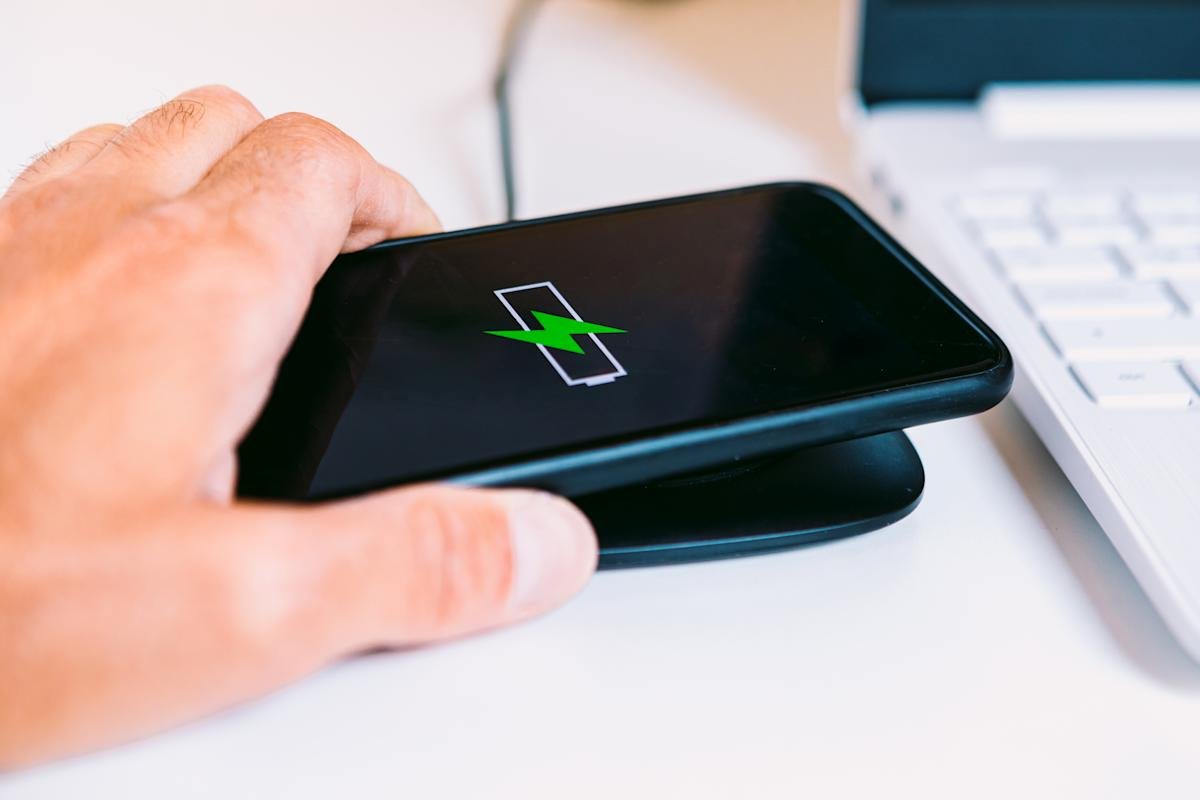
Wireless charging has become one of those small but satisfying features of modern smartphones. You drop your device on the pad and watch the battery percentage increase without messing with cables or ports. Yet for many users, that seamless charge doesn’t always come at the speed they expect. Sometimes the phone overheats, the percentage barely increases or charging takes much longer than it would have if you plugged it in.
Getting the fastest possible wireless charge requires more than setting your phone on a pad. This depends on using the right equipment, such as the best wireless charger or one of the best multi-device wireless charging pads, as well as the latest standards and a setup that makes the most of your phone’s capabilities. Here’s everything you need to know about getting maximum wireless charging speeds for your smartphone.
How does wireless charging actually work?
Wireless charging relies on electromagnetic induction. When you place your phone on a compatible pad, electricity flows through a coil inside the charger, creating an electromagnetic field. Another coil inside your phone captures that energy and converts it back into electricity to refill the battery. It sounds simple, but efficiency depends on how precisely those two coils are aligned, how much power the charger can provide and how well the phone can handle the heat generated during the process.
For years, the Wireless Power Consortium’s Qi standard defined how most wireless chargers work. Almost every major smartphone brand supports Qi, and you can mix and match chargers and phones from different manufacturers with little hassle.
But the new Qi2 standard, which begins in 2024 and extends into 2025, changes how well power is transferred. Qi2 uses magnetic alignment to automatically position the phone and charger into the ideal position, reducing wasted energy and heat. This also allows for higher charging speeds, with Qi2 chargers now supporting 15 to 25 watts of output depending on the device.
Understanding What “Maximum Power” Really Means
Every smartphone has a built-in limit on how much power it can draw wirelessly. For example, iPhone 12 models and later, support up to 15 watts with MagSafe, and Samsung’s S25 Galaxy series can handle similar speeds through Qi2. If you use a charger that provides less power than your phone’s maximum power, it will charge slowly. For example, if you use a 10W wireless charger on the iPhone 17, the maximum speed will cap out at 10W. But even if you buy the most powerful pad on the market, you won’t get results that exceed what your phone’s receiver is capable of.
The phone’s software also plays a role. Some Android models include a “Fast Wireless Charging” setting that must be enabled to reach full speeds. Others may automatically adjust charging rates to prevent overheating, especially if the phone gets too hot. Checking your device’s specifications and settings is an easy way to make sure it’s configured to draw as much power as possible.
Choosing the Right Charger and Adapter
Wireless chargers vary widely in quality and performance. Qi2 certification is the best way to ensure that a product meets the latest safety and efficiency standards. Certified chargers have been tested to provide consistent power and protect against overheating and overcharging. While uncertified or budget pads may still work, they often have less than the advertised wattage.
The wall adapter that powers the charger is equally important. Many people plug their charging pads into an old 5-watt or 10-watt power brick, which limits output before you can even see the phone. To achieve maximum speeds, use a high-output USB-C adapter with a rating of 20 watts or greater, ideally designed for fast charging, such as any of the adapters included in our guide to the best fast chargers.
The cable connecting the adapter to the charger also matters. Short, high-quality cables help reduce resistance and power loss, while longer or cheaper cables can slow things down considerably. Most latest USB cables will also list the maximum wattage supported in their specifications; Generally, when you buy a new one the more it has, the better, so that it can help charge as many of your devices as possible.
Will Lipman Photography for Engadget
Installation for maximum efficiency
Even the right hardware, proper placement and environment make a big difference. Wireless charging works best when the phone’s coil is perfectly aligned with the coil in the charging pad. If both are slightly off center, energy transfer is reduced and more heat is generated which further slows charging.
The Qi2’s magnetic alignment largely fixes this problem by snapping the phone into the correct position, but older Qi chargers still rely on manual placement. Taking a second to make sure the phone is centered can shave a few minutes off the total charge time.
Cases and accessories may also interfere with charging. Thick protective cases, wallet covers or anything with metal components can block or weaken the electromagnetic field. Even magnets not designed for Qi2 alignment can mess up the connection. A thin, wireless-compatible case or no case at all will help maintain the strongest link between the coils. It is also advisable to keep the charging area clean and free of dust or small metal objects, which may disrupt the signal or cause heat spots on the pad.
Thermal management plays another important role. Wireless charging generates more heat than wired charging, and if the phone gets too hot, the charging system automatically slows down to protect the battery. Placing the charger on a flat, hard surface in a well-ventilated area helps prevent overheating. Avoid charging on soft clothing or on closed desks that retain heat. Some of the best Qi2 chargers now include small fans or heat dissipation materials to maintain a steady temperature during fast charging sessions.
slow speed troubleshooting
If your phone still charges slower than expected, it’s worth double-checking each part of your setup. Confirm that both your charger and phone support the same standard – Qi2 chargers work best with Qi2 phones, although older Qi devices may still connect at lower speeds. Make sure the power adapter provides enough wattage to match your phone’s maximum wireless rate. If the charger uses a replaceable cable, try replacing it with a certified USB-C cable rated for higher power output.
Software updates can also affect performance. Manufacturers often improve charging algorithms through firmware updates, thereby improving heat control or overall efficiency. Keeping both your phone and charger up to date ensures that you’ll get the benefits of those improvements. And if your phone still feels unusually hot or the charging indicator flashes on and off, removing the case or cleaning the pad can often solve the problem.
The future of fast wireless charging
The arrival of Qi2 has narrowed the performance gap between wireless and wired charging. While a cable will still be faster in most cases, a properly configured Qi2 setup can now come surprisingly close to a wired one. The technology has matured from a slow, convenient novelty to a reliable daily solution for many users. As more devices adopt the new magnetic alignment, and as charger manufacturers refine their designs, it is becoming easier to achieve wireless charging at maximum power without any extra effort.
Wireless charging has always promised convenience, but now it also offers real speed. With the right combination of a Qi2-certified charger, a capable power adapter, good alignment, and smart heat management, it’s possible to get close to your phone’s peak charging speeds every time you place it on the pad.