This is Optimizer, a weekly newsletter sent every Friday from Verge senior reviewer Victoria Song that dissects and discusses the latest gizmos and potions that swear they’re going to change your life. Opt in for Optimizer here.
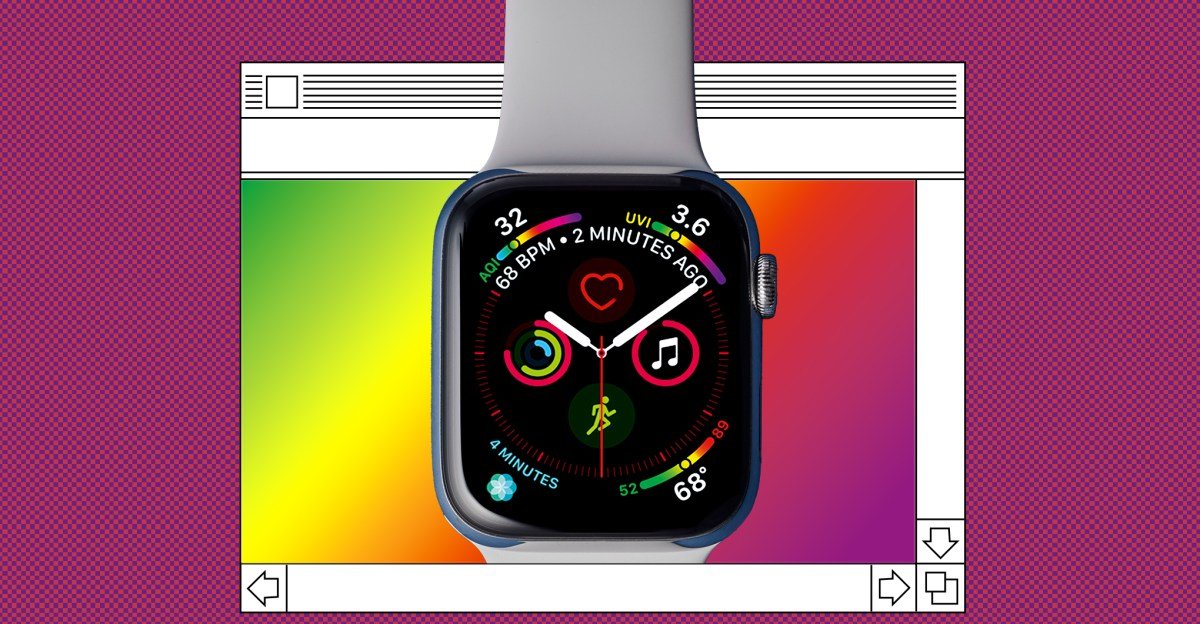
You can trace the state of health tech today to a single gadget: the Apple Watch Series 4.
Back in 2018, smartwatches and fitness bands focused on a handful of things: step count, heart rate, some light sleep monitoring, and activity logging. As a result, they were much more focused on fitness rather than overall health. Handy if you were trying to increase activity levels or lose a few pounds, but not a device that could “save your life.” That all changed with the Series 4, which introduced FDA-cleared atrial fibrillation detection — something that had never been done before on any consumer wearable. Not everyone was a fan of the feature. Critics cautioned that it wasn’t as accurate as a traditional 12-lead EKG, and many doctors weren’t sure how to interpret such novel wearable data.
Nevertheless, this sort of FDA-cleared digital screening feature is now the hallmark of what’s considered advanced consumer health tech. Every year, there are several stories of how Apple Watches have improved or saved lives — something that spurred rivals to pursue similar features on their own devices. Eight years after the Series 4 debuted, wearables can send an array of notifications relating to illness, sleep apnea, hypertension, and even fertility windows. And though there’s debate about such features causing health anxiety, wearable makers are racing to discover relationships between new biomarkers and enhanced longevity — hence why so many newer devices are zeroing in on recovery metrics, metabolism, and, for some reason, bodily fluids.
Given that The Verge is spending this entire week reflecting on 50 years of Apple products, we’d be remiss if we didn’t look at Apple’s role in defining this space — and what’s evolved in its wake. So, I sat down with Deidre Caldbeck, senior director of Apple Watch and health product marketing, to talk about how the company approaches developing health features and what that means for the Apple Watch’s future.

Back in 2016, my first Apple Watch was the Series 2. As a wearables reviewer, I’ve tested every single iteration since. One thing has always been crystal clear about Apple’s approach in this space. The Watch isn’t meant to be a niche object for a small group of health nuts. The vision is a health gadget that works for everyone. (So long as you have an iPhone.)
“We really wanted to make the features on Apple Watch as inclusive and intuitive as possible. Of course, technologies have advanced, and people’s interest in health and fitness has changed over the years, but we’ve really tried to maintain that primary objective: building features that can really impact as many people as possible,” says Caldbeck.
According to Caldbeck, while the Apple Watch has always had an optical heart rate sensor, it was primarily used to track workouts. But as more people started wearing the Watch, Caldbeck says the company got feedback from users saying they wanted more context into their heart health that would perhaps explain some anomalies in their measurements. With the Series 3, the company delivered high and low heart rate notifications. But the major shift, she says, really came with the Series 4. That was when the Apple Watch got its first significant redesign, with a bigger display and a revamped, more modern UI. The addition of the EKG then helped to shift the device toward being a more holistic health tool than simply a fitness tracker.

“We started to hear more from people that they were getting insights into heart rate recovery and we thought, ‘Okay, well, maybe we invest more in things like low-cardio fitness,’” she says, referring to how the company presents the VO2 max metric. “And of course, aFib notifications were there, but should we do more with aFib history once you’ve been diagnosed with aFib? So that sort of kicked off this acceleration into more of these heart health features.”
Apple’s focus on developing big, broadly impactful health features often feels at odds with the current, overarching theme in health and wearable tech right now: AI-powered personalization. Right now, Apple’s rivals are going full speed ahead in integrating AI for an increasingly customized experience. Garmin, Google / Fitbit, Samsung, Oura, Whoop, Strava, Withings, Peloton — you name it, they’re all stuffing AI into their platforms to deliver highly individualized experiences. (Spoiler: They’re generally godawful.)
In the past few years, these companies have also been quick to incorporate wellness trends into their products. For instance, with the popularity of GLP-1 medications, metabolic health tracking and AI nutrition features are a hot commodity. Garmin just launched its take on the feature in January. Even Meta announced this week that it’s getting into AI nutrition logging via its smart glasses later this summer.

Conversely, Apple has been late to the AI game (and criticized for it). Take Workout Buddy. Released last year, the AI-powered feature isn’t truly an AI coach. Instead, it’s meant to be a more motivational feature, surfacing historical milestones or highlighting your progress toward achieving daily goals. Notably, it doesn’t tell you what to do, generate workouts, or provide guidance — something that many people have come to expect from AI fitness features.
All this, Caldbeck says, is intentional.
“We want to deliver meaningful insights without very specific recommendations,” she explains. “We have, to date, designed our features to be a little more discreet, to sort of fade in the background and meet you where you are. Of course, we want to notify you if there’s something that you should pay attention to and give you the right information to make the right decisions or to maybe have a conversation with your doctor.”
Caldbeck notes that Apple has implemented AI in developing several features, such as heart rate monitoring, fall detection, and hypertension notifications. That said, the guiding principle is to use AI to primarily “unlock health insights and empower people with information that they can then take action on.” And another key distinction is that every health feature must align with consensus-based, established scientific literature.

“What’s consistent is our commitment to providing features with actionable insights that are grounded in science and built with privacy at the core,” Dr. Sumbul Desai, Apple’s vice president of health and fitness, tells me over email.
Caldbeck admits that from a product perspective, it’s tempting to hop on buzzy wellness trends. However, she says Apple requires that its data be validated across a large population because its products have such a large global reach. Case in point, its inaugural Apple Heart Study had over 400,000 participants — an unheard-of number at the time. Concepts like specificity and sensitivity — which measure whether a test delivers more accuracy on true positives or true negatives — are often weighed when developing a feature.
“Frankly, we’re careful when we roll out these new features because we want to make sure we’re not getting ahead of the science,” says Caldbeck. “Sometimes, we wait a year or two. It does mean that others may be ahead of us in some areas that we know users care about, but it takes discipline, and we’re going to continue to do that.”
To be clear, many health tech companies pay a lot of lip service to being science-backed. But Apple isn’t bluffing about the patience and competitive sacrifice this approach requires. Last year, I got the chance to speak with Desai regarding the Apple Health Study. The unique thing about this particular study is that it had no specific goal and would encompass activity, aging, cardiovascular health, circulatory health, cognition, hearing, menstrual health, metabolic health, mobility, neurological health, respiratory health, and sleep. The study is set to last five years, and could be extended further. It’s not guaranteed that groundbreaking insights or features will be discovered. Meaning it could be a long, long time before we see what comes from research at this scale and scope.

Hypertension notifications, which were launched last year, are another example. Although it was a feature that Apple had been keen on for a long time, Caldbeck says the company chose to wait until it could deliver reliable, validated results for a global population and successfully go through the regulatory clearance process. Apple also published a validation paper based on data from 100,000 study participants, detailing the tech and how the feature was developed. Sleep score, a feature that has been available for several years on other devices, is another example. Apple didn’t roll out its version of the feature until 2025, Caldbeck says, because it prioritized scientific consistency. And while Apple could have incorporated biometrics into the feature, it instead emphasizes factors that users can actually control.
But even if it’s a while before we see the next groundbreaking health feature, Caldbeck and Desai say that users can expect to see Apple incorporate health tech into its other gadgets, too.
“We’re focused on creating innovative, intelligent features that deliver personal insights through products like Apple Watch, AirPods, and iPhone, fundamentally evolving the concept of prevention by democratizing access to health information,” says Desai.
“If you think about what we’ve done with hearing health with AirPods, and even what we did years ago with using your iPhone to track mobility metrics, there’s a lot that we can still do with devices that are with you every day,” adds Caldbeck. “That’s going to be a place that we’ll continue to invest in to bring more impact to more people across more of our products.”

In Optimizer, I often lament how, in recent years, wellness trends seem to be influencing health tech in a less-than-ideal way. The increasingly blurry line between wellness and medical tech genuinely keeps me up at night, especially as health tech companies begin to lobby Washington for relaxed wearable regulations. As a reviewer, I’ve also written my fair share of how Apple Watch and health updates can feel iterative, especially if other tech companies “got there first.” As I watch this space, I’m not sure which approach will ultimately win. Apple’s slower, broader, but scientifically rigorous approach — or the startups chasing emerging wellness trends, banking on AI-powered personalization to usher in a new era of health tech. But if there’s one thing I’m certain of, it’s that Apple is the rare company that can afford to take its time.
<a href