guy lambert

 BBC
BBC“They don’t keep money, they spend it here and now.”
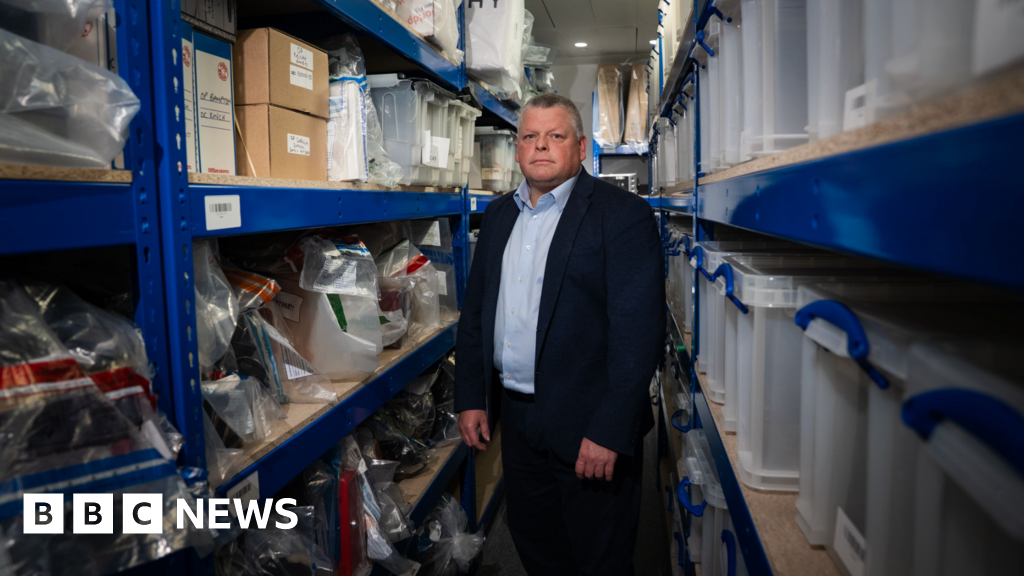
Det Ch Inspector Paul Curtis shows us an evidence room full of designer shoes and handbags. Thousands of items are neatly stacked in plastic containers on wooden shelves.
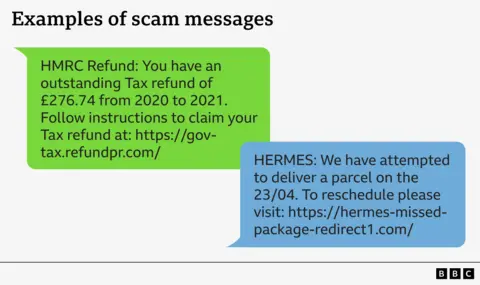
The items here are seized from financial fraudsters, some of whom send scam messages to victims – known as smishing.
“They like to live a lavish lifestyle,” says Curtis. “We found between 8,500 and 10,000 pieces of evidence in this one room,” he says, which is “the result of a house search and raid” conducted by authorities.
The smell of fresh leather goods permeates the air. Brightly colored Gucci stilettos attract attention from a distance; It’s a treasure trove of top-label kit worth thousands of pounds.
These purchases are an indication of how much cash they are making from their crimes and what they are spending it on.
The term “smishing” is a combination of “SMS”, or “short message service” – the technology behind text messages – and “phishing”.
Fraudsters send fake text messages to trick people into revealing personal information such as passwords and PIN numbers – ostensibly from a bank or other trusted company. The intention is to defraud them of their money.
Curtis is part of the dedicated Card and Payment Crime Unit – a team made up of officers from the City of London Police and the Metropolitan Police Service.
Although they are a London police force, the unit has a national authority, and is sponsored by the banking industry. It focuses on combating financial fraud.
He says, “In one of our recent smashing cases, the defendant was sentenced on the basis of sending 15,000 messages over a five-day period. This was the equivalent of earning a million pounds per month.”
The senior official was talking about Ruichen Xiong, a Chinese student who was convicted of crimes in March this year after driving around London and sending messages to thousands of potential victims.
Xiong was sentenced to 58 weeks in prison at Inner London Crown Court in June after pleading guilty to fraud by representation.
According to Ofcom, half of UK mobile users said they received a suspicious message via text or iMessage between November 2024 and February 2025.
‘I felt like a big fool, like I was violated’
Gideon Rabinowitz, 64, lives in Newbury, Berkshire, and has recently been the victim of smishing.
Just two months ago, the former IT manager said she was defrauded out of more than a thousand pounds after receiving a fake text message.
“I felt like a big fool, like I was violated,” he says.

“It really shook me. It really shook me for days afterwards. I felt very unsafe and I didn’t know who to trust anymore.”
Mr. Rabinowitz was led to believe that he was being contacted by his bank who were reporting a suspicious payment on his account.
Actually, he was being messaged by a scammer.
“It started with a sudden message asking if I recognized the transaction – yes or no. Two and a half hours later I was out of pocket for £1,400.”
He adds: “To some extent it was about money and also this feeling of being cheated, of being looked up to, because these people knew who I was. They knew where I lived”.
Fraudulent text messages often pretend to be from utility companies, banks or large companies such as supermarkets. They usually include a link. Once the person clicks on it, they may be sent to a fraudulent website and asked for personal and financial information. The information can then be used to convince them to transfer money from their account.
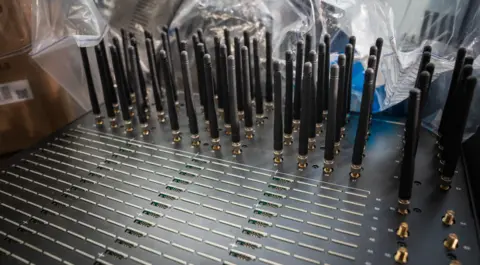
Smishing is mainly done through two tools; A SIM farm consisting of multiple SIM cards allows criminals to bombard people with thousands of scam messages.
The second one is what is called SMS Blaster. It tricks nearby mobiles into connecting with it, and then sends a large number of fraudulent messages in a matter of seconds.
“Scams have a devastating impact on their victims,” the government says.
“Our Telecom Charter sets out clear actions to secure SMS and reduce fraud in the telecom sector”.
“We are also banning SIM farms. Banning these devices, which are used to send thousands of scam messages, will shut down a key tool for criminals and protect consumers,” it added.
The ban is expected to come into effect late next year. This would make possession or supply of SIM forms illegal without any specified reason.
‘Easy to do, hard to figure out’
A cyber expert said smishing is a difficult crime to solve and more education is needed about fraudulent text messages.
Ciaran Martin, former chief executive of the National Cyber Security Centre, says: “Theft in itself is very difficult for the police to detect because so much of it comes from abroad and even when it is done from within the UK it is very easy to do and hard to detect.”
“So while the police can sometimes take major action, we should not look to the police as a strategic answer to this.
“The strategic answer is for people to understand that serious businesses don’t ask you for money by text, and for businesses to find better ways to interact with customers and verify that interaction.”
The police advice is simple: do not click on links in any unsolicited messages you receive.
If you believe you are a victim of fraud, report it to Action Fraud, report it to your bank and forward the message to 7726 so the mobile network can investigate further.
For more information visit here bbc.co.uk/scamsafe Where you can find a selection of resources
If you have been scammed or have been defrauded, details of help and support are available here bbc.co.uk/actionline
<a href