Shortly before noon on Wednesday, a series of headlines about Rachel Reeves’ budget began appearing on the Reuters newswire, causing immediate panic in financial markets.
The details were shocking: they appeared to be laying out the key policies of the Chancellor’s Budget more than 40 minutes before they were delivered to the crowded Commons chamber.
“UK OBR Economic and Fiscal Outlook: Budget tax increase of STG26.1 billion by 2029-30,” read an alert published at 11.41am.
In chaotic moments in newsrooms and on the trading floor – as well as across Westminster – the Office for Budget Responsibility (OBR) was unaware that it had published a highly sensitive analysis of Reeves’s tax and spending plans in full on its website.
As the Reuters snaps flowed, bond prices and sterling began to rise as markets hurriedly executed trades worth billions of pounds. The yield on Britain’s 10-year government bonds – actually the interest rate – initially fell by four basis points, while the pound jumped 0.3% on news that the Chancellor had created a much larger than anticipated fiscal buffer.
When asked about the leak, the OBR first suggested that any issues lay elsewhere. But within minutes, Downing Street realized that the independent watchdog had uploaded its crucial Economic and Fiscal Outlook report – the key document that rules on the Budget – well ahead of schedule.
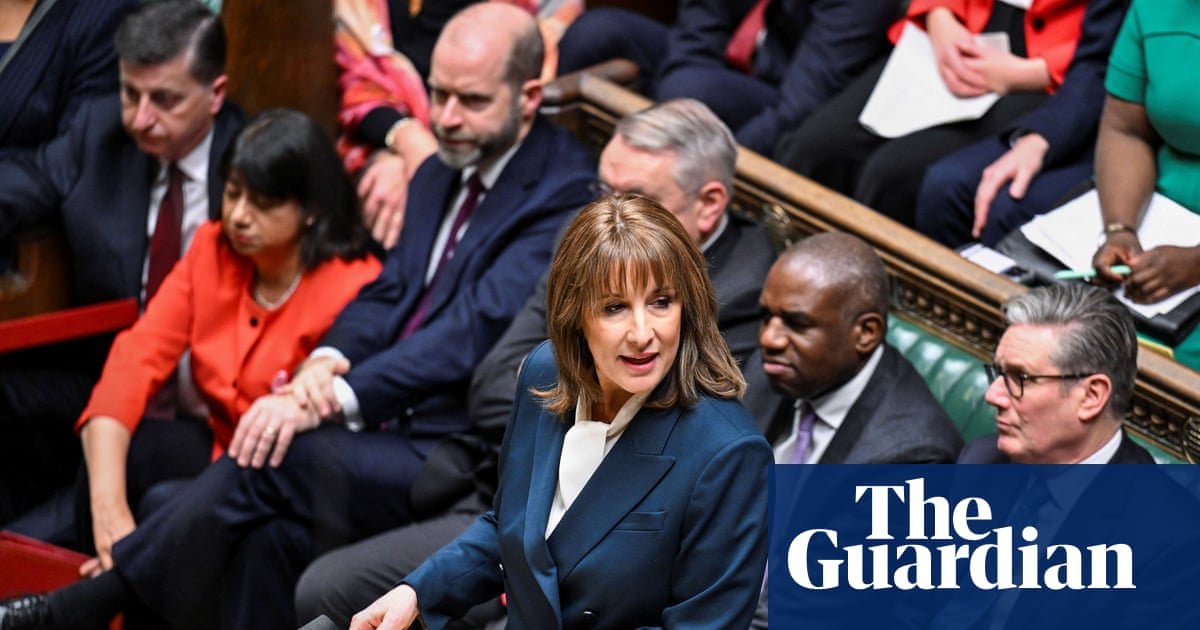
In the moments before his speech, the chancellor was seen checking his phone as the news broke. Treasury Secretary Torsten Bell, sitting behind Reeves, put down his phone and lawmakers quickly placed handwritten notes on the front bench.
By the time Reeves arrived at the dispatch box at 12.35 pm, the OBR was forced to issue a polite apology and launched an internal investigation.
It is believed that the details of the budget are kept secret until the Chancellor announces them to MPs in the Commons. However, high-profile breaches of the increasingly leaky process have occurred several times before.
Recently, the London Evening Standard tweeted an image of its front page, revealing the main announcements of George Osborne’s 2013 budget, before the then Chancellor spoke. In 1996, the then Daily Mirror editor, Piers Morgan, returned a leaked copy of Ken Clarke’s budget speech.
In 1947, Labor Chancellor Hugh Dalton was forced to resign after giving details of his budget to a journalist while visiting the chamber. This news appeared in the evening newspapers before Dalton’s speech ended.
Highlighting the seriousness of the latest budget breach, the shadow chancellor, Mel Stride, suggested in the Commons that the leak “could be a criminal act”. “It is absolutely disgraceful that this has happened,” he told MPs.
OBR Chairman Richard Hughes has said that he will continue to lead the watchdog unless he loses the confidence of the Chancellor, the Treasury Committee or Parliament. Reeves’ spokesperson said he had “complete confidence” in Hughes.
“The document was inadvertently uploaded to our website a long time ago,” Hughes told a tense press conference in Westminster. “We have launched an investigation into how and why this happened. It was a mistake at the OBR.”
A Whitehall insider said the mistake was likely due to human error. “Probably by someone very junior… There is no doubt that he was in the midst of the worst day of his working life.”
Metadata shows that the PDF published in error was last modified at 3.10am on Tuesday 25 November.
An economist associated with the OBR said, “I think they created the page, built it up, and then didn’t realize that people would guess the link.” “They should have kept it behind a password all that time.”
After newsletter promotion
Another former officer said it would be unfair for Hughes to fall on his own sword as the release was accidental.
“It’s too early to say that heads will be spinning before you know what’s happened,” he said. “We need to see what the full details are, and the OBR have said they will conduct a forensic investigation into what went wrong.”
Before the Budget, highly sensitive details are passed between the Chancellor’s Office and the OBR five times before Budget Day. A former insider said that strict checks were put in place to prevent leaks, including the requirement to use a “secure gateway” to access documents when away from the office.
However, the leak will provide fresh ammunition for the watchdog’s critics. Within Labor ranks, the timing of its decline in productivity – punching a billion-pound hole in the Chancellor’s tax and spending plans on Budget day – has caused particular concern.
A government source said, “I hope this is the beginning of the end.” “Time to stop this,” said another.
Earlier this month, the TUC urged Reeves to launch a comprehensive review of the OBR, and accused him of being a “cheerleader for austerity” since its creation under Osborne in 2010.
Labor MP Jeevun Sandher, a colleague at the Department for Business and Trade, said: “The OBR has got its key decisions wrong for 14 years, consistently underestimating the impact of public spending (cuts) on growth. Today they have released the forecast document early. Completely unacceptable.”
There was considerable excitement in Whitehall over Reeves’ decision to stick to the OBR forecasts of one fiscal event for the year but two – meaning she would not necessarily take corrective action next spring in response to the forecast.
One consultant said, “This was the original sin that led to the welfare debacle.” “It’s good that we’ve realized that we don’t really have to bend our knees twice a year.”
However, Labor critics and people close to the watchdog warned that after months of kite-flying and speculation ahead of the budget, the government had already made itself the target of criticism long before the OBR leak.
Nusrat Ghani, deputy speaker of the Commons, who chaired Reeves’ budget speech, said, “This disappointing trend in relation to budget briefings has been growing for many years and under successive governments, but it appears to have reached unprecedented highs.”
“All of this falls short of the standards the House expects.”
<a href