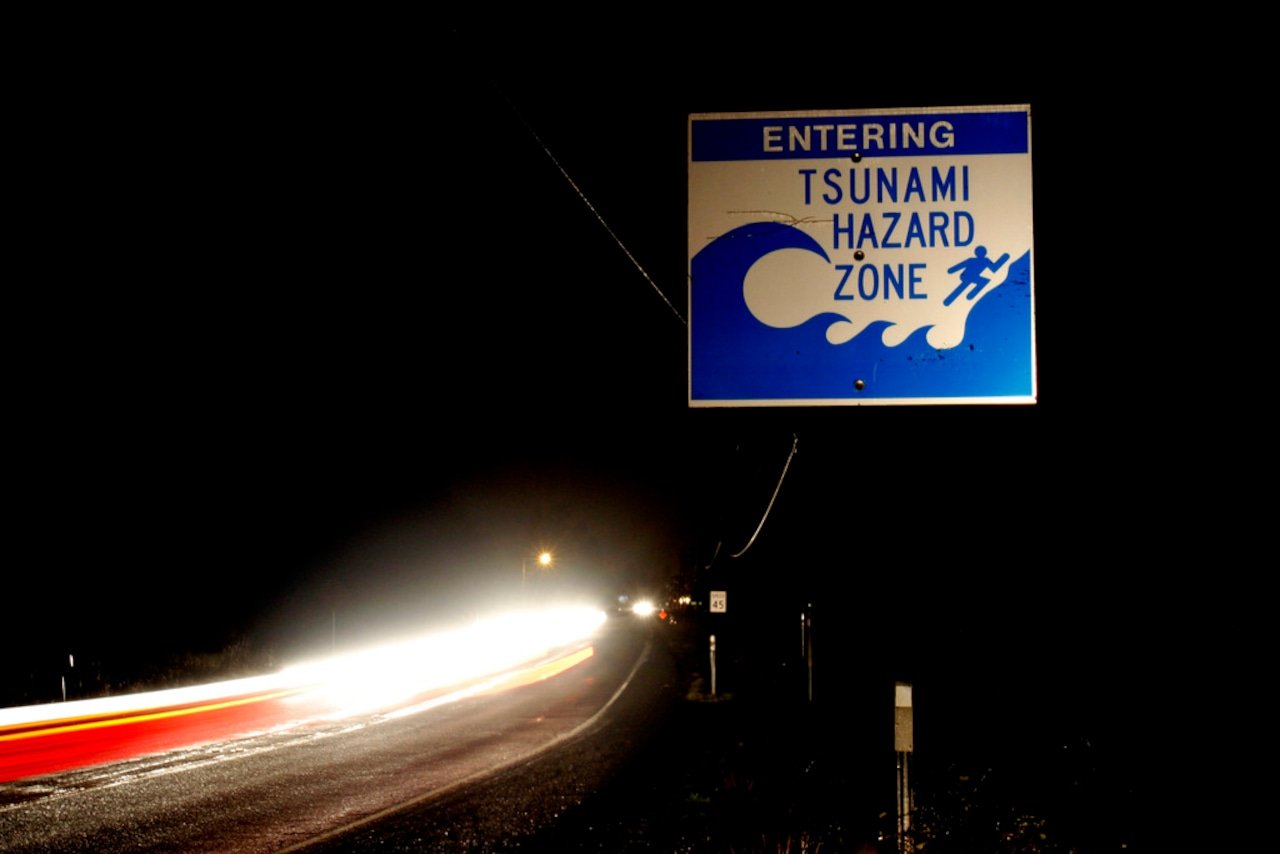
Tsunami warnings for Oregonians will remain unaffected for the time being, after the Alaska Earthquake Center decided to return federal cuts to a warning system that helps Pacific Coast states, including Oregon, receive quick and accurate alerts.
Earlier this month, a U.S. senator urged federal officials to restore a $300,000 annual grant to the Alaska Seismic Center in Fairbanks, which runs 250 seismic stations across Alaska. The stations are part of a warning system that informs Oregonians about the strength and timeline of a potential tsunami, giving people vital information to find safety.
The Alaska Earthquake Center said it is going to stop supplying data to tsunami warning centers due to budget cuts, which will mean less accurate and less timely information about tsunamis from federal tsunami warning centers.
“Seconds matter during a tsunami, and coastal communities may have as little as 20 minutes to evacuate and prepare for an incoming wave,” U.S. Sen. Maria Cantwell, D-Wash., wrote in a letter to the administrator of the National Oceanic and Atmospheric Administration on Nov. 19. “Any delay in data could waste critical time to get people out of harm’s way.”
Tsunamis and earthquakes are an almost constant concern in the Pacific, one of the most seismically active regions on the planet. The same year, a record-breaking earthquake near Russia raised concerns about a tsunami that ultimately did not materialize. The tsunami caused by the Great Tohoku earthquake near Japan in 2011 resulted in about 20,000 deaths and waves that reached as far as Oregon, causing damage but saving lives.
The National Oceanic and Atmospheric Administration grant paid for the maintenance of nine particularly critical and inaccessible stations and for the immediate transmission of data from the Alaska Earthquake Center stations to federal tsunami warning centers.
Now, the center has decided to pay directly from its budget to deliver the data to tsunami warning centers, spokeswoman Elizabeth Nadin said in a text message.
But the Center will not pay for the maintenance of the nine seismic stations that the federal government had previously paid for. These are in very remote parts of the state and “extremely expensive” to get there, Nadine said.
Those nine stations are also particularly important, said seismologist Harold Tobin of the University of Washington, because they are in areas that are particularly seismically active.
“It’s certainly one of the most remote areas. But it’s also a place where a lot of earthquakes occur, and a lot of earthquakes occur under water,” Tobin said. “This is an area where it is absurd not to monitor closely from a tsunami warning perspective.”
Nadine said the nine stations will continue to transmit data until they stop operating due to a natural event or malfunction.
The Alaska Earthquake Center’s funding was cut in fiscal year 2024, but the center will still continue to provide real-time data to the agency, NOAA spokeswoman Kim Doster said in the statement.
Doster said in a written statement that the agency does not rely on any single source of information for its alerts, adding that the Alaska Earthquake Center at the University of Alaska is “one of several partners” providing information.
<a href=