The US and Israeli attacks on Iran over the weekend shocked global markets and sent the S&P 500 (GSPC), oil and gold prices volatile.
Meanwhile, President Trump pledged that the war could last four to five weeks – or be fought “forever” with existing munitions stockpiles, suggesting that instability is likely to continue.
In fact, there was a massive selloff in stocks amid new strikes on Tuesday, raising fears of a protracted war.
But a Yahoo Finance analysis of these three major markets — oil, gold and stocks — in previous moments of geopolitical shock found a familiar pattern: Prices often spiked in the first days of trading, but returned to normal within weeks, even as the fight dragged on.
The review covers nine key moments in recent history, starting with Iraq’s invasion of Kuwait in 1990 to Nicolás Maduro’s capture in Venezuela. It found that when the fighting started, the situation in these three markets looked very different a month later.
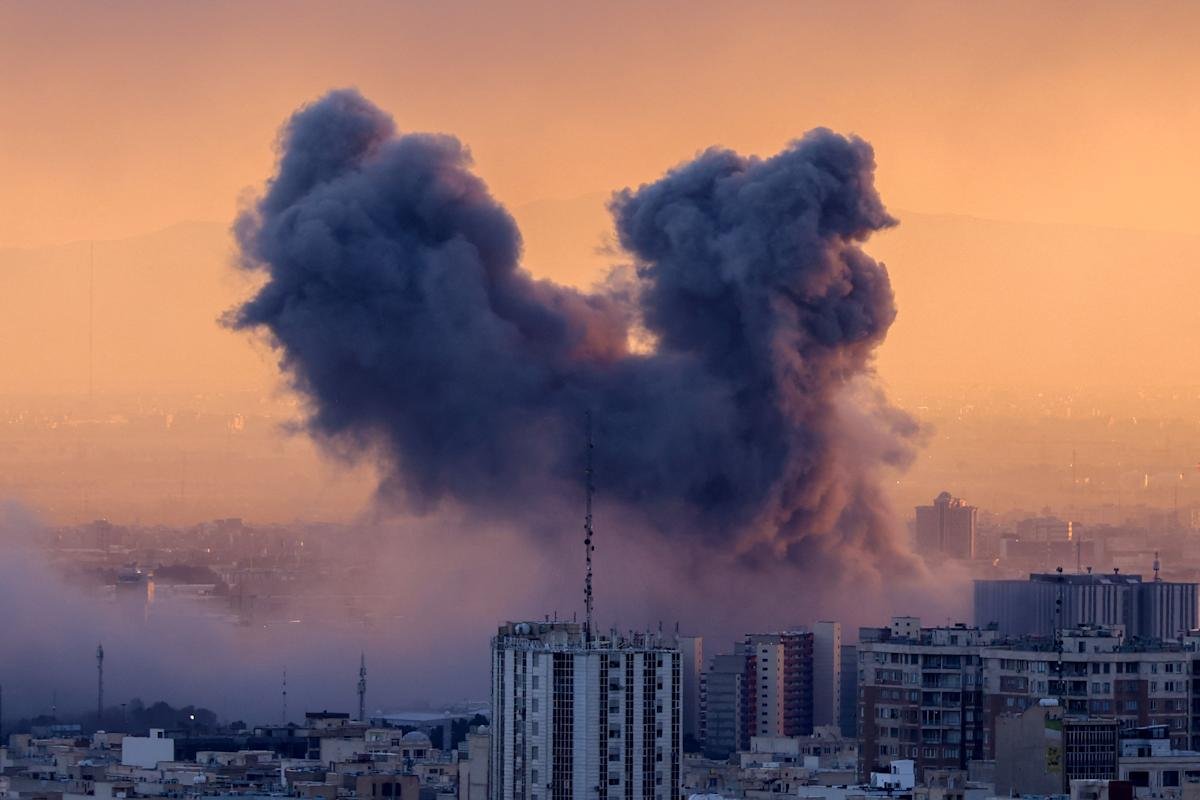
A plume of smoke is seen rising after the attack on Iran’s capital Tehran on March 3, 2026. (Atta Kenare/AFP via Getty Images) ·Atta Kanare via Getty Images
Perhaps the most serious example occurred last June during the 12-day war between Israel and Iran. During that conflict, US forces intercepted Iranian attacks and bombed Iranian nuclear sites.
Hostilities began on June 13, 2025, causing an immediate surge in oil and gold prices and a decline in stocks. After 30 trading days, all three markets had moved in opposite directions.
Europe The spot price of Brent oil rose by about 7.3% between June 12 and 13. But prices were actually down 0.6% at the end of 30 trading days, according to a U.S. Energy Information Administration analysis of prices.
The pattern was like gold. Yahoo Finance’s own data shows a 1.49% one-day rise during that conflict, followed by a 1.39% decline over 30 trading-days.
The S&P 500 followed a similar pattern – but the opposite – falling 1.13% on the first day of trading after the bomb dropped, then rising 5.70% after 30 days of trading.
The impact of Iran’s attacks so far has followed that initial historical pattern.
The Brent crude oil market closed last Friday at a price of $ 72.48 per barrel. It jumped more than 7.8% on Monday to close at $78.16. Gold was up about 2.7% in the same time frame.
Meanwhile, the S&P 500 started with gains on Monday and ended the first day of trading in the green before falling significantly in early trading on Tuesday.
Meanwhile, few analysts were willing to speculate where prices might end up.
SEI Chief Investment Officer Jim Smigiel, appearing on Yahoo Finance on Monday, urged individual investors to “breathe, don’t do anything big.”
It remains to be seen whether this struggle will continue following previous market patterns. This weekend’s attacks in Iran are already significantly more widespread than the 12-Day War and also more consequential – notably in the assassination of Ali Hosseini Khamenei, who had served as Iran’s supreme leader since 1989.
President Donald Trump is seen at the Medal of Honor ceremony in the East Room of the White House on March 2. (Kyle Mazza/Anadolu via Getty Images) ·Anadolu via Getty Images
No matter the immediate ramifications of this conflict, day-one price movements during moments of global tension have little to do with where prices end up a month later.
Of the events analyzed by Yahoo Finance for this story, which included the start of the Russia-Ukraine war, the U.S. intervention in Libya and the 2003 Iraq War, less than 56% of the time the direction in which prices moved after one day matched the direction after a month.
The analysis found that prices often changed little after a month, even if they had increased significantly the day before.
For example, the price of gold rose 6.85% in the first trading day after the September 11, 2001 attacks, but then fell. It was more moderate by 2.28% over the 30-day period.
Similarly, the price of oil increased by more than 34% a few days after Russia launched its invasion of Ukraine, but increased by only 1.53% after 30 trading days.
It’s a lesson energy analysts have returned to in recent days.
“We are reminded that oil was at its peak about a week after Russia’s invasion of Ukraine,” Strategas’ Chris Verone wrote in a note.
At the end of the day, he wrote, “We would still be more inclined to be buyers of a pullback among energy equities in the coming weeks.”
Tankers were seen off the coast of the United Arab Emirates on March 3 as Iran vowed to close the Strait of Hormuz. (Reuters/Amr Alfiqi) ·reuters/reuters
This was part of a widespread expectation that prices were about to soften, although recent history contains one exception worth remembering.
Iraq’s invasion of Kuwait in 1990 led to price movements on the very first day, which not only remained stable – but increased in the month of trading that followed.
The setback began when then-Iraqi President Saddam Hussein’s forces massed on the Kuwaiti border and then crossed the border on August 2. Oil rose 11.64% after one day – then surged nearly 57% over the 30-day period.
Similarly, the S&P 500 started down 1.14% the day after that struggle and fell further in the following weeks, falling more than 10% after 30 days.
But even there, prices eventually recovered a few months later when Allied forces drove Iraqi troops from Kuwait and Hussein’s forces returned to Baghdad.
Ben Vershkul is Yahoo Finance’s Washington correspondent.
Click here for political news on trade and money policies that will shape tomorrow’s stock prices
Read the latest financial and business news from Yahoo Finance