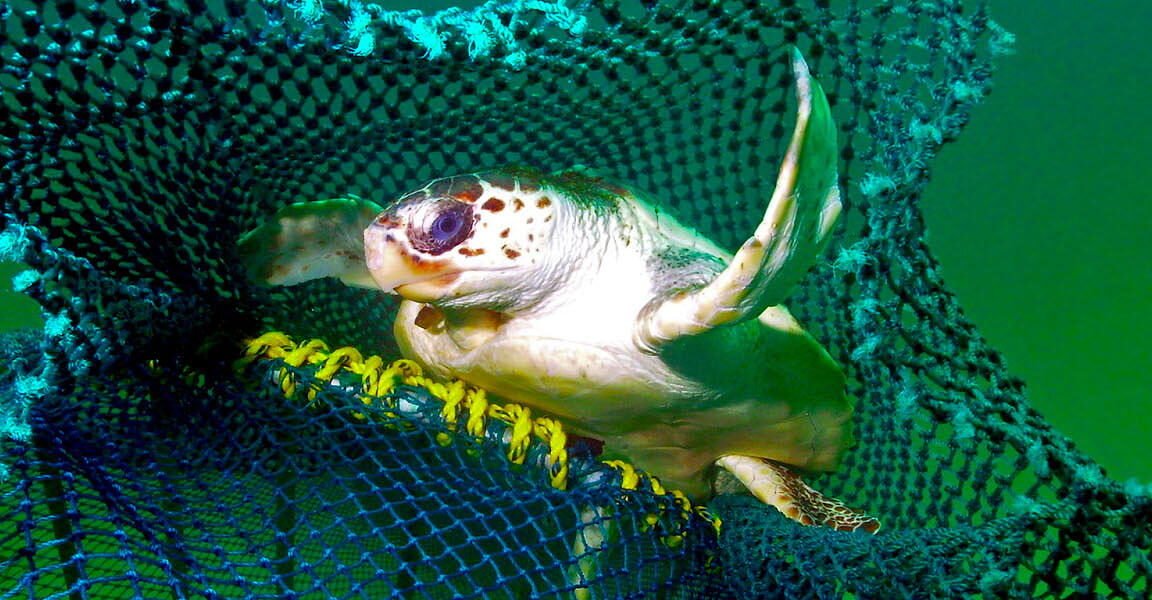
Our oceans are full of sophisticated, exquisite nets: nets, hooks, fishing lines. Designed to catch animals destined for our dinner tables, they often also catch other wildlife.
This accidental harvest is known as bycatch, and each year it causes the deaths of millions of marine animals, including whales, dolphins, sharks, turtles and sea birds. Nets and gear can suffocate animals or cause fatal injury; Even when animals are thrown back into the ocean, they often die. Bycatch is also a dilemma for fishermen – entangled organisms can destroy equipment, causing loss of time, money and the reputation of the fishery.
For decades, conservationists, researchers, and fishermen have developed methods to reduce a variety of bycatch in various fishing stocks around the world. But implementing these solutions is often a challenge, and many mitigation strategies are never widely implemented.
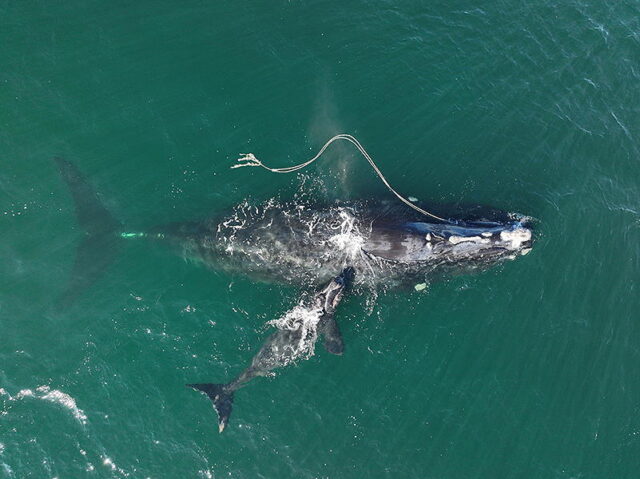
Fishing gear that traps dolphins, porpoises and whales is a major threat to the animals. Here, are the gear trails of a North Atlantic right whale called Snowcone (known individual #3560) that swims with its calf in Georgia waters.
Credit: Georgia Department of Natural Resources NOAA Permit #20556
Fishing gear that traps dolphins, porpoises and whales is a major threat to the animals. Here, are the gear trails of a North Atlantic right whale called Snowcone (known individual #3560) that swims with its calf in Georgia waters.
Credit: Georgia Department of Natural Resources NOAA Permit #20556
However, some approaches now have proven success rates – and there may be more in the future. Recent research has explored traps equipped with lights; Even low-tech tricks like lining gear with plastic water bottles hold promise for reducing some types of bycatch while still being practical for fishermen to use.
Despite the challenges, researchers are hopeful. “There aren’t a lot of conservation issues that I know of where industry and conservationists and consumers and fishermen and resource users all want the same thing,” says marine biologist Matthew Savoca, a research scientist at Stanford University’s Hopkins Marine Station. “Every stakeholder wants less bycatch.”
keeping turtles out
The bycatch problem has always existed. “It’s a conflict that is intrinsic to the whole idea of fishing,” says Nancy Knowlton, a marine biologist emerita at the Smithsonian’s National Museum of Natural History. “If you have something that’s designed to catch animals, you’ll almost always catch some things you didn’t mean to catch.”
<a href