Between 0958 and 1011 hours on 19 September 2025, Russia carried out another series of air incursions into Estonian airspace. They were technically minor violations, but the last one lasted about 12 minutes, and in the context of tensions with NATO – largely perpetrated by Russia itself, it was another dangerous move in the never-ending game of Baltic chess.

This is why no other similar steps have been taken, and why Russia will think twice before doing so again.
NATO air interdiction procedures have been following normal procedure for decades. In my lifetime I have seen or been exposed to hundreds, and have even flown on one in the back seat of a Tornado. Pulling up next to a Tu-22M (NATO: Tu-26 Backfire) in the South Norwegian Sea is a thrilling experience.
Ground or air based radars see the enemy coming, aircraft scramble and certainly in the Cold War era and until recently, intercept aircraft will be pinging their radars looking for targets. NATO planes will come, take the Russians out of their airspace or simply sit next to them if they are in international space. The point was always to make it clear that interception would always occur. We would never turn our back on them and they always knew we would.
At the same time the Russians would test the timing for interception and note which units were sent to intercept. The game has always been played this way for the best part of 60 years.
The previous Estonian incursion had not been stopped and NATO command was well aware that the Russians were not convinced by playing the game the old way. This was not stopping them from entering Estonian airspace and they had the advantage of a vast area of airspace from which they could change direction, infiltrate and escape at any time – most likely before NATO aircraft could actually reach them. The Russians were using every opportunity to emphasize their local superiority and make sure NATO was aware of it.
His preferred aircraft for these operations is not so much a fighter in the classic sense, but a long-range interceptor, the MiG-31 Foxhound. It is incredibly fast in a straight line at Mach 2.8 – leaving most Western aircraft standing – it has a combat radius of about 1,900 miles (3,060 km) and can be in and out of the interdiction zone at altitudes up to 82,000 feet (25,000 m) in a few minutes.

NATO knew this. It was also known that the Russian command system is not as integrated as NATO’s and that MiG-31 pilots refer to Ground Assisted Control for instructions on almost everything. It was clear that this infiltration was ordered and deliberate. It’s time to change the rules of the game and show the Russians that NATO has changed what they thought were the rules. Russia was about to find out once and for all how dramatically and effectively things had escalated.

NATO chose a military and political option to tell the Russians that they are not messing around any longer, that it will not be sustainable to tolerate these incursions, and that it is time to demonstrate Western superiority. Once you read what happened and remember the call to shoot down any future incursions, you’ll understand why the Russians haven’t done it again. This is a remarkable story of NATO pushing back and Russia actually getting the message.

The MiG-31 uses a very powerful phased array radar, designed to look ahead for air targets, called the SBI-16 Zaslon. Later upgrades include variants such as the Jaslon-M, which increases detection range and track-while-scan functionality. These radars enable simultaneous tracking of multiple targets and coordination with other aircraft and ground systems. However they are unable to ‘look down’ and operate only in the air to air domain. Combined with long-range air-to-air missiles, the Foxhound represents the ideal long-range interceptor platform – provided it can sight the target, of course.
The whole concept of the long-range interceptor dates back somewhat to the 1950s, from the days of the major strategic bomber as a nuclear weapons delivery platform. Long-range interceptors – the most famous being the Su-15 Flagon which shot down Korean Air 007 on 1 September 1983 thinking it was an American RC-135 spy plane in Russian airspace, is a Russian ‘thing’. The MiG-25 and now the MiG-31 to follow are still intended to fulfill a similar role, although this is difficult to be sure in the 21st century.
The MiG-31 may be capable, but it’s really from a different era, where straight-line speed means nothing and, despite its powerful radar, it’s not really suitable for modern air combat. Yet the Russians consider it absolutely appropriate to break NATO’s cage, and if all this happens, they are happy.
In any case the MiG-31 Foxhound is an ideal way to get in and out of this type of deliberate infiltration role.
NATO was monitoring the airspace over the Baltic states with ground radar and with AWACS based at Geilenkirchen, several hundreds of kilometers behind, near the German/Polish border. It identified three Russian MiG-31s well before they entered Estonian airspace.

As soon as the AWACS sighted the aircraft, they informed NATO at the Joint Air Operations Center in Udem, Germany, on the border with the Netherlands, which ordered two Italian F-35s to take off from their Estonian air base at Amari on the coast. They flew under competitive operational silence. This was done through NATO secure encryption and the F-35s were operating without radar being activated and alerting the Russians. However, the F-35 could actually see where the Russians were and what they were doing via NATO datalink-16 shared with the AWACS. There is no need to use their own radar, which made them effectively invisible to the Zaslon radar on Foxhounds.
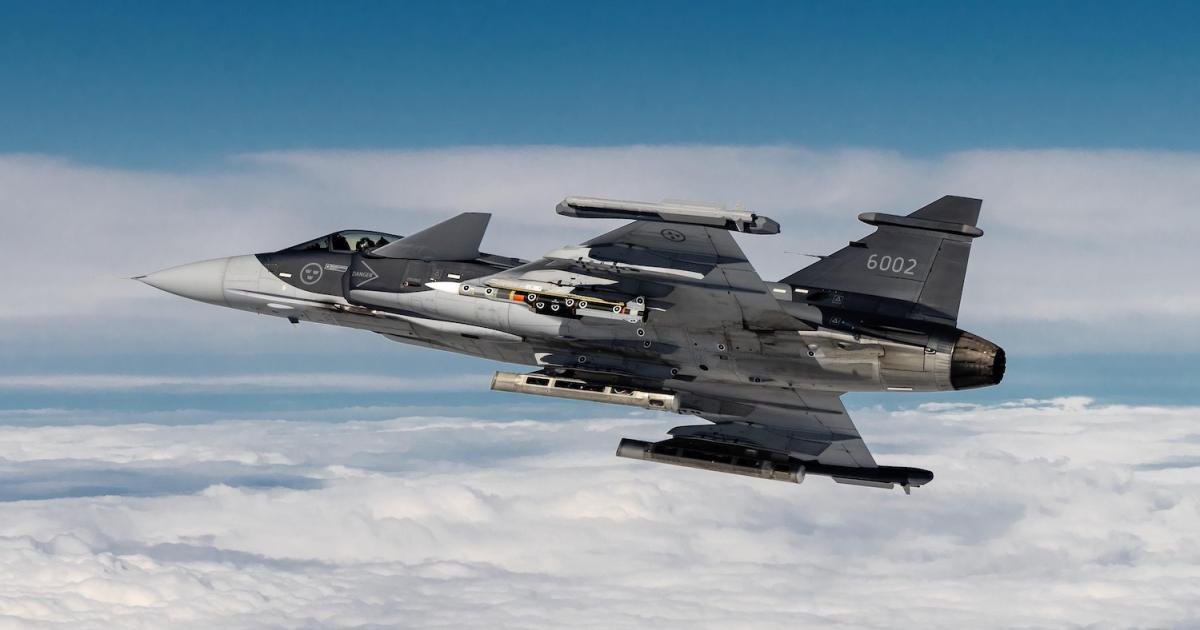
Meanwhile a pair of Swedish Gripens on patrol over the Baltic are boxing in Russians armed with Meteor missiles – and again, they have no idea. The Gripens know the same know-how as the F-35 and vice versa, all shared with AWACS and NATO commands.

Meanwhile the Foxhounds are doing what they always do, testing reaction times, mapping radar coverage gaps, listening to comms and generally looking for weakness in the local air defense system. Yet this is just part of their goal, because the real point is to get in and out and make it such a common occurrence that it is not worth stopping by every time. This is about enforcing their right to roam wherever they want and being fed up with NATO stopping them. They never understood that we never get tired and we always wait for them.
There would be no polite escort this time, no gentlemanly wave from the cockpit. NATO was about to demonstrate tremendous capability without firing a single shot.

The Russians were also being monitored by US RQ-4 GlobalHawks over the Baltic, and supported by NATO signals intelligence supplied by ground surveillance satellites. It was this satellite that first learned that the Russians were advancing.
The infiltration on Wendloo Island, only 28 km from Russian airfields, was a favorite spot for the Russians. The Russians were surprised, with no NATO aircraft visible.
Meanwhile the F-35s are using their AN/APG-81 radars in passive mode, tracking the Russians and relaying high band data to NATO and the Gripens. Everything the Russians do is being recorded and every transmission and signature unique to each aircraft is being logged. This data is permanently available to NATO for future use.
The Russians don’t know what’s going to hit them. Once the above data is known, electronic warfare systems on NATO aircraft know what to jam, when to jam, and how to maintain that jam until their mission is accomplished.

Meanwhile the Gripens are using close but not active radar, relying on data provided by NATO from all its sources, primarily the F-35 and AWACS. The Gripen is equipped with Leonardo Skyward-G IRS and Saab’s Arexis EW suite. The IRS detects and Eraxis can respond – it has an even more comprehensive response when it knows exactly what it is combating, using data from the F-35 and its own passive sensors.
If this were a hostile scenario the Swedes could use their 200 km range ramjet powered Meteor air-to-air missiles without the Russians even knowing they were coming. The missile is designed to lock on to a target without causing a radar spike to identify it as a threat to Russian aircraft. This, combined with what was about to happen, showed the Russians a staggering level of advancement that they had never encountered before. Once they returned to their base and were briefed they would know how much danger they were potentially in if this were a war scenario.
Now it is true that NATO policy on intercept policing requires physically tracking adversaries, so to allow this to occur with maximum effect, the F-35 would have to get close enough for the Foxhounds to see. The Gripens released their EW by using radio digital memory jamming, creating false targets and flooding the Zaslon-M with nonsense data. The Russians’ cockpits would be lit up like Christmas trees, making whatever information Zaslon was providing meaningless. Arexis cut off the radio between the aircraft and their ground base. The Foxhounds were really getting wasted. They could not see anything and could not communicate with anyone.
The F-35 closed in from behind – invisible – and identified the aircraft using its optical scanner before turning away. The Gripens commander then used the emergency radio frequency to tell the Russians, “You are under our control. Return to Russian airspace immediately.”
At first confused, the Russian pilots one by one turned around and flew out of Estonian airspace back into international space and continued their journey towards Kaliningrad. Who would want to be in the briefing room after that incident?
The Russians never saw any NATO aircraft. He was made fully aware that none of his missile and radar systems were functioning normally and he was powerless to seek orders from his command. Yet clearly all three pilots knew that they were completely outgunned and effectively crippled by the NATO response. And the Russian Air Command also knew this. They were completely defeated, locked in a kill zone from which escape was not possible, and could not even see the responsible aircraft on radar, let alone visually.
NATO demonstrated full command of the air and a converged digital data backbone, working on a networked system using multiple assets. The demonstration was so thorough that the Russians got the message, especially when it was combined with NATO, making it absolutely clear that shooting down the Russian plane was not just a statement of intent, if they did it again, it was backed up with a clear demonstration that it could be done. It cannot be a coincidence that this has not happened since.
I’ll be honest I was thrilled when I was shown how it was done, really excited by how things have progressed and also how little credit NATO and its organizations and members get for quietly working towards ensuring peace while staying on top of the future of air warfare.
I was equally impressed by the fact that we don’t often see what happens behind the scenes. It was made public that the Russians had been informally told that the threat to shoot if they continued their provocations was now very real and not just the words of an idle threat. This was backed up with the very real message that NATO could achieve this and they would barely know about it. Russia just has to ask its Foxhound pilots.
Russia understands only strength. NATO demonstrated that it has the will and capacity. Quad Erat Demonstramondum Valdimir.
analyst
militaryanalyst.bsky.social