Presented by SAP
The consumer packaged goods industry is experiencing a fundamental shift that is forcing even the most established brands to rethink the way they operate. This is what some call the CPG squeeze, or margin contraction, the convergence of trade policy headwinds and the sobering reality that value-led growth is no longer a viable strategy. For companies that rely on price increases to drive revenues, this is a structural change that demands new approaches to operations, strategy and competitive positioning.
CPG companies are now required to achieve annual productivity gains of 5% or more to remain competitive. Traditional cost-cutting measures such as curbs on travel, hiring freezes and simple time off can shave a few percentage points off other legacy efficiency drives. The solution lies in a more sophisticated approach: identifying which processes can be digitally enabled before making organizational changes, confronting questions about process efficiency, manual workflows and automation opportunities.
But piecemeal solutions that address individual problems cannot deliver the systemic efficiency gains that CPG companies now need. This is driving interest in integrated technology platforms that can simultaneously support decision making and execution across all functional areas.
The data challenge is at the center of CPG decision making
Modern CPG operations run on data, but of course not all data strategies are created equal. Companies face a dual challenge: they need to understand external market dynamics and consumer behavior as well as deep insight into their internal operations. Historically, this has meant extracting operational data, which means losing important business context in the process, and then requiring a larger investment in reconstructing that context so that it can be analyzed alongside consumer and retail data.
Disconnection creates real problems. When data loses its business context during extraction, companies spend significant time and money trying to understand what the numbers really mean. Meanwhile, market conditions change, promotional windows close and opportunities disappear. In an industry where timing often determines success or failure, this gap in analytical ability becomes a competitive disadvantage.
To overcome this challenge, advanced data platforms like SAP’s Business Data Cloud are able to import external data along with internal SAP operational data, which contains the full business context. CPG brands can combine point-of-sale data from retailers, insights on consumer behavior, and internal transactional information without traditional extract-and-reconstruct workflows – fundamentally changing the speed at which companies can move from analysis to decision to action.
Impact is especially important for promotional planning and revenue management. Instead of spending weeks preparing data for analysis, companies can run scenarios, model outcomes, and adjust strategies in real time, which is a huge deal in an industry where promotion windows are measured in days or weeks.
Promotion strategy in a high-risk environment
High-stakes publicity moments like the Super Bowl highlight how fragile CPG operations have become. Demand spikes are rapid, localized and short-lived, leaving little margin for delayed insights or disjointed execution. In this environment, promotion success depends less on creative selling and more on how quickly companies can understand demand, model results, and align pricing, inventory, and execution while the window is still open.
The decision-making behind these promotions involves complex analysis of many variables: which products to offer, optimal discount levels, store-specific conditions, and even regional variations in consumer preferences. What appeals to shoppers in one geography may fail in another, so an effective promotion strategy requires detailed analysis down to individual store locations.
Tools like SAP’s Revenue Growth Management solution enable this level of sophistication, helping brands calculate and model promotional lifts and translate those insights into execution-ready decisions. The analysis takes into account regional taste preferences, local competitive dynamics and historical performance data to optimize each promotion decision.
But promotional planning is valuable only if it can be executed effectively. This is where many CPG companies face friction between strategy and operations. Data analysis can pinpoint the right promotional mix, but without ensuring product availability, maintaining shelf presence and executing physical sales, the analysis is largely academic. That’s why integration between promotion planning systems, supply chain and financial planning systems, and ERP platforms is important.
Delivery Execution: Make-or-Break for Promotion
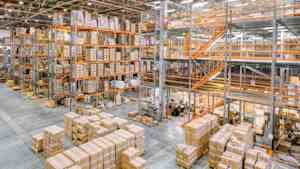
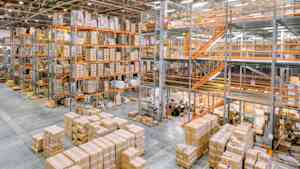
For high-velocity promotional periods, companies must accurately forecast demand, strategically position inventory and execute delivery flawlessly. This is particularly complex for categories like snacks and beverages, where direct-to-store delivery models are common. Managing shelf presence is important, as empty shelves mean consumers will switch to competing products or abandon purchases altogether. And this requires real-time visibility across multiple layers of the supply chain across different data sources and operational capabilities to act quickly.
Modern warehouse management systems, including SAP Extended Warehouse Management, provide the detailed visibility needed to track inventory across these multiple states. When paired with DSD-specific applications, such as SAP’s Last Mile Delivery solution, which optimizes driver routes, delivery schedules, and in-store execution, CPG companies can maintain shelf presence that drives promotion success. Sales execution tools, such as SAP’s Retail Execution offering in SAP Sales Cloud, allow field teams to audit stores and report on actual conditions. This helps headquarters get clear, accurate visibility of what is happening at the point of purchase.
How AI is changing CPG operations
Artificial intelligence is moving beyond experimental use cases to practical applications in CPG operations. In warehouse environments, AI-enhanced systems can optimize task management, improve forecasting accuracy and streamline returns processing. For supply chain planning, AI helps generate demand scenarios that account for the many variables affecting product movement.
SAP’s integration of Juul into integrated business planning software shows how conversational AI can transform planning workflows. Instead of navigating complex interfaces to access supply chain data, planners can ask natural language questions and receive immediate, AI-powered responses based on real-time information. This reduces friction in accessing insights and accelerates decision making during critical planning cycles.
Advanced warehouse operations are benefiting from AI agents that can enhance inventory risk analysis, optimize task management, and improve forecasting accuracy. These are not just faster versions of existing processes. Instead, they represent qualitatively different capabilities that can identify patterns and risks that human analysts might miss amid the volume and complexity of modern supply chain operations.
Revenue management, or determining optimal pricing and promotion strategies, is particularly well suited for AI assistance, because analyzing how different price points, promotion tactics, and positioning strategies interact across thousands of stores and products is complex beyond human analytical capacity. Machine learning can identify patterns and optimize decisions at a scale and speed that manual analysis cannot match. The AI capabilities being built into revenue growth management platforms promise to make promotion planning more sophisticated and more efficient.
Perhaps most importantly for CPG companies facing the productivity imperative, intelligent inventory management systems are using machine learning to predict delivery dates and provide real-time analytics for delivery decisions. Sales order fulfillment monitoring can anticipate fulfillment risks before they occur, enabling proactive intervention. These AI capabilities address issues such as product availability and reliable delivery during critical promotion windows, which are some of the biggest challenges in CPG operations.
But the most impactful AI applications in CPG are not necessarily the most visible. Rather than flashy consumer-facing features, the real value comes from incorporating intelligence into core operational processes. Incremental improvements in dozens of workflows turn into substantial competitive advantages over time.
The CPG shortage is not a temporary situation that companies can wait out. Margin compression and structural factors limiting pricing power reflect fundamental market changes. Trade policies will continue to evolve. Consumer behavior will continue to change. The companies that will emerge stronger will not just be the companies with the best products, but those that have built the most efficient, responsive operations.
John Dano is an industry advisor for consumer products at SAP.
Sponsored articles are content produced by a company that is either paying for the post or that has a business relationship with VentureBeat, and they are always clearly marked. Contact for more information sales@venturebeat.com.
<a href