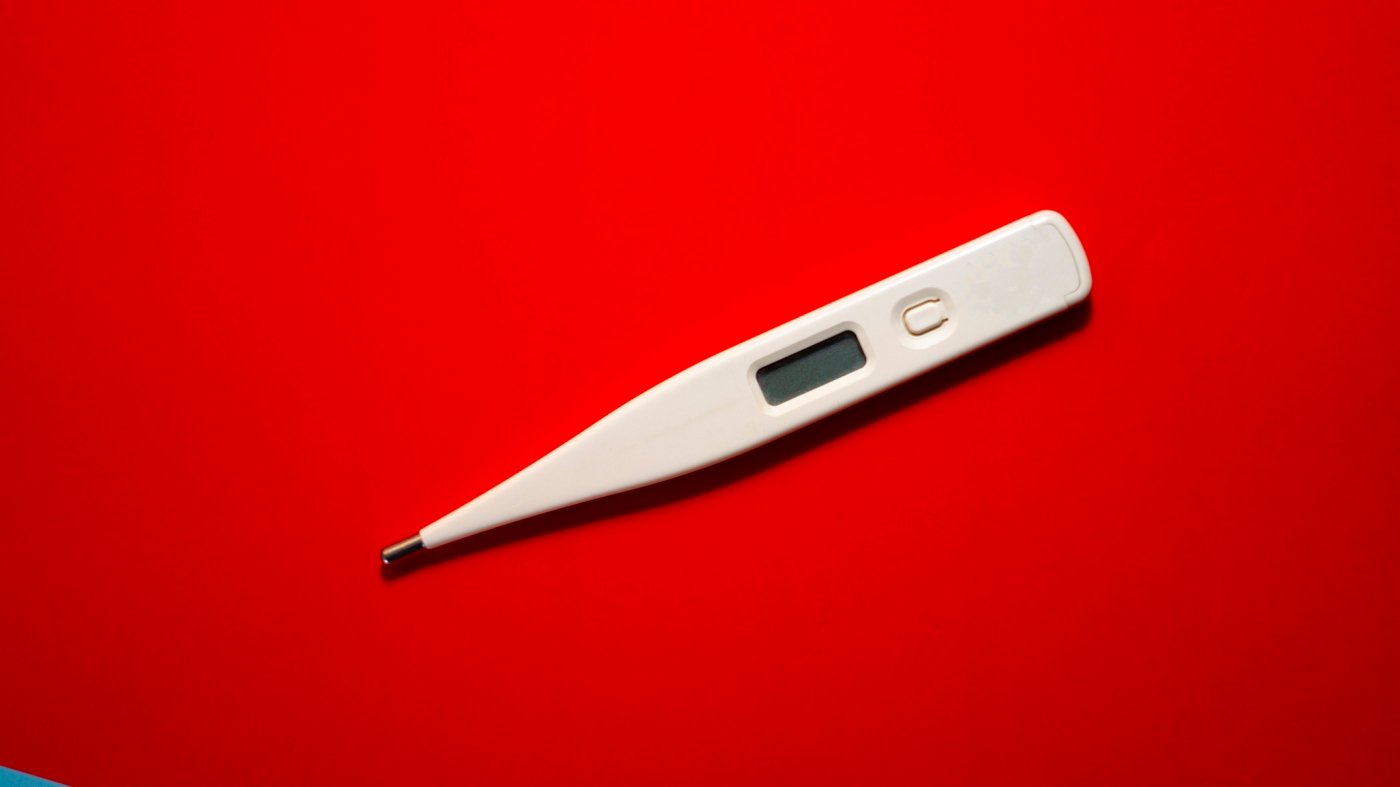

Fever is part of the immune system’s response to a pathogen, which is shared with many animal species.
Cavan Images/iStockphoto/Getty Images
hide caption
toggle caption
Cavan Images/iStockphoto/Getty Images
For centuries, the nature of fever – and whether it is good or bad – has been hotly debated.
In ancient Greece, the physician Hippocrates thought that fever had useful properties, and could relieve the patient of illness. Later, around the 18th century, many physicians regarded fever as a distinct disease, one that could actually cook the patient, and so should be treated.
These days, researchers understand that fever is part of the immune system’s response to a pathogen, which is shared by many animal species. And while evidence is accumulating that fevers can help clear up an infection, exactly how they help remains mysterious.
“There is a cultural knowledge that there is this relationship between temperature and the virus, but at the molecular level, we are quite uncertain how temperature might affect the virus,” says microbiologist Sam Wilson of the University of Cambridge.

There are two main ideas, he says. The heat of the fever itself could harm the virus, similar to Hippocrates’ hypothesis. Alternatively, heat is a means to an end, either motivating our immune systems to work better, or a regrettable but inevitable byproduct of fighting an infection.
“The fact that there were no definitive answers to these questions piqued my interest,” says Wilson. That interest led to a study published Thursday ScienceThis suggests – at least in mice – that high temperatures are enough to fight some viruses.
This conclusion was difficult to reach, Wilson says, because it is very difficult to separate the effects of fever from the immune response that typically accompanies it. “The stars had to align,” he says.
To test this question, Wilson and his colleagues first needed a pathogen. They agreed on bird flu, because birds tolerate heat more than humans.
Influenza A viruses that infect birds target their intestines, which are a few degrees warmer than the airways favored by human influenza viruses. “This means that bird flu is adapted to replicate at high temperatures, comparable to human fever,” says Wilson.
Researchers identified a part of the bird flu genome that helps the virus thrive in this hot environment, called PB1. They then inserted this heat-tolerant snippet into the human flu virus. This gave them two almost identical versions of influenza, a normal human one and a heat-tolerant one.

Those two strains allowed researchers to ask what impact this ability to replicate at different temperatures might have on disease. They needed an animal to test the question, and laboratory rats proved ideally suited.
“It just so happens that the mice don’t develop the same fever as influenza infection,” says Wilson.
So the team conducted a simulation by placing some mice at slightly higher temperatures. They then exposed the mice to either the normal human influenza virus, or a heat-tolerant version.
Under normal laboratory temperatures, mice infected with both strains became ill.
But when the team worked harder, a significant difference emerged. Mice infected with the heat-resistant strain became sick, but mice infected with the common strain appeared relatively safe, suggesting that the heat itself helped fight the flu.
“This study reinforces the idea that temperature alone is important and effective,” says Daniel Barreda, a microbiologist at the University of Alberta who was not involved in the research. But he says the study doesn’t rule out that fever also helps the immune system work better, which could be important for fighting viruses that aren’t as sensitive to temperature as influenza.
Joe Alcock, an emergency physician and researcher at the University of New Mexico, also praises the study. But he points out that we should not assume that fever works the same way in humans as it does in mice.
Still, Alcock says the study adds to the growing evidence that fevers evolved for a reason. As a physician trained by a health care system that often treats fevers immediately, this gives him pause.
“We treat fever like a knee-jerk reaction, giving medications like acetaminophen or Tylenol,” he says. Of course, treating fever is appropriate in many circumstances, because high temperatures can also damage human cells. But he says this should raise the question of when we should take Tylenol or ibuprofen when we have a viral cold.
“Is it possible that by taking Tylenol or ibuprofen for a viral infection, I am actually making it harder for my body to get rid of the infection?” Alcock says. “This is still an unanswered question.”


<a href