“I didn’t pack anything. Just my phone and my handbag. I thought if I didn’t go now, I’d never survive,” Zulu told DW.
Her story reflects that of thousands of women facing the persistent scourge of gender-based violence (GBV) in Zambia.
According to the 2024 Zambia Demographic and Health Survey, almost half of women there had experienced physical, emotional or sexual violence in their lifetime; However, experts warn that the real number is likely to be higher, as stigma and fear mean many cases go unreported.
GBV: millions still ‘trapped’
The fight against GBV is gaining momentum in Africa and indeed around the world. Zambia has developed a strong legal framework to combat GBV, including the Anti-GBV Act of 2011 and a National Action Plan on Gender-Based Violence. Yet, a gap remains between official policy and practice.
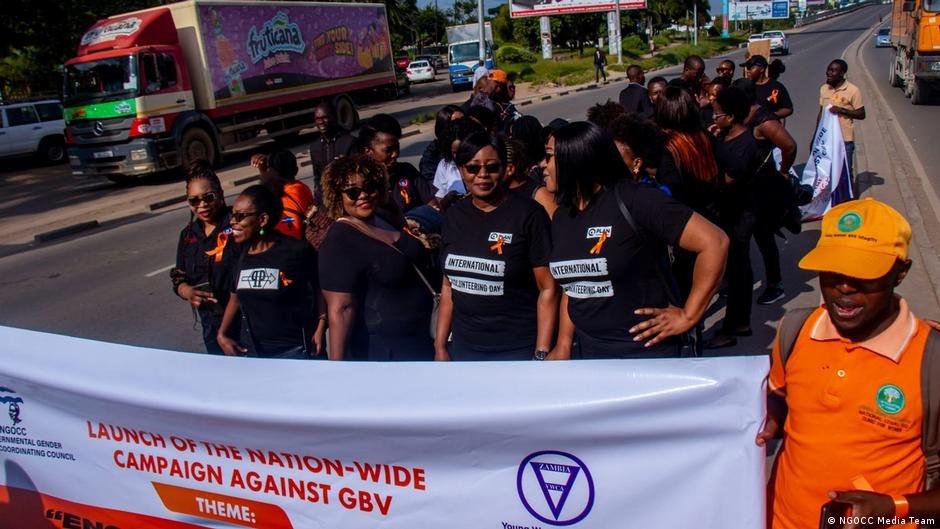
Anne Mwale-Anamela, executive director of the Non-Governmental Gender Coordinating Council (NGOCC), says the country is struggling with the underlying forces that fuel such violence:
“We may have strong laws, but if communities still believe that violence is a private matter or a normal part of marriage, survivors remain silent and trapped,” Mwale-Anamela explains from her office in Lusaka.
“GBV is deeply rooted in power, inequality and societal expectations,” she adds, adding that although awareness campaigns have improved public understanding of the issue, access to services remains unequal.
For example, many rural districts lack shelters, trained counselors, and legal aid structures. Transportation, staff shortages, and limited community outreach are also impacting police units due to lack of response time and survivor support, as well as the correct legal knowledge and resources to combat GBV.
These shortcomings leave many survivors with little choice but to return to abusive homes.
VP Nulamango calls for cultural change
For many years, reporting violence to authorities was considered only a last resort, but government officials insist they are committed to strengthening security systems.
“We know that many survivors fear being blamed or not being taken seriously,” says police spokesman Rae Hamunga, who acknowledges the challenges for officers in gaining public trust.
But the problem of GBV, he points out, doesn’t just affect adult women; More than three quarters of all GBV cases brought for criminal prosecution involve girls; Among statistics applicable to children and minors, almost a quarter of all criminal cases involve boys as victims.
“We cannot allow GBV to weaken our families and our nation,” Vice President Mutale Nalumango said in a recent speech, stressing that GBV undermines not only the safety of individuals but also the fabric of Zambian society.
“Therefore, it is important that women become empowered and the cultural norms and practices that oppress them are eliminated, thereby improving their status,” she said.
Male activists join the fight against GBV
However, activists argue that progress has been slow due to inadequate funding: shelters often have to rely heavily on donations, while psychosocial support services and legal aid are minimal.
To truly address the roots of the problem, advocates say harmful gender norms must be challenged; This is the focus of MenEngage Zambia, a movement working with boys and men to rethink traditional ideas of masculinity.
One of its longtime members, Golden Nchibinga, believes change must start at a young age: “If boys grow up believing that power means control, violence becomes normalized for them,” he told DW.
“We are teaching men that real power is empathy, responsibility and respect. Masculinity should never be a threat; it should be a source of security.”
MenEngage runs sessions in schools, churches and community centres, encouraging men to talk openly about identity, emotional well-being and healthy relationships.
Nchibinga says the response to the initiative has been encouraging, but long-term change requires sustained engagement and greater national visibility.
Reaching hearts and minds on digital platforms
Meanwhile, a new generation of young gender activists are increasingly turning to digital platforms to amplify the conversation.
Human rights and gender activist turned digital campaigner Angela Nyirenda uses Facebook, TikTok, Instagram Reels and acronym explainers to educate youth about GBV, its warning signs and the availability of local resources.
“The Internet is our megaphone,” he told DW. She highlights how these narratives can and do reach women in other parts of Africa.
“You can reach thousands of girls in minutes; girls who don’t attend workshops or live far from support services. We meet them where they already are: on their phones.”
However, the digital space is not always safe for activists; Nyirenda says she regularly faces online harassment, cyberbullying and sexual insults from people who oppose her work, or see gender equality as a threat.
“But silence protects the abuser more than the abused. If we don’t talk about it, nothing changes,” she says, reiterating her message.
Meanwhile people like Thandiwe Zulu have long joined people like Nyirenda: she now volunteers in community WhatsApp groups that provide emotional support, information about safe houses and guidance on how to document abuse or obtain protection orders.
“There are days I feel strong and there are days I don’t. Healing is not a straight line,” she admits, adding that she hopes her story can still help others.
“I want every woman to know that she is not alone. And (that) she deserves peace – real peace – no matter where she comes from.”
The voices against silence are getting louder and louder
For scholars like Charity Musamba of the University of Zambia, these emerging voices are essential – although deeper structural issues remain.
“GBV thrives in an environment where violence is normalized, where women’s autonomy is questioned, and where economic dependence traps survivors,” she explains.
“Ending GBV requires cultural reeducation. We must redefine what love, respect, rights and partnership mean within families.”
Musamba argues that lasting, transformative change requires sustained collaboration between government, civil society, traditional leaders, and the media.
But it can also be seen that change is beginning to take root: across Zambia, voices against gender-based violence are growing louder – from victims to policymakers, police to digital activists, all of them are reshaping the national conversation and pushing for a future where every woman and girl can live free from fear.
Edited by: Serton Sanderson
<a href