As Hong Kong mourns the victims of its worst fire in decades, the response to the disaster reveals how the semi-autonomous city maintains differences from mainland China — and how some of those differences are being exacerbated.
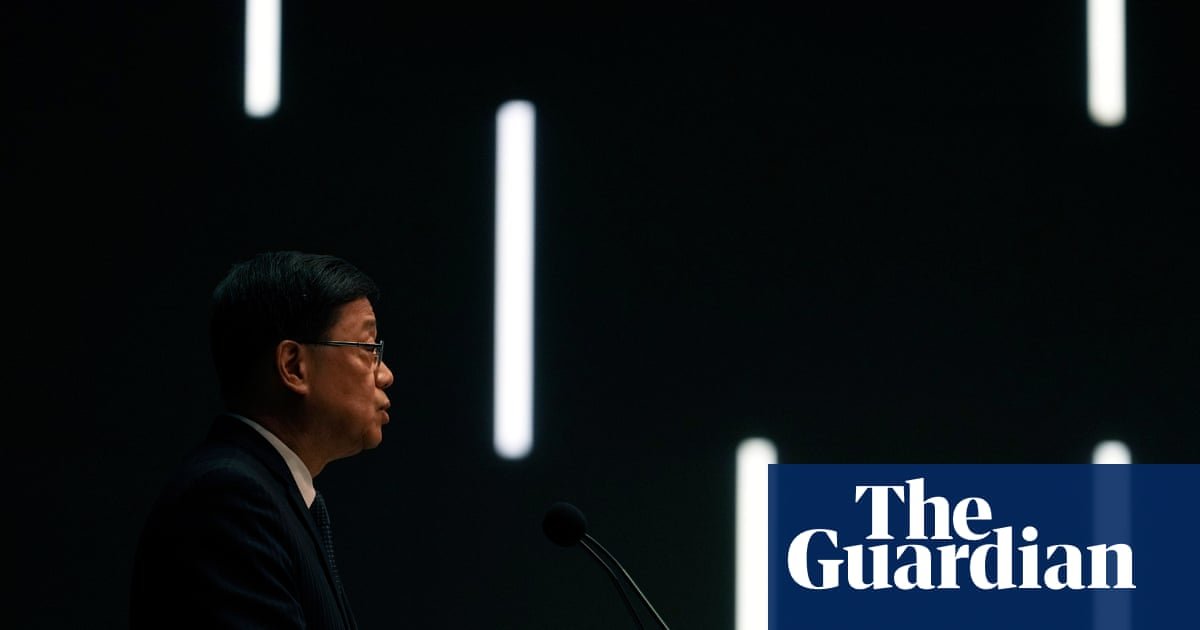
Hong Kong leader John Lee on Tuesday announced the formation of an “independent committee” to investigate the explosion that killed 151 people at the Wang Fuk Court apartment complex in Hong Kong’s New Territories.
Hong Kong has a tradition of independent, judge-led investigations into disasters, something that would never happen in mainland China, where the judiciary is controlled by the Chinese Communist Party (CCP) and public discussion of tragedies is strictly controlled.
But the crackdown following the 2019 and 2020 pro-democracy protests in Hong Kong, including the implementation of two national security laws, has led many legal experts to believe that Hong Kong’s judiciary is no longer independent.
Former Britain’s Supreme Court judge Jonathan Sumption wrote when resigning from Hong Kong’s final appeal court last year: “The rule of law is deeply compromised in any territory about which the government feels strongly.”
It’s safe to assume that Hong Kong’s worst fire in decades, which followed months of complaints from residents about the potential flammability of materials used in construction work, is something the government will feel strongly about. Authorities have already arrested 13 people on suspicion of murder in connection with the blast, including several people from a construction company. Till now no official has taken responsibility for this tragedy.
The death toll from the fire will loom over Sunday’s Legislative Council (Legco) election, which is equivalent to a general election in Hong Kong.
But where in previous years there had been vigorous campaigning by various political parties and a boisterous public debate between candidates, this year, for the second time following the pro-democracy protests, it will be a “patriots only” affair, with only government-approved candidates allowed to stand.
“Having eliminated all opposition parties, the government no longer fears that a large number of candidates could win seats in the Legislative Council who want to challenge the status quo and raise embarrassing questions during debates on bills supported by the Chief Executive,” said Jeffrey Wasserstrom, Chancellor’s Professor of History at UC Irvine and author of Vigil: Hong Kong on the Brink. “What is of concern now is something else that could be embarrassing: a small turnout.”
In 2021, the first time LegCo elections were held under “patriots only” reforms, turnout reached a record low of 30.2%. In 2016, voter turnout was 58.3%.
Refusing to vote is one of the only ways Hong Kongers can safely express their dissent against the government as other forms of protest have been criminalized. Over the weekend, Miles Kwan, a student, was arrested over a petition that demanded accountability from the government over the fire. Local media reported that two other people had been arrested.
“Before the national security law, just speaking out would have no impact on people,” Wasserstrom said.
However, in mainland China, there are no major elections of any kind – patriotic or otherwise – that citizens can boycott.
It is impossible to imagine that China’s leader Xi Jinping would attend an unscripted press conference held by Li on Tuesday. An AFP journalist asked: “You have talked about taking Hong Kong from chaos to order and from order to prosperity. And yet this prosperous society allowed 151 people to burn to death. Can you tell us why you deserve to keep your job?” Such a question would never reach Xi’s ears on a public platform.
Similarly, although Hong Kong’s national security laws have done much to constrain independent media, there is still a more open information landscape there than in mainland China, partly because Hong Kong does not block Western social media platforms and Google.
Last week, an article published in Chinese media about the “hidden dangers” of mainland China’s cities following in the footsteps of Hong Kong’s high-density housing model was removed from the Internet.
The most direct comparison to a recent tragedy in mainland China is the Urumqi apartment fire in 2022, which killed at least nine people and led to mass protests across China against the strict zero-COVID measures in place at the time, which were believed to have prevented people from leaving the building. Those protests, known as the White Paper Movement, became one of the biggest challenges to CCP rule since the Tiananmen protests of 1989 more than 30 years ago. The Chinese government has tried to erase the 2022 and 1989 protests from public memory. Authorities will try to do the same in Hong Kong, but are unlikely to be as successful.
Additional research by Lillian Yang
<a href