Daniel Wittenberg,BBC England

 reuters
The families of some of those killed in the Hillsborough disaster fear they could once again be denied full accountability as a long-delayed report into police conduct around the stadium disaster is due to be published on Tuesday.
Several people who worked on the Independent Office for Police Conduct (IOPC) investigation – including a former director – have told the BBC that they doubt the report will provide all the answers that survivors and bereaved relatives were promised.
Some have warned that this could lead to Hillsborough being accused of yet another cover-up.
The families have also criticized the length and cost of the investigation – which is the largest of its kind ever conducted in England and Wales.
‘People deserve more’
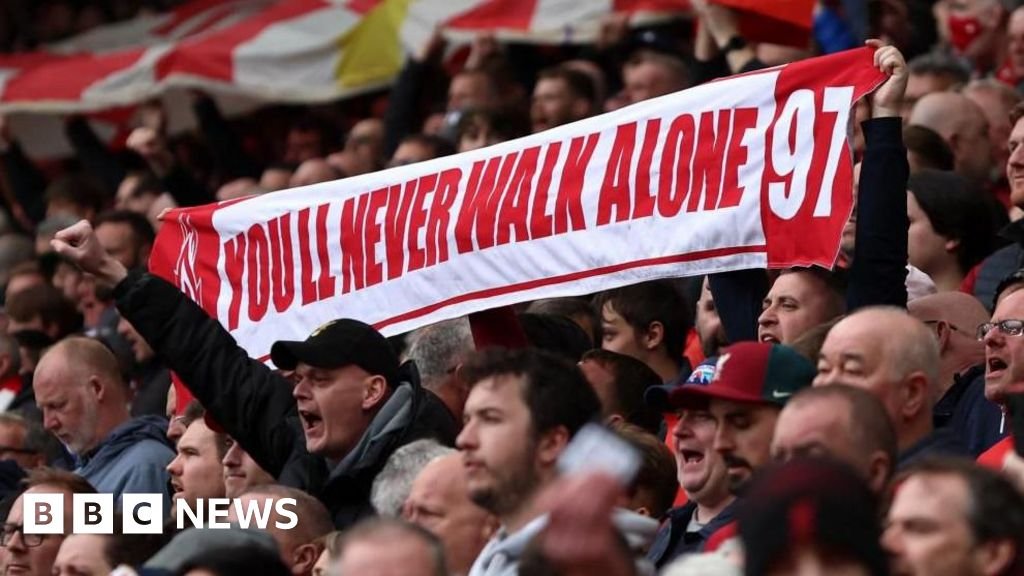
The police watchdog has spent more than 13 years investigating the actions of South Yorkshire Police and other forces following the 1989 disaster in which 97 Liverpool supporters were killed during an FA Cup semi-final at Sheffield Wednesday’s Hillsborough ground.
The IOPC had planned to publish its full report – which BBC News understands runs to several thousand pages – but will now release a “more focused” 400-page version.
It said the change was due to “concerns” from survivors and relatives about the sensitivity of some material and was intended to avoid undermining previous inquiries.
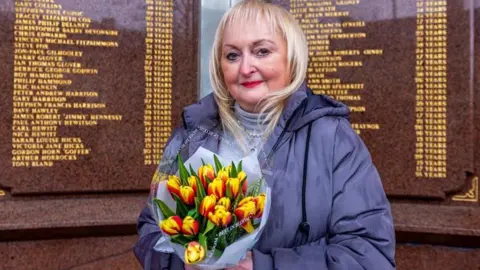
Jenny Hicks, whose teenage daughters Sarah and Victoria died in Hillsborough, said she would have wanted the family to see the lengthy report before making any decisions about publication.
“I’m not expecting any big revelations,” she said. “I am very disappointed that we are not getting a full report.
“I would have loved to see something that took 13 years to build.”
Some insiders said they believed the process was hampered by internal disagreements, overlapping inquiries and a lack of momentum.
Mike Benbow, who previously led the inquiry for five years, said: “The inquiry was partly about trying to restore trust and confidence in the judicial process which had let families down for many years.
“It remains to be seen whether we have achieved closure for anyone.
“After 13 years, the people deserve a report of more than 400 pages.”
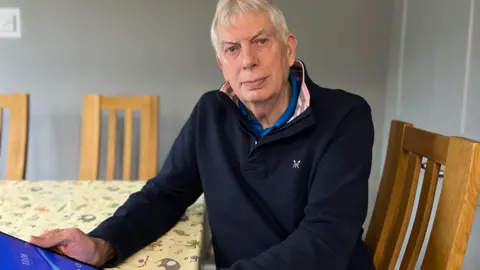
Another insider, who did not want to be named, said: “It would be the equivalent of looking at a house through a keyhole.
“It won’t tell you anything at all. It will just be an executive summary and a timeline of what happened.”
The IOPC said the full report will be housed in the National Archives and the transfer will begin next year, although no time frame has been set.
The IOPC investigation ran alongside Operation Resolve, a criminal investigation focused on the day of the disaster.
Both were set up in 2012 following the revelations of a widespread cover-up which found police leaders spreading falsehoods blaming Liverpool fans and hiding evidence of their own failings.
Officials promised a new era of transparency.
‘We have to succeed’
At the time, families bereaved by the disaster – and thousands of people who survived it – were daring to feel optimistic for the first time in more than 20 years.
The investigators were aware of the importance of their responsibility to correct the mistakes of the past.
In 2013, Deborah Glass, then vice-chair of the IPCC – the predecessor of the IOPC – told the BBC that she hoped the investigation could be completed within two years.
He said, “Hillsborough has a history of failed investigations by other bodies, which produced results that people had no confidence in. We can’t get any more than that.”
“We need to conduct the final definitive investigation here in Hillsborough so that the next generation is not still looking for answers. We have to succeed.”
Analysis of accounts by the BBC revealed that more than £150 million has been spent on the IOPC and Operation Resolve investigations.
This included over £56 million on IOPC staff, which reached approximately 200 staff, at least £10 million on accommodation, with dedicated offices in Warrington, and £18,000 of IOPC spend per year on stationery.
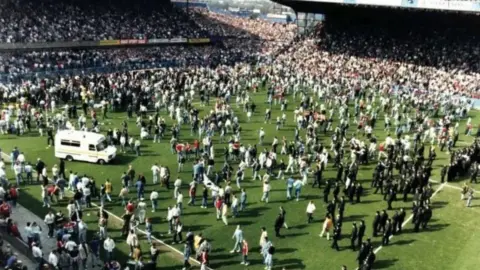 Hillsborough Inquiry
In the early years of the investigation, teams faced practical and technical challenges.
On a visit to the archive in 2016, the BBC saw the original police notebooks kept for 25 years in the lock-up.
Some were so neglected that they had to be cleaned with rat feces before they could be analyzed.
Viewing the evidence on VHS tapes and floppy disks required revived computers of the 1980s and modern facial-recognition equipment had to be used to track fans’ movements frame by frame.
The scale was unprecedented and there was a sense of purpose. Yet, 13 years later, the optimism felt by survivors and families has evaporated.
After the criminal trial ended without a significant conviction and the acquittal of police commander David Duckenfield, many bereaved relatives began to lose faith in the process.
Many people told the BBC that they thought the IOPC investigation made no sense.
They knew that all the police officers involved had either retired or died. Even if they are found guilty of misconduct, no penalty can be imposed.
“I hope it won’t be a waste of taxpayers’ money,” Ms Hicks said.
“We’ve just had the budget and people are struggling. Perhaps the money would have been better spent on the NHS, or somewhere else it is desperately needed.”
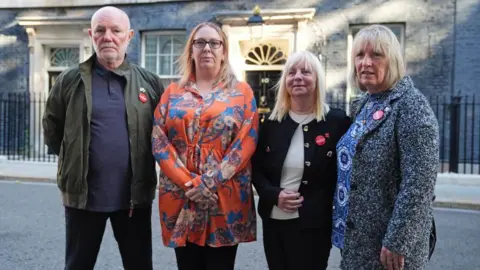 PA media
Charlotte Hennessey was only six years old when her father, James, was killed in the disaster.
He said that the length of the investigation, as well as the original cover-up, has resulted in Hillsborough fearing for his adult life.
“The process has been extremely long and I have no doubt that it will only lead to disappointment,” he said.
“We want to be able to live our lives but we keep getting pulled back into it.”
He added: “There’s no empathy for my own mental health, no compassion for how distressing the outcome can be.”
Ms Hennessy also feels uneasy about the cost of such a long-term investigation.
She said, “You can’t put a price on my father’s life but I would never want public money to be used like this. It is an appalling waste.”
difficult to stomach
Families received the full report on Monday, although those who filed complaints were informed of the results in advance.
The IOPC has not upheld several cases, citing lack of evidence.
This has been difficult to digest for complainants, who felt they had read much of the evidence in the Hillsborough Independent Panel report in 2012, which exposed the cover-up, and who heard much of it at the inquiry that followed.
For them, the effect has been that justice has been diverted.

Ms Hennessy complained of gross police negligence when the 2016 Hillsborough inquest found her father could have survived with better emergency medical care.
He has now been informed that the IOPC did not find any case to answer.
“I’m really disappointed,” she said.
“They’ve had a decade to write this and I don’t think it’s worth the paper it’s written on. No amount of reports will change the facts.”
‘Hell and back’
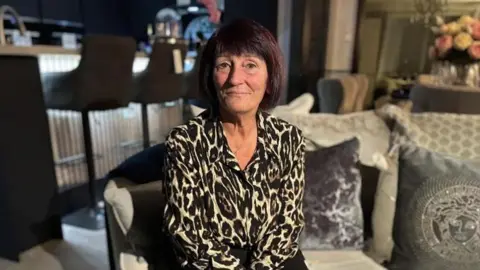
Debbie Matthews, whose brother Brian was murdered in Hillsborough, filed two complaints alleging officers fabricated evidence and made false statements.
He said one was not justified while the other was considered beyond the scope of investigation.
“We’ve already been through hell and now it feels like they’re kicking us again,” he said.
“We are really disappointed. Our mental health is being affected really badly because of this.”
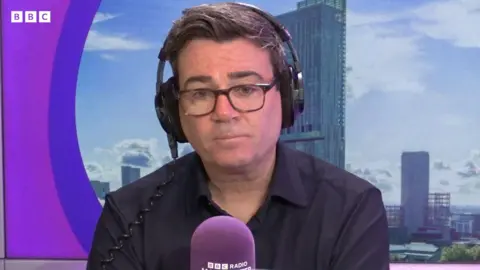
Andy Burnham, the Merseyside-born mayor of Greater Manchester, who was culture secretary when the fresh Hillsborough investigation began, said he hoped senior police officers would be held to account in a timely manner as a result of the report.
“The operation we worked on established the truth about Hillsborough… that there was a failure of police control on an unsafe ground,” he told BBC Radio Manchester last week.
“What it has never achieved is personal accountability for those officials who covered up the matter and attempted to shift the blame to Liverpool supporters.”
The publication of the report comes as the Public Office (Accountability) Bill – widely known as the Hillsborough Law – is moving through Parliament.
The purpose of the law is to ensure that victims of major incidents have greater transparency and accountability in the future and that public bodies have a legal duty to be truthful and co-operate fully with investigations.
The bill has the support of Sir Keir Starmer, with Ms Hennessy saying he had personally promised her it would be implemented.
Mr Burnham has also renewed his call for a permanent victim advocate body to support bereaved families in holding institutions to account.
Many of those who once felt hopeful now view the IOPC’s findings with a sense of resignation.
The families who celebrated the publication of the independent panel’s report and cried with joy after the inquiry’s verdict in 2016 felt they were reaching the truth, but they also wanted justice and accountability.
An IOPC spokesperson said: “We share the despair of the survivors, the bereaved families and all those who have campaigned for so long for answers – and we have told them, they deserve better.
“Our investigation is part of very lengthy and unprecedented processes.”
<a href