

Learn about the dangers of keeping dogs outside in cold weather and essential tips for keeping them safe and comfortable during the winter.
A large cold front is moving through the Great Lakes region, bringing heavy snowfall to some areas, high winds and hurricane warnings across the Great Lakes, as well as the threat of storm surge on Lake Erie – an event that could leave shoreline locations inundated with lake water.
“This is going to be one of the strongest storms we’ve had in some time, with water rises of 3 to 4 feet from the western basin of Lake Erie eastward,” said David Marsalek, a meteorologist with the National Weather Service in Cleveland.
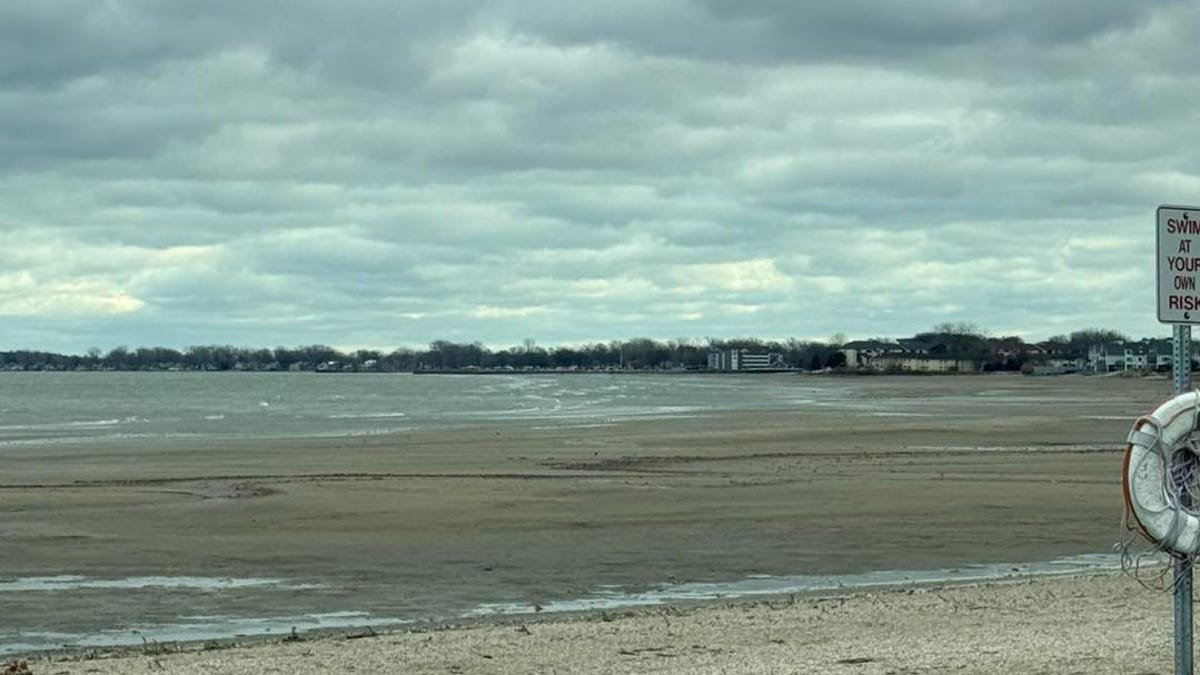
Jet Express Ferries to Put-in-Bay, Kelleys Island and Cedar Point, based in Port Clinton, Ohio, posted photos on its Facebook page on Wednesday, Nov. 26, showing that Lake Erie’s waterline has receded significantly, leaving nothing but wet sand where the lake once was.
The forecast calls for gale force winds of 35 to 40 knots or 40 to 46 mph on Lake Erie. Marsalek said the winds are out of the southwest, which is favorable for moving water out of western Lake Erie.
“When you look at Lake Erie and how it’s oriented, it’s west-southwest to east-northeast,” he said. “Essentially, the strong wind is pushing water from the western basin of the lake to the eastern basin.”
A low water advisory is in effect on western Lake Erie until 4 a.m. Friday, November 28.
“It’s of any shipping interest,” Marsalek said. “Depending on how deep a vessel requires, water level drop may be an issue.”
Meanwhile, rising water in eastern Lake Erie is expected to cause waves as high as 24 feet in Buffalo.
Jay Austin, professor of physics and astronomy at the University of Minnesota-Duluth, has studied water displacement and seiches on the Great Lakes.
“The effectiveness of wind in creating these large coastal displacements depends on how deep the lake is,” he said. “The risk is higher in shallow lakes than in deep lakes like Superior or Ontario.”
The pushing of water from one side of a closed body of water to the other, and then its return, can sometimes create a seiche (pronounced “sesh”) – which creates a large wave on the shore with rapidly returning water, like water spilling into a bathtub. On June 26, 1954, a seiche on Lake Michigan produced a 10-foot-high wave that swept eight people to their deaths off a pier in Chicago.
But Marsalek said Cech is not expected given the current weather.
“We expect the winds to gradually subside and change direction over time,” he said. “It will take a while for the water to return to the western basin of the lake.”
Contact Keith Matheny: kmatheny@freepress.com.
<a href=