
 BBC
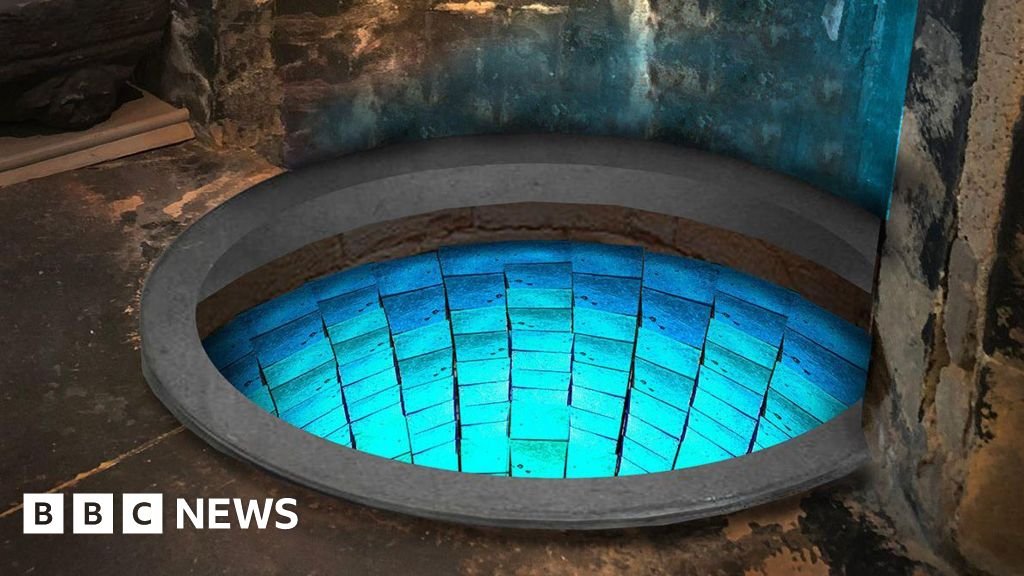
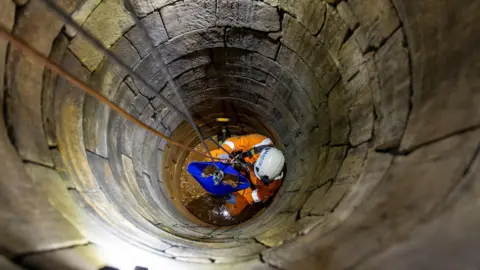
BBCAn ancient well buried in the sacred crypt of a historic Glasgow church has been excavated and transformed into a major art project, the first the public has seen it in living memory.
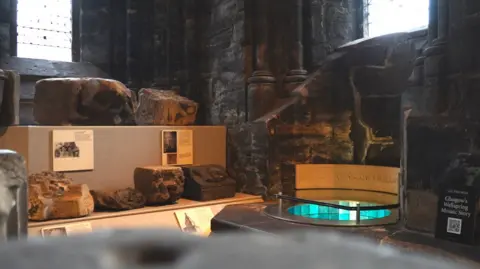
This well has been hidden for centuries in the basement of Glasgow Cathedral.
It was discovered in October by archaeologists led by Professor Stephen Driscoll of the University of Glasgow.
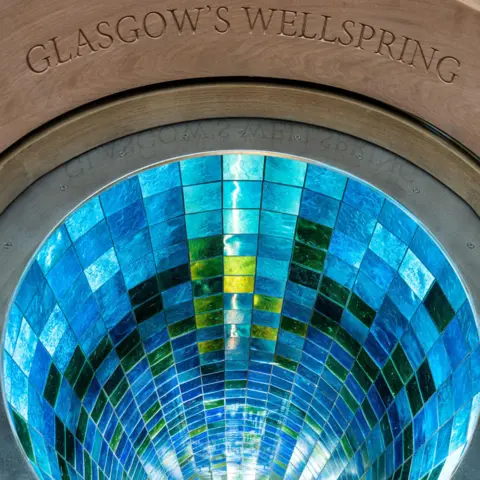
It has now been enhanced by a stunning light mosaic and will be the focal point of a series of concerts and events to celebrate 850 years as the city of Glasgow.
 alasdair smith
Long before Glasgow became a city, the site of the well was a place of deep spiritual significance.
It is believed that this is where St. Kentigern, also known as Mungo, set up his cell and was baptized in the waters of the Molendinar burn below.
The natural well was later incorporated into the walls of Glasgow Cathedral, forming the heart of the Kentigern Shrine in the basement.
Over the centuries, the holy site grew in prominence and remained one of Britain’s major pilgrimage sites for more than 300 years.
The well not only dates back as a holy site of Christianity, but also symbolically and literally marks the starting point of what would become the city of Glasgow.
 Approxima Arts/Chris Leslie
The mosaic installation, simply called The Well, has been brought to life by the Approxima Creative Collective team, including Scottish artist Joanna Castle.
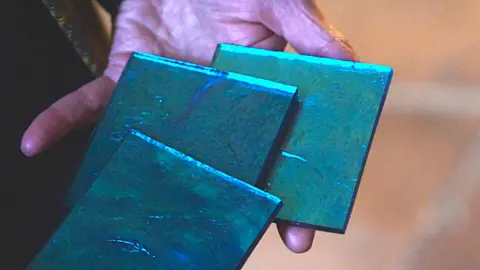
It is made of more than 1,000 hand-blown stained glass tiles, each inlaid with gold leaf, mirroring the colors of the cathedral’s stained glass windows.
He explained how tiles made in the Orsoni Venezia 1888 kiln in Italy were actually fired from back to front to give them their desired colors.
“I had a lot of these glass plates in my studio and this blue-green is actually the back side of the gold leaf plates.
“So I thought, OK, I’ll ask Orsoni to provide us with a range so we can get this transition from light to dark at the bottom of the well.
“When I talked to them they said, Oh Joanna, these are the backs. We don’t make it specifically so the front is what they’re working to create and the back is incidental in some ways.”
Joanna went to Venice to sift through boxes and boxes of gold leaf mosaics to find the right color.
Creative director Angus Farquhar said the well was a powerful but neglected part of Glasgow’s story.
He said, “I saw that little well in the corner that had no signage and it had just been forgotten and I thought wouldn’t it be incredible to bring it back as a gift to the people of Glasgow.”
He said that in the past wells had been linked to poisoning and disease and that many public wells in Glasgow had been capped and then forgotten.
Therefore the digging of the well was an important moment.
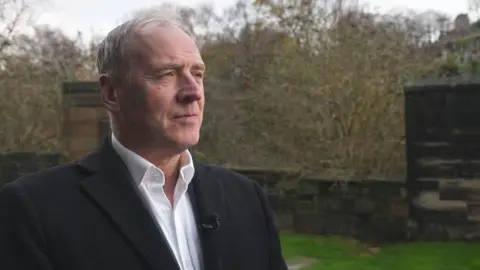
He said: “It hadn’t been touched for 70 years and we found coins, rings, thimbles, little pieces of shell from all over the world with people’s names written on them and we realized it was still used as a little point of blessing, even though there was no sign there and it was dark.
“The idea that we could bring it back became really exciting and just two weeks ago with the support of Historic Environment Scotland we pumped out the last of the water and cleaned the bottom of the well where we had dug and the water was clear again for the first time in possibly a century or two.
“That was the happiest moment for me in this project, other than seeing the mosaic, because it felt like we brought something pure back.”
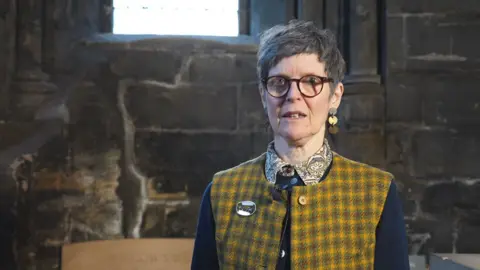
The well’s rededication will be celebrated with concerts next weekend.
Visitors can also pre-book a timed slot to visit the well and see the new mosaics in the crypt.
The project is one of a number of events planned in 2025 to celebrate Glasgow’s 850th birthday.
Lord Provost of Glasgow, Jacqueline MacLaren, said: “This remarkable project not only honors our past, but breathes new life into a site of deep significance in the story of our city, blending archaeology, contemporary art and music in a celebration for all Glaswegians and visitors.
“This project will serve as a lasting legacy of Glasgow 850 and one that can also inspire our future.”
<a href