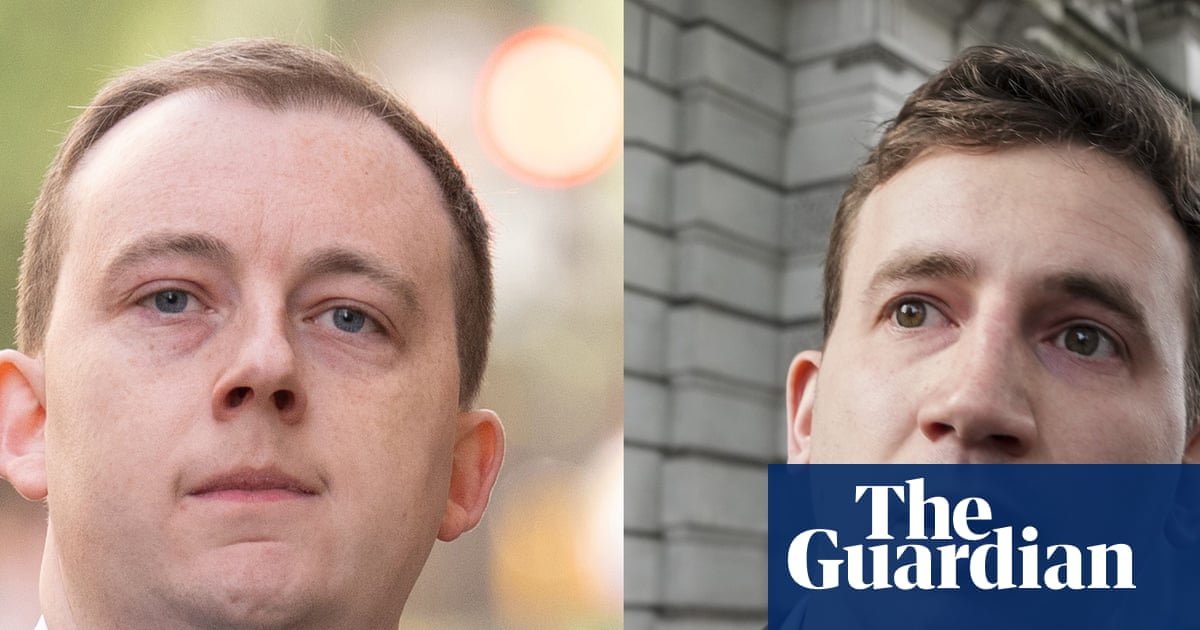
Parliament’s security committee has criticized prosecutors for dropping their charges against two men accused of spying for Beijing, concluding in a damning report that their handling of the case was “shameful”.
MPs said the process was “beset by confusion and misplaced expectations” and “inadequate” communication between the government and the Crown Prosecution Service (CPS) contributed to the collapse of the trial, while “numerous opportunities to correct course were missed”.
The report concludes the committee’s six-week investigation into the failed high-profile trials of former parliamentary researcher Christopher Cash and teacher Christopher Berry, who faced spying charges.
The CPS unexpectedly dropped its charges on 15 September, which were brought under the Official Secrets Act of 1911, saying the government had not provided sufficient evidence that China posed a “threat to UK national security”.
In its report published on Tuesday night, the Joint Committee on National Security Strategy (JCNSS) said the episode had exposed “systemic failures” that had led to a “crisis of public trust” and fueled “allegations of a conspiracy at the highest levels of government”.
The JCNSS said: “The evidence we found shows that the process is beset with confusion and misplaced expectations. Some aspects have been poorly described at best.”
However, it said it found no evidence of a “coordinated high-level effort to thwart the prosecution”, rejecting claims from senior Conservatives that there was political interference.
The JCNSS questioned the prosecutors’ judgment at several stages of the processes, and concluded that the CPS “could have exposed or escalated the issues much earlier on false expectations”. The committee said:
-
It was “unclear” why the CPS concluded that the July 2024 ruling “changed the legal landscape so significantly” in relation to the Bulgarian spy ring that they had to change their approach.
-
It was “surprised” that the CPS considered the government’s evidence insufficient to put to the jury when it described how China “posed a range of threats to the national security of the United Kingdom” that were “similar to a more general active threat”.
-
The government did not have “clear enough processes to escalate issues where there was a lack of clarity” and the “level of senior oversight” of cabinet ministers and national security advisers was insufficiently strong.
The findings put pressure on the CPS, which said it did not have the evidence needed to proceed further. This claim has been challenged by senior lawyers including former Director of Public Prosecutions Ken MacDonald and former Supreme Court judge Jonathan Sumption.
The committee said, “We regret that the DNSA’s (Deputy National Security Adviser) common sense interpretations of the words given in the witness statements were clearly not a sufficiently strong basis to meet the evidentiary requirements of the Crown Prosecution Service.”
The Director of Public Prosecutions for England and Wales Stephen Parkinson and Deputy National Security Adviser Matthew Collins, who were government witnesses in the case, were among a number of senior figures who gave evidence to the JCNSS inquiry in October.
Attorney General Richard Harmer and Chief Secretary to the Prime Minister Darren Jones faced questions about whether ministers or special advisers had a hand in the case being dropped.
Days before prosecutors withdrew the charges, Tory politicians raised questions about a meeting of senior mandarins and Keir Starmer’s national security adviser Jonathan Powell on September 1 to discuss the implications of the trial.
But the committee concluded that prosecutors had decided they did not have the necessary evidence more than a week before the meeting.
It said it found no evidence of “undue influence or deliberate efforts to hinder the prosecution” and concluded that Harmer “acted with constitutional propriety” even though he was “not active” in assisting prosecutors in the case.
A government source said: “The Tories spent weeks making baseless allegations which have proven to be completely false. The reality is that their reckless disregard for national security has left unacceptable loopholes in the law.”
The committee warned that it would be wrong to blame the failure of the process solely on the outdated Official Secrets Act, as some ministers have done.
In their recommendations, MPs urged the government to improve its process for communicating with the CPS and to better support deputy national security advisers.
He urged the Cabinet Office and security services to work with the CPS to formalize principles for dealing with sensitive cases within the next six months.
He also recommended setting up a new rule for formal case “conferences” within 30 days of such allegations being made to avoid such “lack of clarity” on evidence in the future.
A CPS spokesperson said: “We recognize the strong interest in this matter. We will carefully review the recommendations and work with partners to identify where improvements can be made.”
“Our decisions are made independently and based on the law and evidence, and this principle remains at the heart of our work.”
A government spokesperson said: “We welcome the committee’s report which makes clear that allegations of interference in this case were unfounded and untrue.
“The decision to drop the case was taken independently by the Crown Prosecution Service. We are disappointed that this case did not reach trial.
“Protecting national security is our first duty and we will never waver in our efforts to keep the British people safe.”
<a href