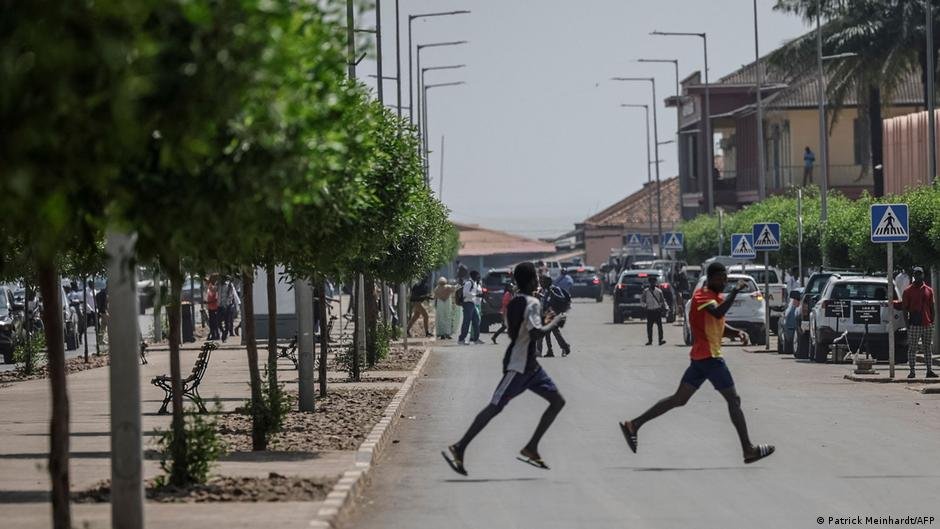
Soon after, a group of army officers held a press conference saying they had seized power and ousted President Oumareau Sissoko Embalo after the first round of general elections on Sunday.
Officials said they had formed a “higher military command for the restoration of order” and would remain in charge until further notice.
Authorities said they had suspended the electoral process, claiming it was necessary to clarify the situation before returning to constitutional order.
He also said he had temporarily closed the country’s borders and airspace and imposed a curfew.
Presidential Guard and soldiers from an elite gendarmerie unit manned hastily set up checkpoints in the capital, Bissau, and the sounds of gunfire reportedly subsided by the afternoon.
Results are pending after Sunday’s voting
The impoverished West African country was awaiting the results of the election, where both the incumbent and the main rival have already claimed victory.
Official results of Sunday’s election, which were largely peaceful, were due to be published on Thursday.
But on Tuesday, incumbent President Umaro Sissoko Embalo and opposition candidate Fernando Dias da Costa both claimed victory. This comes despite the country having a two-round electoral system, with a runoff vote being perhaps the most likely scenario if no one among multiple candidates can win more than 50% of the vote.
Since independence in 1974, Guinea-Bissau has seen four successful coups and several attempts, one of which the government reported last month amid the election campaign.
The former Portuguese colony abruptly expelled journalists from major Portuguese-language news outlets such as the LUSA news agency in August this year ahead of the vote.
Many more to follow…
Edited by Jennifer Cimino Gonzalez
<a href