
 AFP via Getty Images
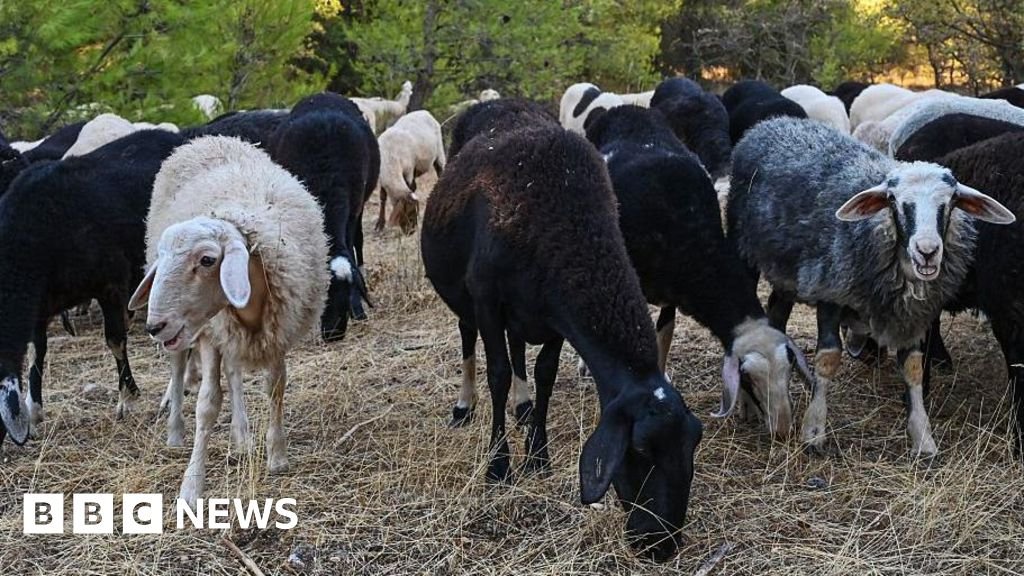
Millions of sheep and goats are being slaughtered in Greece due to the spread of an infectious disease. This may affect the production and export of the country’s famous feta cheese.
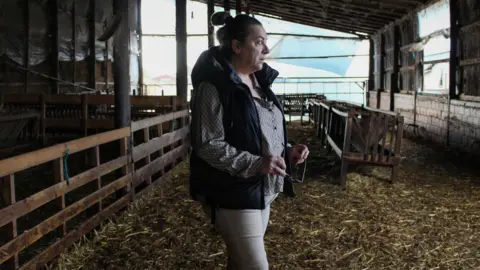
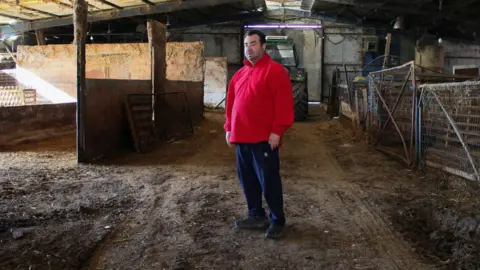
Anastasia Siortou walks through her deserted farm on the outskirts of Karditsa, a town in the Thessaly region of central Greece.
There is an eerie silence at the place where 650 sheep were being reared.
On November 12, veterinary officials killed all the animals after cases of smallpox were detected in sheep and goats.
“There’s another farm two kilometers away. They had cases of pox, but they hid it,” she says, adding that she believes her herd has contracted the disease.
Ms Siortou is a veterinarian herself and has expanded the farm her father built.
Losing animals means financial ruin – in addition to cattle lost on the farm, sheep’s milk, which is sold for the production of feta cheese, is often called the “white gold” of Greece.
However, Ms Siourtou speaks of the emotional blow more than the financial blow. “I was here the day the sheep were killed. It’s so cruel, I felt I failed to protect them.”
Sheep and goat pox is a viral infection. The first case was detected in northern Greece in August 2024 and the disease has since spread to many regions of the country.
According to the latest data from the Ministry of Rural Development and Food, a total of 1,702 incidents were recorded till mid-November.
Finding even a single case on a farm means the entire herd must be culled for preventive reasons. About 417,000 sheep and goats have been disposed of so far, about 4–5% of the previous total.
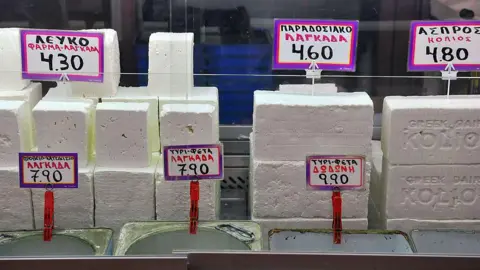
About 80% of Greek sheep and goat milk goes into making feta cheese, which has a protected designation of origin within the European Union.
This means that while a similar cheese can be produced elsewhere in the EU, it cannot be called feta. The UK continues to respect this 2002 decision after Brexit.
Last year, Greece exported €785 million ($909 million; £690 million) worth of feta, according to data from the Greek Exports Association. Of this, €520m went to fellow EU countries and €90m to the UK.
Feta must be made from at least 70% sheep’s milk, with the rest from goat’s milk.
Smaller dairies say they are already having problems sourcing sheep milk, meaning there could be a potential shortage of feta in the future. Although prices have not yet increased, that will be the outcome if the outbreak is not ended.
“The limited amount of milk available increases production costs and makes it more difficult to maintain the current volume (of feta) on the market,” says Dimitris Gougoulis, professor at the Faculty of Veterinary Medicine at the University of Thessaly.
Another sheep farmer, Tasos Manakas, near Karditsa, saw his 873-strong flock decimated on 9 October.
Now he spends his days sitting in a small room in his barn. “The shop is closed,” he says bitterly.
Mr. Mankas passes empty metal feeders and milking rooms that are now gathering cobwebs. “I would come in the morning, listen to the animals bleating, pet them.
“I was here the day they were killed. If you cut me that day, I won’t bleed.”
 AFP via Getty Images
He is thoughtfully flipping through a government document full of numerical tables.
Affected farmers are being offered compensation of between €132 and €220 per sheep, depending on its age. Farmers respond that the payments are too little to cover their losses.
The government has also been criticized for its blanket response to the outbreak. A national scientific committee for the management and control of sheep and goat pox was established only in late October – a full 14 months after the first case was reported.
Meanwhile, no lockdown zones have been established in areas where the first cases were recorded until the end of summer 2024, and critics say the state veterinary service is sorely lacking.
Also, farmers have been arrested for illegal transportation of animals in trucks in areas considered disease-free. And local reports say infected animals have been buried in fields without notifying authorities.
A spokesperson for the Ministry of Rural Development and Food told the BBC: “We implemented the sheep-pox eradication plan from the beginning, as provided for in the European Protocol.
“The result was to reach almost zero cases in the spring of 2025. The decision to establish the scientific committee in October 2025 was taken under the pressure of one factor – many farmers did not follow biosecurity measures, resulting in an explosion in cases.”
Greece’s Supreme Court has now ruled that prosecutors must investigate possible violations of biosecurity measures, which many critics say is too late.
Across the country, farms are still run under 1960s standards – tin huts, walls made of baked mud or cement bricks, and no fences.
The BBC visited one such farm on the outskirts of the town of Larissa in Thessaly. Two dead lambs were lying on the ground.
The owner insisted that there were no cases of smallpox on his farm. He refused permission to take photographs. He says, “Some animals have lumps on their chests. It’s not smallpox, but no one will believe me.”
Sheep and goat farmers in Thessaly are demanding approval for the mass vaccination of their herds, saying they are similar to how the problem is dealt with in Bulgaria and Turkey.
Such vaccinations are allowed in emergencies under EU rules, and farmers have been putting a lot of pressure on the government to request vaccines from the Commission’s available stocks.
However, the Greek government responds that mass vaccination could lead to Greece being classified as an endemic country for the diseases, which would lead to a ban on exports of sheep and goat milk, and especially feta cheese. Greek officials also emphasize that there is currently no certified vaccine against sheep pox.
Professor Gougolis points out that existing older vaccines are effective in countries where pox is endemic, but “are not a tool for eradication (of the disease)”. “They do not completely prevent infection, and the virus may continue to spread within the vaccinated population.”
Yet the situation now seems to be going out of control.
Members of the National Committee for the Management and Control of Sheep and Goat Pox recently told journalists that about one million illegal vaccinations may have been carried out by cattle farmers in different parts of the country. This distorts the epidemiological picture and makes disease control even more difficult.
But many cattle farmers are angry with this perception of the officials. They say this is an arbitrary calculation and accuse the scientific committee of endangering feta exports.
Haris Tsekliotis, a farmer in the village of Rizomilos near Volos, listens to all this with deep concern. An infection was found on his farm, leading to 700 sheep being killed as a precaution.
It was the second time his farm was destroyed, following devastating floods in Thessaly in 2023.
“It’s extremely harsh,” he tells the BBC as he walks between his sheep’s empty pens.
All around are bales of hay meant for sheep to eat, now left unused in the farmyard and soon to rot.
Mr. Seskaliotis is not the type of farmer to sit back and count his wounds. “I am thinking of setting up a new unit for fattening calves with my son,” he says. “We have not learned anything except herd rearing.”
<a href