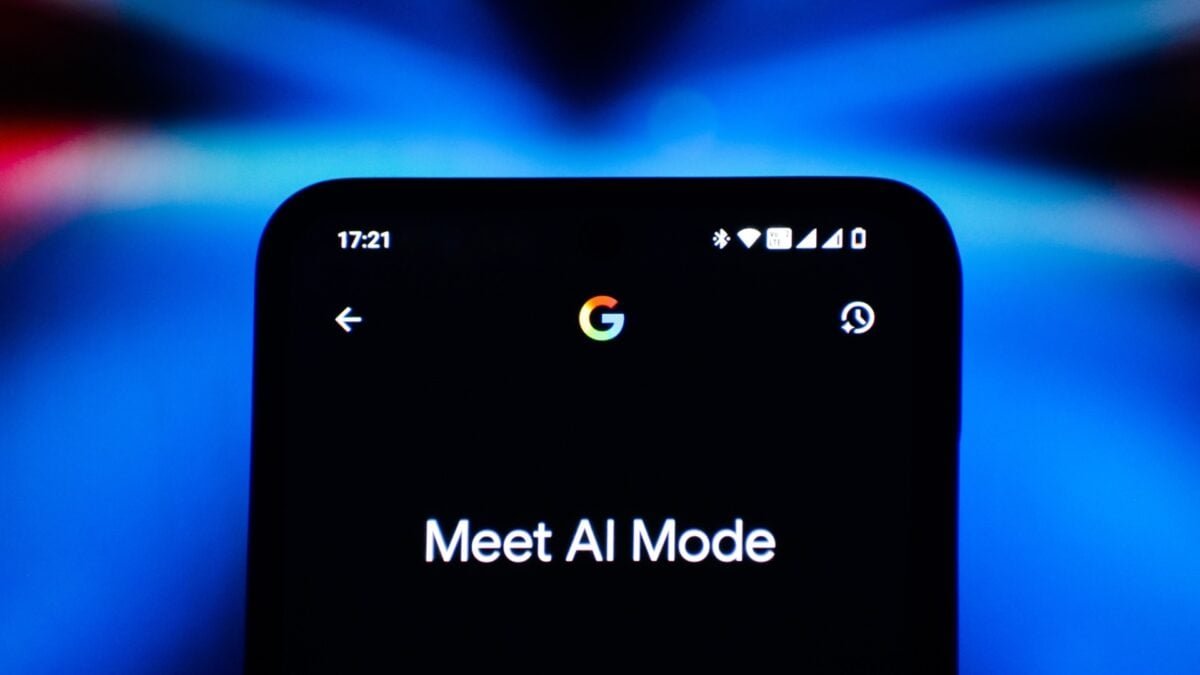

According to Robbie Stein, Google’s vice president of search products, most people use AI products not for general factual information, but for advice and recommendations.
“They want to know where to eat for dinner, they want to know where to travel with their family,” Stein told the Limitless Podcast last week. “So we think there’s a huge opportunity for our AI to get to know you better and then be uniquely helpful because of that knowledge.”
To better understand you, Stein says Google’s AI models will use connected services like Gmail so it can paint a detailed picture of your likes and dislikes over time. Thanks to this, for example, AI can provide you with targeted product releases that you may like.
AI is an existential topic for Google Search. Earlier this year, a judge ruled in Google’s favor in an antitrust trial over its search business, saying that “for the first time in more than a decade,” AI made it so that “a product could emerge that would pose a meaningful challenge to Google’s market dominance.” It seems Google is seeing where the decisiveness comes from as the tech giant has ramped up its AI efforts, introducing its latest Gemini model to great success and integrating it into the entire Google ecosystem.
Gemini is already integrated with Google Workspace apps like Gmail (where you keep personal correspondence), Calendar (which knows what you do, when, and where), and Drive (which can contain your work documents or your personal photos). It’s also available on Google Maps, YouTube, WhatsApp, Spotify, you name it.
The company also launched a new Chrome browser in September with Gemini integration, including an agent AI that can navigate the web and complete tasks on your behalf.
Stein’s vision of an Internet that knows a lot about you is one where your interactions with Google would not be limited to specific instances when you use the search engine, but would be an ongoing conversation. The example he gives is that, let’s say, you’re looking for a couch for your apartment. You are going to slowly feed your AI information about what type of sofa you are looking for, whenever it comes to your mind. The AI will remember these scattered bits of information, and more information collected from you through past conversations and your activity on connected apps. And then one day, that perfect sofa you’ve been looking for goes on sale, and increasingly, AI offers it to you, perhaps through a push alert.
“I think I think about the future of search much more than any one specific feature or single form factor,” Stein said.
Of course, some parts of the Google search experience will remain non-personalized, even in this sense, such as when you go to the Internet to look up simple, factual information, such as the height of the Empire State Building. But according to a Google executive, that’s probably not the majority.
“It’s almost weird not to personalize it,” Stein said.
This hyper-personalization will also be extremely beneficial for the company’s advertising business. Stein announced just a few weeks ago that Google had “started some experiments on ads within AI mode and within Google AI experiences.” AI-enhanced targeted advertising is the name of the game, given that Google’s biggest digital advertising competitor, Meta, has recently announced its entry into it.
Google’s business decisions have consequences for the entire web because the company’s products have the power to change the way we interact with the Internet. Their search engines are the gateway to the Internet for the average user; Meanwhile, the company’s AI business is making great progress and outperforming competitors.
Personalization sounds great on paper, and it promises to make life easier on many fronts. But, like many other technological advancements in our day and age, it undeniably comes with risks. The more an AI system knows about you, the greater the security risk of any potential data breach or sale.
Even OpenAI CEO Sam Altman has acknowledged the risks of letting AI models know everything about you.
“There are two things that people love right now that, taken together, are a real security challenge. Number one, people love how personalized these models are becoming,” Altman told Stanford University professor Dan Boneh last month. “And then number two is that you can connect these models to other services.”
You can’t trust an AI with this information the way you can trust a fellow human being, Altman said.
“If you tell your spouse a lot of secrets, you can kind of trust that they’ll know in what context… what to tell other people. Models don’t really do this very well yet,” Altman said. “So if you’re telling a model all about your personal health care issues, and then they’re buying something for you, you don’t want that e-commerce site to know about all of your health care issues.”
<a href