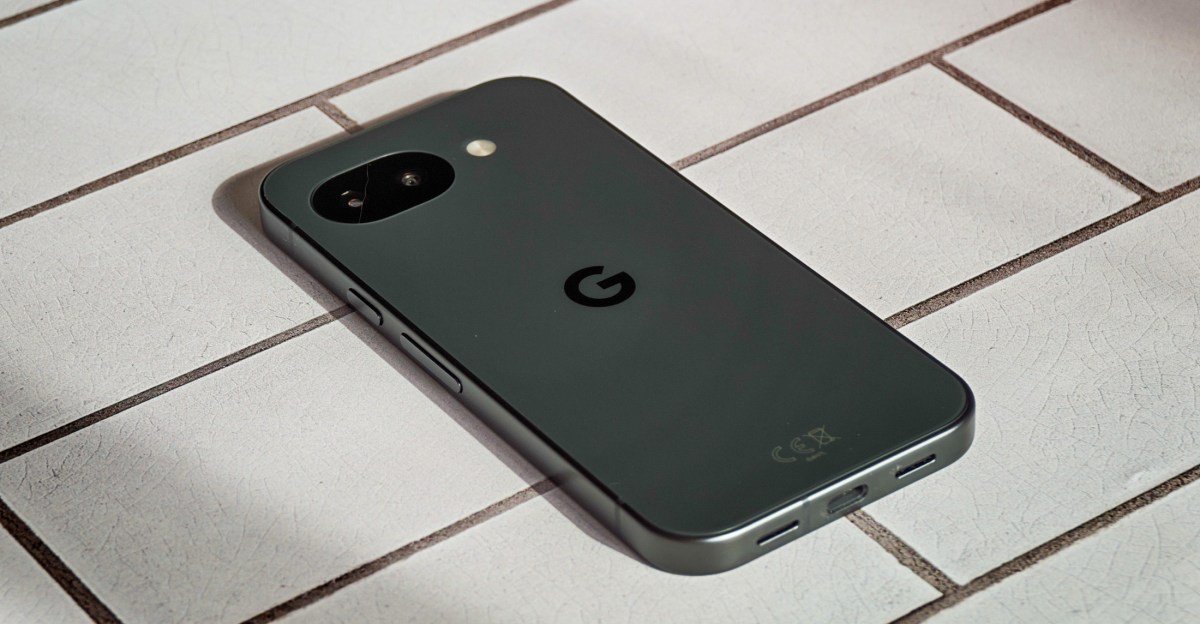
I’m not entirely sure why the Pixel 10A exists.
Google hasn’t upgraded the chipset, camera, or battery in the new phone, and the changes it’s made elsewhere are minimal. I think the flatter camera island is cool! In one sense, this isn’t a big problem: the Pixel 9A is an excellent device, and last year it was easily the best phone you could buy for $500 in the US. The new 10A is now available to buy at the same great price ($499 for 128GB of storage or $100 more for 256GB), but the 9A is still on sale, and with the price drop, there’s a bigger question: Why not just buy the 9A – which is almost the same phone – for $50 less?


Good
- flush camera looks better
- Seven years of software updates
- Satellite SOS Support
bad
- It’s the Pixel 9A again
- Pixel 9A is cheaper
- You should just buy the Pixel 9A
When Google first showed me the 10A I had a hard time understanding what exactly changed, so I looked over the spec sheet to see every hardware change Google made, no matter how small. Here they are:
- The 10A is 3g lighter than the 9A, and is fractionally smaller and thinner, resulting in slightly thinner bezels around the screen.
- Cameras are completely flush with the body, not nearly flush
- The screen is protected by Gorilla Glass 7i compared to Gorilla Glass 3
- Display is 300 nits brighter and more contrasty at peak brightness
- 10A with 30W wired and 10W wireless charging, up from 23W wired and 7.5W wireless
- The 10A supports Bluetooth 6.0, while the 9A has 5.3.
- Support 10A Satellite SOS
- It comes in some new colors
It’s not a lot, and none of these features individually feel like game-changers, except perhaps the introduction of Satellite SOS, which allows you to contact emergency services even when you’re out of cell coverage. If that, or perhaps slightly faster charging, is enough to get you to 10A, great! I think you may be in the minority.


The exterior updates are subtle, but welcome. Last year’s 9A ditched Google’s usual camera bar in favor of a smaller camera barely Got up from behind the phone. Google has taken this design further in the 10A, making the phone slightly thicker, so that the camera is now not only flush with the body, but slightly recessed.
It’s a welcome counterpoint to the bulging cameras on other phones with bigger ambitions. They justify their design with cutting-edge camera hardware, but since Google decided to stick with older, smaller sensors and focus its photography efforts on software, I applaud the decision to repay it with the least intrusive camera design on any smartphone right now.
Overall the phone looks great, even if the design isn’t particularly new. It is simple, sleek and comfortable to hold in one hand. It’s slightly larger than the $799 Pixel 10, despite using the same 6.3-inch display, but the 10A is noticeably lighter, which more than makes up for the extra size. My black model – sorry, obsidian – Sounds a little conservative, but the berry and lavender versions look fantastic if you want a pop of color.

The 10A has the same 5,100mAh battery as the 9A, although Google claims the phone can last an extra 20 hours in its Extreme Battery mode. This is likely thanks to software optimizations, although in a press conference Google declined to comment on whether the 9A will receive the same optimizations, or already has. Either way, it’s a big battery that can last a day, but not two, which is basically fine. The slightly faster charging speeds are welcome, though still slower than many Android options – and Google hasn’t bumped the Pixel 10 line’s Qi2 magnets to 10A, which would actually seem like a worthwhile upgrade.
The phone also runs on the same Tensor G4 chipset as last year’s 9A. It’s plenty fast for most everyday phone tasks, even if it falls short of the most powerful chipsets on the market. Google’s decision not to upgrade the chip in a year seems a bit odd, but it’s really only likely to cause headaches if you’re expecting a powerhouse gaming phone (which it isn’t), or plan on keeping it for the seven-year period of OS updates, by which time the G4 will be nine years old and feeling a little long in the tooth.
The cameras are also identical between the phones, which was inevitable in retrospect: a quirk of Google’s lineup means the Pixel 10 has the same 48-megapixel main and 13-megapixel ultrawide cameras as the 9A, and so this phone gets them too. The cameras looked pretty good on the 10, but for a $499 phone I can’t complain too much. I’m a fan of Google’s fairly natural processing, especially at night, when it mostly resists the temptation to excessively brighten everything. However, the sensors are small, so you’ll hit the limit quite quickly in low light, noisy detail and off lighting, especially on ultrawide. However, there aren’t many better cameras at this price, and none in the US, where you’ll have to spend at least a few hundred bucks more for a worthwhile upgrade.

The camera is also where you’ll find two software features found on the 10A, but not the 9A: Camera Coach and Auto Best Take. Camera Coach is an AI feature that will give you step-by-step instructions on how to frame a photo, most of which boil down to “zoom in to focus on the subject.” Whenever I try it it gives an error message and refuses to work most of the time. Auto Best Take is exactly what it sounds like: an automatic version of the existing Best Take feature, which merges groups of photos to get the best expression from each person in a single shot. There’s no reason to spend more on 10a than 9a, and in a press briefing Google wouldn’t confirm whether they’ll remain exclusive anyway, or simply roll out 9a in a future software update.

We’ve gotten some highly iterated phone updates recently: Samsung’s Galaxy S26 flagships feel like regular spec refreshes, Apple’s iPhone 17E mostly just adds MagSafe and more storage. But both of those releases put the Pixel 10A to shame – at least they changed Some?.
Funnily enough, the Pixel 10A is still the best midrange phone in the US, and one of the better options worldwide, which is mostly an indication of what the rest of the industry is doing at this price point. In six months’ time, when the remaining stock of the Pixel 9A sells out, the 10A will be the best way to spend $500 on a phone. But while last year’s phone still exists, Google’s biggest competitor is Google.
Photography by Dominic Preston/The Verge
<a href