
The app’s lyrics feature allows listeners to follow along as the song plays. However, when free users in the test reach the song cut-off only the first few lines are visible. After this the lyrics of the song have become blurred. Users who want to continue watching songs are advised to upgrade to a premium account, which costs $14 for both YouTube videos and music, or $11 for music only. The subscription also removes ads and adds features like downloads and high-quality video streams.
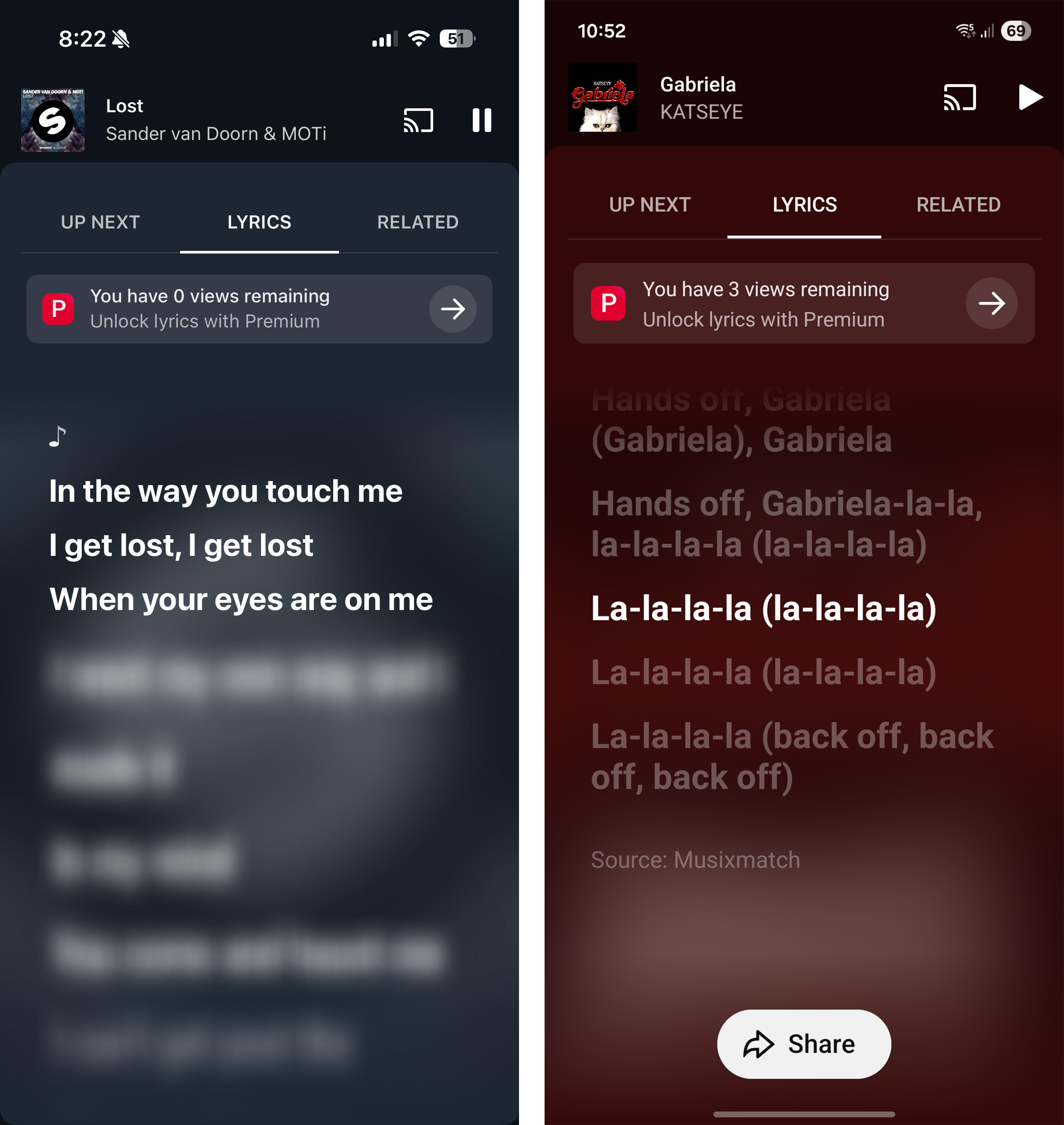
New paywall in YouTube Music.
Credits: /u/MrYeet22836 and /u/Vegetable_Common188
New paywall in YouTube Music.
Credits: /u/MrYeet22836 and /u/Vegetable_Common188
This change is not without precedent. Spotify began restricting access to lyrics for free users in 2024. However, the response was so negative that the company backtracked and restored access to the song’s lyrics on ad-supported accounts. YouTube Music doesn’t have as much reach as Spotify, which may help mitigate the social media embarrassment. Many customers are getting the premium service simply because they are paying for ad-free YouTube and will never know there has been a change in song availability.
As Google has increased restrictions on free YouTube accounts, the service has only made more money. In Google’s most recent earnings report, it reported $60 billion in YouTube revenue from ads and subscriptions (both YouTube Premium and YouTube TV). This is approximately $10 billion more than the previous year.
The songs in YouTube Music are provided by third parties that Google has to pay, so it’s not surprising that Google is looking for ways to cover the costs. However, it is a bit surprising that the company has not used AI to generate songs for free. Google recently tested the patience of YouTube users with several AI features like unannounced AI upscaling, fake DJs, and comment summaries.
This story was updated with Google’s response.
<a href