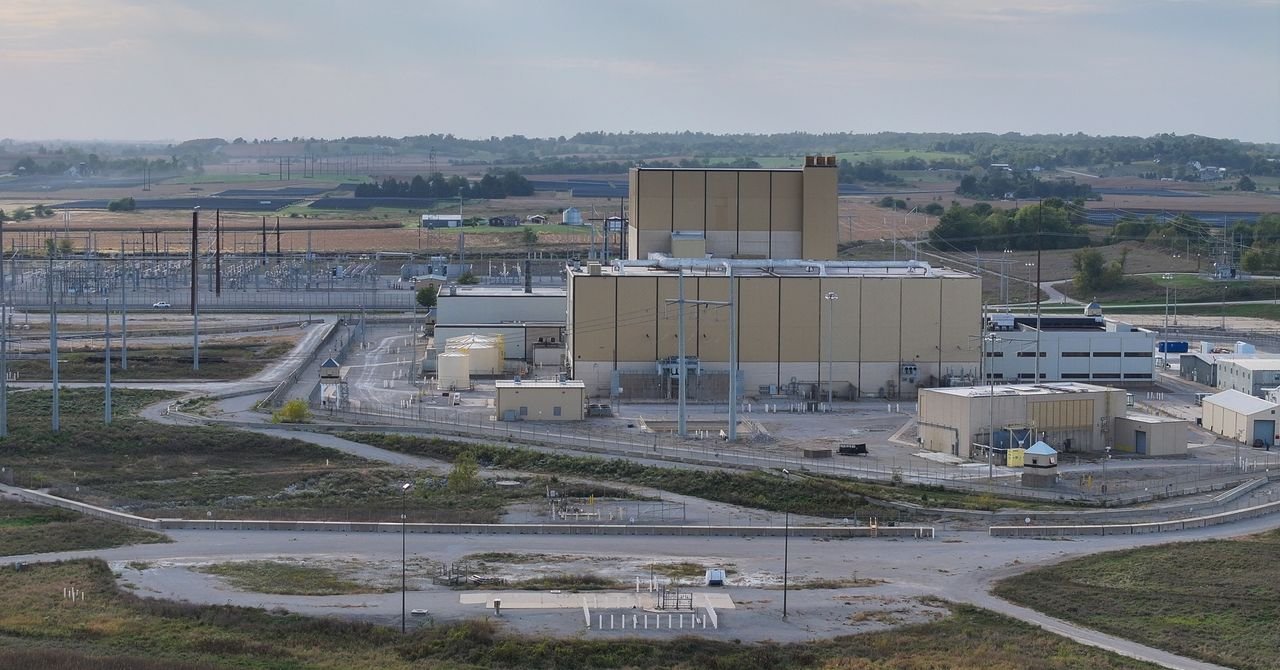
“This was one of the most significant safety incidents in American nuclear history and yet it was not very dangerous to the public,” Stein said. “This shows the hardiness of these plants.”
NRC licensing requires reactor buildings to be built to withstand “tornado missiles,” or large objects striking at high speed, Stein said. “They are virtually designed to safely withstand these types of events,” he said.
Nevertheless, NextEra plans to increase weather-related safety measures at the reopened Duane Arnold plant.
“We look at those incidents and try to understand the lessons learned and ask what could make the plant even safer than it is?” NextEra consultant Michael Davis said at a public information meeting held Nov. 13 in Cedar Rapids by the Iowa Utilities Commission.
The company is considering installing a third diesel generator to provide additional backup power, Davis said, and will also design Duane Arnold’s replacement water-cooling towers with higher wind resistance limits.
Google representatives did not respond to questions about whether the damage at Duane Arnold during the 2020 derecho raised any concerns for nuclear safety during severe weather events.
NRC safety requirements mandate that applicants “consider the most severe meteorological and seismic conditions known in the proposed area” when selecting reactor sites, an NRC representative wrote in a statement to Inside Climate News.
The NRC said, “It is important to understand that nuclear plants are built to withstand extreme environmental hazards and the NRC requires plants to maintain redundant systems, components and programs to be able to minimize the damage caused by off-site lightning events.”
Lokenwitz, a former Duane Arnold engineer, sees the plant’s reopening as a revival of sorts. Had the facility not already been planned to be shut down when the derecho struck, Duane Arnold would have been rebuilt and continued producing power, he said.
“That plant operated exactly as designed. It was a perfect storm.”
<a href