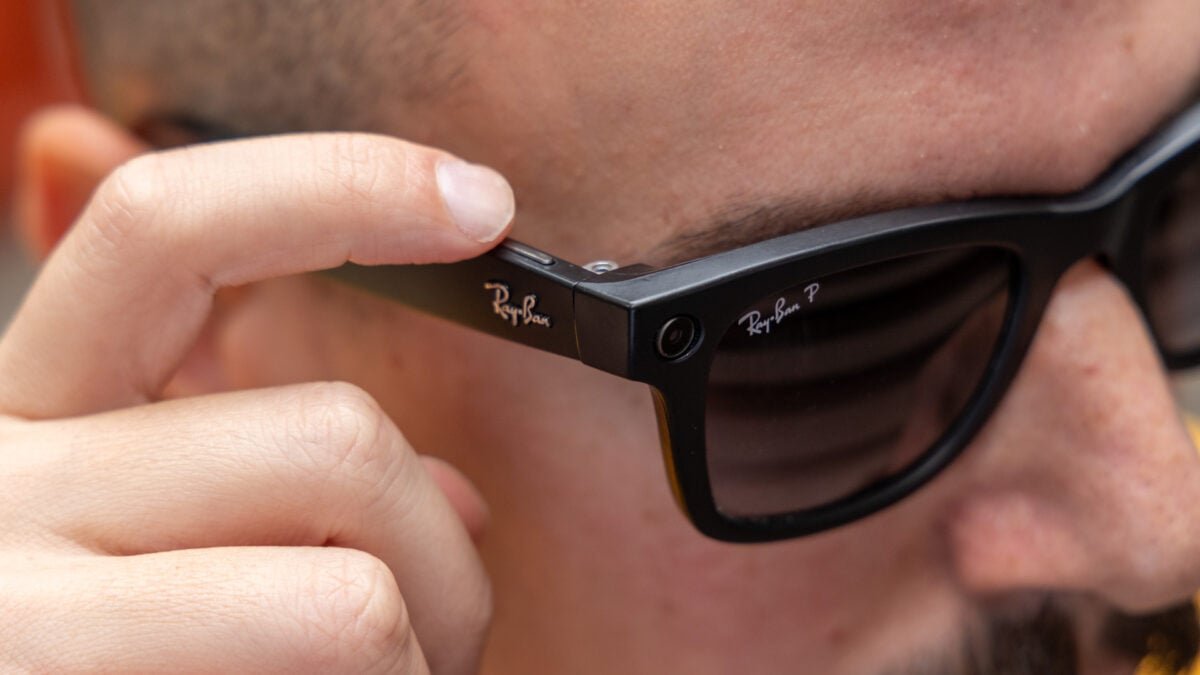
The latest ban comes courtesy of cruise liner, Royal Caribbean, which now bans the use of any glasses that can record video and take photos in various parts of its ships. Overall, the partial ban seems fairly reasonable, stating “Smart glasses are not permitted for use in casinos, spa service areas, restrooms, locker rooms, medical facilities, security screening locations, youth facilities, during back-of-house tours, in crew areas, or anywhere where guests and crew have a reasonable expectation of privacy.” Basically, just don’t be an a**hole when you use smart glasses, and you’re good.
This is certainly reasonable, and also completely unenforceable.
The thing about smart glasses these days is that they are hard to spot. As someone who has been wearing Ray-Ban Meta AI glasses consistently for the past few years, I’m pretty sure almost no one will recognize I’m wearing them. They’re the size of regular glasses, the cameras blend in very seamlessly, and even with Meta’s security measures, it’s easy to miss a recording.
To let people know that you’re taking a photo or video, Meta’s AI glasses have an LED indicator (a green light) on the outside that turns on as soon as you start recording. I believe that if you know what to look for on a pair of smart glasses, it’s a semi-obvious sign that someone is recording, but if you’re unaware of its existence (like many are), it’s easy to ignore. This isn’t even counting the fact that it can be obscured with a little work and $60.

Then there is the matter of enforcement. If smart glasses are difficult to detect (and they are), who will be responsible for actually sniffing them out and making sure they are being used appropriately? If you’re counting on a low-paid employee on a cruise liner going out of his way to prevent new wave Glasshole from discreetly recording in inappropriate places, I would adjust your expectations ASAP. Royal Caribbean’s threat is that they will confiscate improperly used smart glasses, but that sounds like a whole other can of worms to me, especially if anyone caught recording isn’t eager to hand over their expensive Ray-Bans. And what if they have prescription lenses? Would you deprive a poor astigmatist of his reading glasses?
Cruise liners aren’t the only entity trying to ban smart glasses. Recently, the College Board banned wearing smart glasses while taking the SAT exam, which is another handy thing to do. Smart glasses, especially those with AI and Internet access, will be an efficient deception tool and can be used to quietly and quickly get answers to all kinds of things. However, if I’m honest that restriction feels even more disappointing. As I recently reported, smart glasses that could be useful for fraud, such as those made by Even Realities, are even harder to detect because they do not have cameras or speakers and are not as suitable as normal glasses.
To put it mildly, the whole thing is a bit of a mess. Google Glass may have been partially banned in 2013, when some bars, restaurants, and casinos basically outlawed them, but that was a different world and a different product. The truth of the matter is that banning today’s smart glasses would take effort And Stability. And my friends, these qualities are not always easy to come by.
<a href