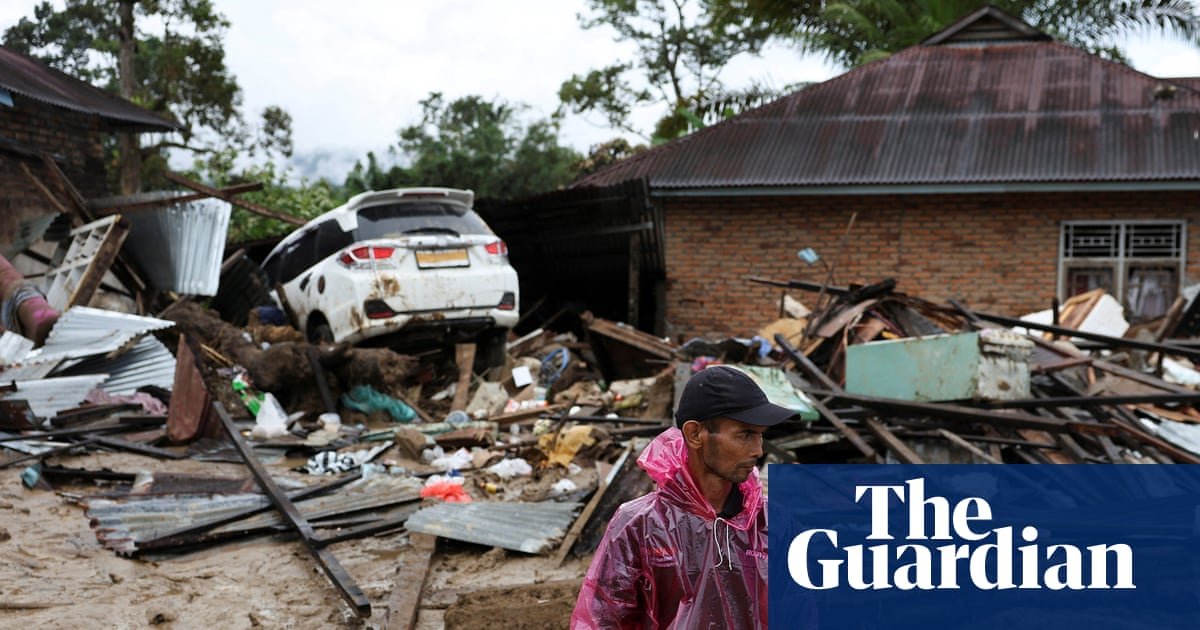
Families are trapped on their rooftops. Houses were buried by fast flowing mud. Jagged brown craters in lush green mountains.
These scenes are the result of a series of cyclones and storms during the heavy monsoon season, which brought torrential rains to Asia, destroying essential infrastructure and reshaping landscapes. The violent weather has killed at least 1,200 people in the past week and forced one million to flee without knowing whether their homes would still be standing when they return.
The results indicate a serious increase in deadly weather across the region, exacerbated by carbon pollution warming the planet. A review by the Intergovernmental Panel on Climate Change (IPCC) predicted that as temperatures rise there would be more intense rainfall in South and South-East Asia, as well as a “large increase” in the frequency of floods in monsoon regions.
Roxy Cole, a climate scientist at the Indian Institute of Tropical Meteorology and co-author of the latest IPCC report, said the behavior of cyclones has changed more than their numbers this season. “They are wetter and more destructive because the background climate has changed,” he said. “Water, not air, is now the main driver of disaster.”
Natural weather patterns, including the La Niña cycle and a negative Indian Ocean dipole, have helped create conditions for storms to form. Scientists have not determined to what extent planet-heating pollution has contributed to the death toll, which is rising with the flood waters, but they have long established that warmer air holds more moisture – about 7% per degree Celsius.
The extra water, combined with increased energy from warmer oceans, leads to the formation of storms that have far greater impacts.
“Across South and Southeast Asia, storms this season are bringing extraordinary amounts of moisture,” Cole said. “The warmer oceans and atmosphere are filling these systems with water, so now even moderate cyclones bring rainfall that drowns rivers, destabilizes slopes and leads to widespread disasters.
“Then landslides and flash floods strike the most vulnerable, the communities living in these fragile environments.”
The rain has loosened the soil in mountainous areas and flattened the slopes, destroying villages and rendering roads and railways unusable. The floods have also hampered rescue efforts by disrupting power supplies and phone networks.
In Indonesia, where freshly cut logs have been washed away in flooded parts of the country that are also affected by deforestation, the damage is believed to have been exacerbated by the cutting of trees that could absorb water and stabilize the soil. According to local media, the Attorney General’s Office is leading a task force to investigate whether illegal activities may have contributed to the disaster. Reuters also reported that the Environment Ministry planned to interrogate logging, mining and palm plantation companies about their activities.
Sonia Seneviratne, a climate scientist at ETH Zurich and co-author of the IPCC’s latest report, said other human factors may have increased the extent of flooding, but that does not negate the role of climate change in worsening rainfall patterns.
After newsletter promotion
“We have a clear signal of an increase in heavy rainfall with increasing warming both globally and in Asia,” he said. “The impact of human-induced climate change on the intensity of heavy rainfall is well established, and is a major element in reported flooding.”
The good news in the long term is that the human cost of floods and storms has fallen sharply around the world as governments have set up early warning systems and got into the habit of getting people out of danger before disaster strikes. Even in middle-income countries that have made great progress in converting death figures into displacement figures, however, experts say response systems are still poor.
Alexander Matthews, director of the Asia-Pacific region of the International Federation of Red Cross and Red Crescent Societies, said, “The picture for South-East Asia shows that you still need better early warning systems, better shelters for people in times of flooding… (and) even more nature-based solutions – planting trees and mangroves in places that are particularly at risk of flooding, to keep people safe.”
“People also need better social protection systems in disasters so that they can quickly get cash and food, medicine and shelter when disaster strikes,” he said.
<a href