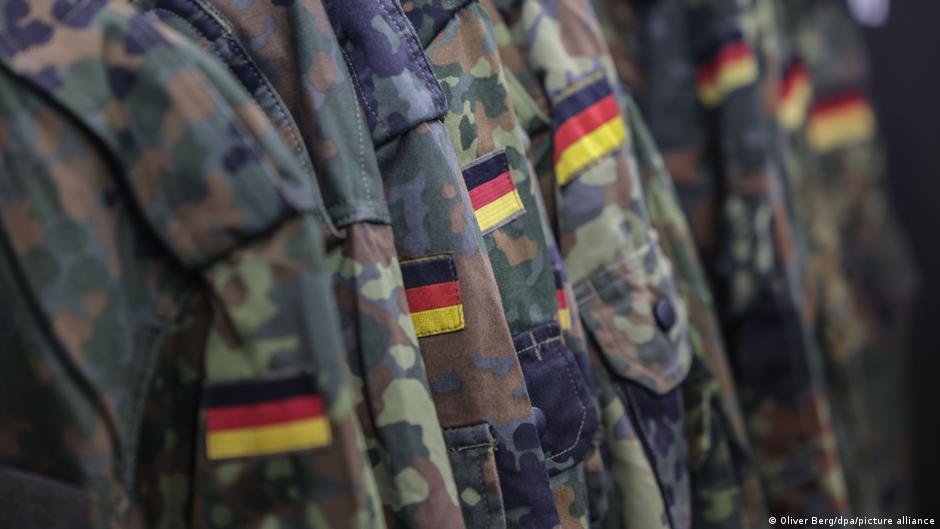
Defense Minister Boris Pistorius, of the centre-left Social Democratic Party (SPD), plans to introduce new voluntary military service as early as January – with better conditions and pay than old-style conscription.
“Other European countries, especially the Nordic countries, have shown that the principle of voluntary service with charm works – and I hope the same will happen here,” the Social Democrat said after coalition leaders reached an agreement. “The number of applicants is increasing, the recruitment figures are increasing,” Pistorius stressed. The goal is to recruit 20,000 new volunteers by 2026. He will receive €2,600 ($3,025) per month before taxes.
In recent months the ruling parties have been at odds over whether the armed services can recruit enough volunteers to meet Germany’s defense needs. The Bundeswehr currently has approximately 182,000 soldiers. Yet at least 260,000 will be needed by 2035 to meet NATO requirements.
Politicians from the conservative Christian Democratic Union (CDU) and its Bavarian sister party, the Christian Social Union (CSU), argued that this ambitious goal could only be achieved with a return to compulsory military service, or at least with a mechanism that automatically triggers a return to compulsory military service if there are not enough volunteers.
However, the Social Democrats vehemently rejected a return to compulsory military service. Now an agreement has been reached between both the parties. If the number of volunteers does not match, the Bundestag must decide whether to introduce “compulsory military service on demand” for a certain number of young people.
The CDU/CSU parliamentary group also praised the agreement. Alexander Hoffmann (CSU) described this as achieving “the right mix of free will and obligation”.
New duties for young men: a questionnaire and physical examination
Although military service remains voluntary, all 18-year-old males will be required to fill out a questionnaire, called a “declaration of willingness”, from 2026. They will have to answer questions regarding their physical fitness and willingness to serve in the armed forces.
In fact, all 18-year-olds will receive a QR code that will be linked to the survey. Women may choose to fill it out and express their desire to serve in the Bundeswehr. But this would not be mandatory because Germany’s basic law states that only men can be recruited.
From July 2027, all 18-year-old males will also be medically examined to see if they are fit for duty, starting with those born in 2008. Approximately 300,000 youth will be affected per year. The Defense Minister argues that this is the only way for the Bundeswehr to have an idea of who might be called upon in the event of a conflict.
District recruitment offices spread across the country used to be responsible for these inspections. With the end of compulsory military service in 2011, these offices were abolished. The Defense Ministry is now busy creating a new infrastructure and is already inspecting assets for this purpose. Pistorius stressed that the Bundeswehr’s new “career centres” should not be like the dusty offices of years past. They should be modern, bright and airy, just like Sweden.
Criticism from the younger generation
The government’s agreement on military service has drawn criticism, particularly from those affected. Quentin Gartner, representative of the school student body, criticized the agreement as inadequate. In an interview with a German news organization Redaktionsnetzwerk Deutschland (RND)The BSK Secretary General called for funding of €100 billion alongside the Military Service Act as well as “a campaign for the education and mental health of young people”. “There is not the slightest indication that the state is prepared to take responsibility for us,” Gartner said.
There was also criticism from opposition politician Sören Pelman, leader of the Socialist Left Party’s parliamentary group in the Bundestag: “Everyone in the coalition is trying to present the agreement on military service as their success – the younger generation is being thrown under the bus.”
Pellman said the coalition had simply postponed the dispute. “You don’t have to be a prophet to understand that mandatory military service is coming.” The left-wing party wants to give young people advice, for example, if they want to refuse to serve in the armed forces. Regardless of whether military service remains voluntary or becomes mandatory again in the future, the Basic Law guarantees the right to conscientious objection.
This article was originally written in German.
While you’re here: Every Tuesday, DW editors provide insight into what’s happening in German politics and society. You can sign up for the weekly email newsletter, Berlin Briefing, here.
<a href