“If a German corvette ship is attacked and sunk by a Russian submarine, you would call it war,” Sonke Marranes, a colonel in the German armed forces and a military strategist, said at a recent meeting of German security forces. “But what if metal shavings are put into the gear of a ship and then it no longer operates: is that war?”
Marhans is an expert on hybrid threats. At the autumn conference of the German National Criminal Police Office (BKA), he discussed future challenges with German and international security experts in Wiesbaden.
Marranes’ example of sabotage affecting the operational capability of a German warship is an actual incident that occurred on the corvette Emden in January, shortly before its delivery to the German Navy.
Hybrid attacks are continuously increasing in Europe. Military personnel, police officers, politicians and scientists have warned that the situation is critical.
“We are facing cyber attacks, sanctions evasion and arson attacks on a scale we have never seen before,” said Silke Willems of the Federal Office for the Protection of the Constitution, Germany’s domestic intelligence agency.
Russia relies on cost-effective agents
It is very difficult to identify criminals. For police and intelligence services, it is often not clear whether they are dealing with a Russian attack, a criminal act or simply a breakdown in infrastructure.
Comparing it to similar incidents usually gives a clearer picture. Investigators say Russia is deliberately operating in a gray area, complicating the response of affected countries.
According to security officials, Russia is increasingly relying on cost-effective operations. “This is now being done by so-called ‘low-level agents,'” Holger Munch, head of the National Criminal Police Office, told DW. These individuals often don’t even know who is hiring them, Munch explained, and they are willing to carry out attacks for relatively little money.
The perpetrators are mostly young men with prior criminal records, many of whom immigrated to Germany from the former Soviet Union. They are often recruited, for example, through the Russian social media platform Telegram, Munch explained.
Germany ready to retaliate
According to Munch, the Criminal Police Office has significantly expanded its capabilities to deal with cyber attacks. Even if criminals were to rent hundreds or thousands of servers around the world, BKA could disable them, he said.
Interior Minister Alexander Dobrindt vowed that Germany would step up its response to the attacks. Dobrindt said, “Whoever attacks us in cyberspace must be alert: We want to and will defend ourselves in the future! We can even disrupt and destroy.”
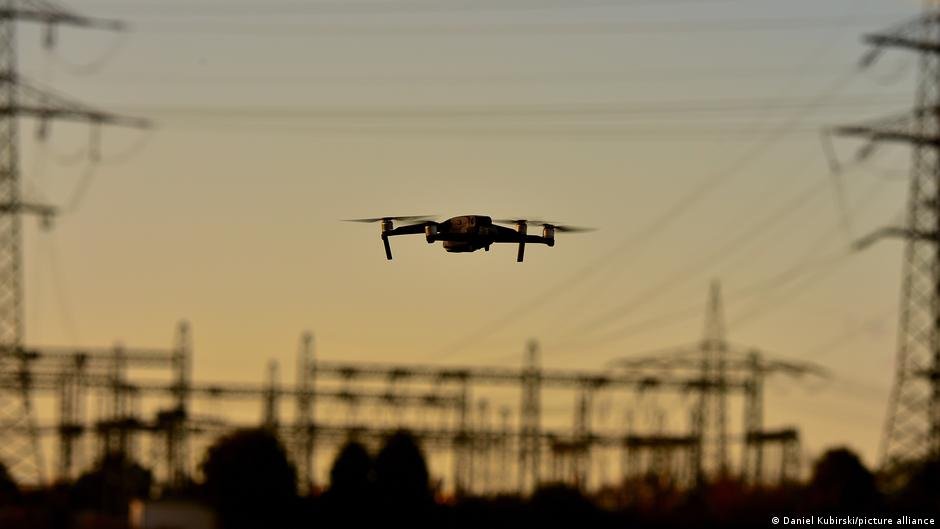
In the fight against hybrid threats, the German government decided this week that in addition to the federal police, the Bundeswehr, the German armed forces, will also be authorized to shoot down drones within Germany. In return, police are planning to set up additional drone units to defend against attacks.
But it is not just Russian drones, incendiary devices and disinformation that are worrying politicians and security experts: More and more people in Germany are becoming distrustful of state institutions, which poses a major challenge.
According to German security officials, fake news and lies about democratic institutions and elected officials – all fueled by complex, large-scale Russian disinformation campaigns – are aimed at destabilizing Germany and other democracies through hybrid warfare.
To ensure that Germany remains resilient against these attacks, military strategist and colonel Soncke Marranes said hybrid warfare must be accepted as a challenge for society as a whole.
This article was originally written in German.
While you’re here: Every Tuesday, DW editors provide insight into what’s happening in German politics and society. You can sign up for the weekly email newsletter, Berlin Briefing, here.
<a href