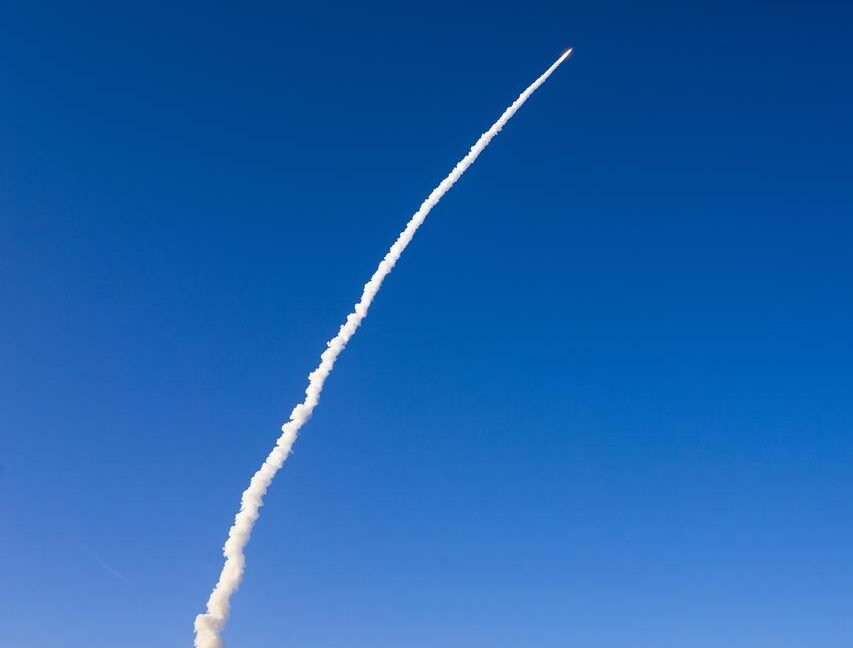
The Orion spacecraft successfully fired its main engine for 5 minutes and 50 seconds on Thursday, sending four astronauts on a free-return trajectory around the moon. For NASA and the Artemis II crew members, it became a point of no return for more than a week.
Most Americans, in fact about three-quarters of the population worldwide, have not seen humans leave low-Earth orbit in their lifetime. The last time this happened was in 1972, during the final Apollo Moon mission.
The “translunar injection” of Orion’s main engine burned out Wednesday, about a day after the mission’s successful launch aboard NASA’s Space Launch System rocket from Kennedy Space Center. This burn was the last major firing of Orion’s main engine, and prepares the crew to fly around the moon on Monday, be catapulted back to Earth under lunar gravity and fall into the Pacific Ocean on Friday, April 10.
“Things are going really well right now,” Lori Glaze, NASA’s senior official for exploration, said during a news conference Thursday evening. “I don’t think we could be happier.”
The first day is full of activity
The decision to leave Earth orbit was taken after a busy day on Orion, during which the four crew members; Reed Wiseman, Victor Glover, Christina Koch and Jeremy Hansen advanced the spacecraft’s life support and propulsion systems to ensure the vehicle is ready for long missions in deep space.
Howard Hu, NASA’s program manager for the Orion spacecraft, said Orion’s life support is working very well. This included important systems such as carbon dioxide “scrubbers” that remove exhaust gas from the cabin atmosphere as well as water systems. There was a minor glitch with Orion’s toilet during initial checkout, when it had to be “wetted” with water to prime the pump. Not enough water was added, so the pump was not responding. Once more water was added it started working properly.
<a href