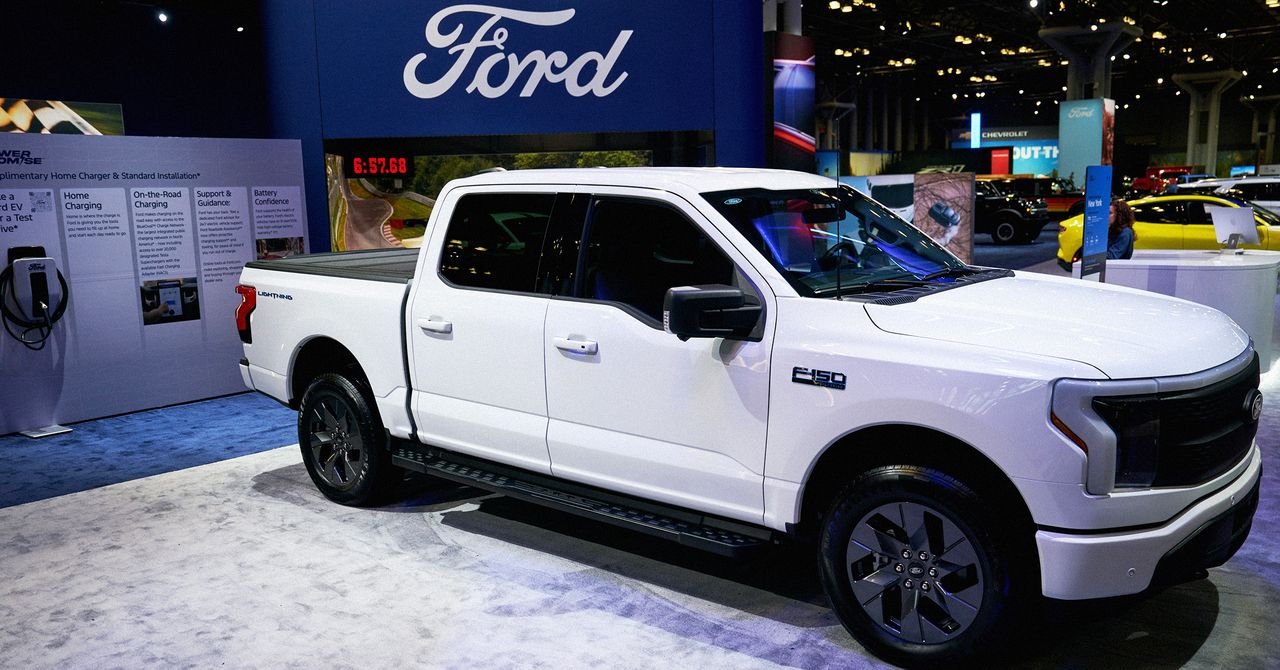
Instead of planning to make enough electric vehicles to make up 40 percent of global sales by 2030 — as it promised just four years ago — Ford says it will focus on a wide range of hybrid, extended-range electric and battery-electric models, which executives now say will account for 50 percent of sales by the end of the decade. The company says the automaker will make hybrid versions of almost every vehicle in its lineup.
Ford executives told reporters Monday that the company will no longer build large all-electric trucks, and will repurpose an electric vehicle plant in Tennessee to build gas-powered cars. The next generation of Ford’s all-electric F-150 Lightning will be an extended-range electric vehicle, or EREV, a plug-in hybrid that uses an electric motor to power its wheels while a small gasoline engine recharges the battery. Ford says the technology, which automakers have promoted in recent years as a middle-ground between battery-electric vehicles and gas-powered vehicles, will give its trucks expanded towing capacity and a range of more than 700 miles.
Ford still plans to produce a midsize electric pickup truck, targeting a starting price of around $30,000, which will be available in 2027. It will be the first of “affordable” electric vehicle models he is currently designing at a Skunkworks studio in California, set to use a “universal” platform architecture that will make the vehicles cheaper to produce.
The new plans leave Ford with the ability to make excess batteries, which the company says it will use by opening a new business: the battery energy storage sideline. This new business will produce low-cost and long-lasting lithium iron phosphate or LFP batteries for customers in the public utility or data center industries.
“Ford is following the customer,” says Andrew Frick, president of Ford Blue and Ford Model E, the automaker’s gas and battery-powered vehicle businesses. He says adoption of electric vehicles by US customers is not at the level the industry expected at the beginning of the decade. (Battery-electric vehicles currently make up about 7.5 percent of U.S. new car sales.) Frick also cited changes in the regulatory environment, including the Trump administration’s rolling back of commercial and consumer tax incentives for electric vehicles.
The company has also canceled an all-electric commercial van planned for the European market. Instead, Ford will team up with Renault in a partnership announced last week to develop at least two small Ford-branded electric vehicles for Europe — a move CEO Jim Farley called part of a “fight for our lives” as U.S. automakers try to compete with affordable EVs out of China.
Ford said Monday it also plans to produce a new gas-powered commercial van for North America.
<a href
Эта познавательная публикация погружает вас в море интересного контента, который быстро захватит ваше внимание. Мы рассмотрим важные аспекты темы и предоставим вам уникальныеInsights и полезные сведения для дальнейшего изучения.
Подробнее тут – https://vivod-iz-zapoya-2.ru/
Финансовые инструменты позволяют заказчику убедиться в надежности участника и его готовности выполнить обязательства по контракту. При этом грамотное сопровождение снижает вероятность финансовых рисков и помогает правильно оформить документы для банка.
Все ответы на ваши вопросы – тендерное сопровождение под ключ ростов на дону
Участие в государственных и коммерческих процедурах требует точной подготовки, понимания законодательства и внимательной работы с документами. Для многих компаний самостоятельная работа с закупками становится сложной задачей: необходимо отслеживать новые закупки, анализировать требования, оформлять документы и взаимодействовать с площадками.
Погрузитесь в детали – тендерное сопровождение заказчиков