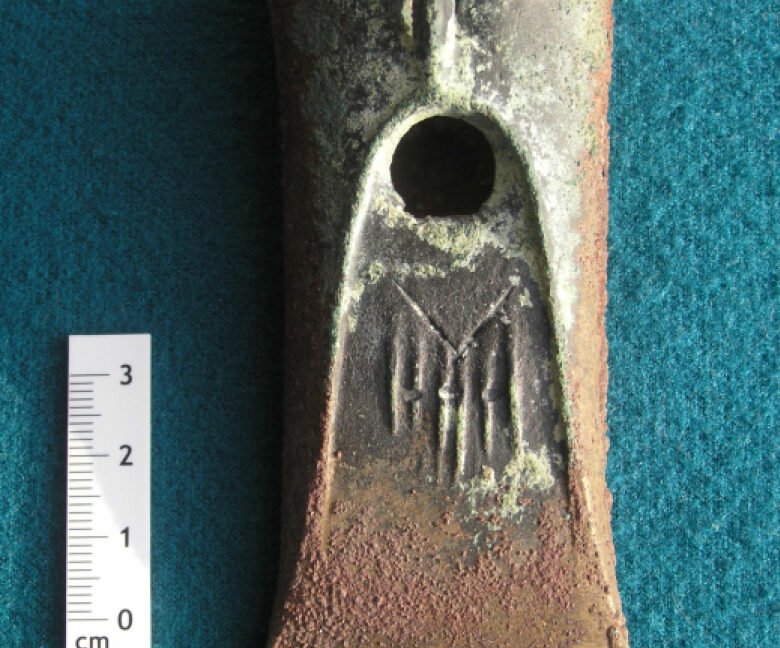
“Certain features emerged in this area,” they wrote in their recent paper (archaeologists refer to buildings and walls as features), “suggesting that metallurgical production may have been dispersed or may have occurred in less architecturally formal locations.” In other words, it appears that the bronze-smiths of ancient Semiarka worked in the open air, or in a scattering of smaller, less permanent buildings that left no traces behind. But it seems that all of them have done their work in the same area of the city.
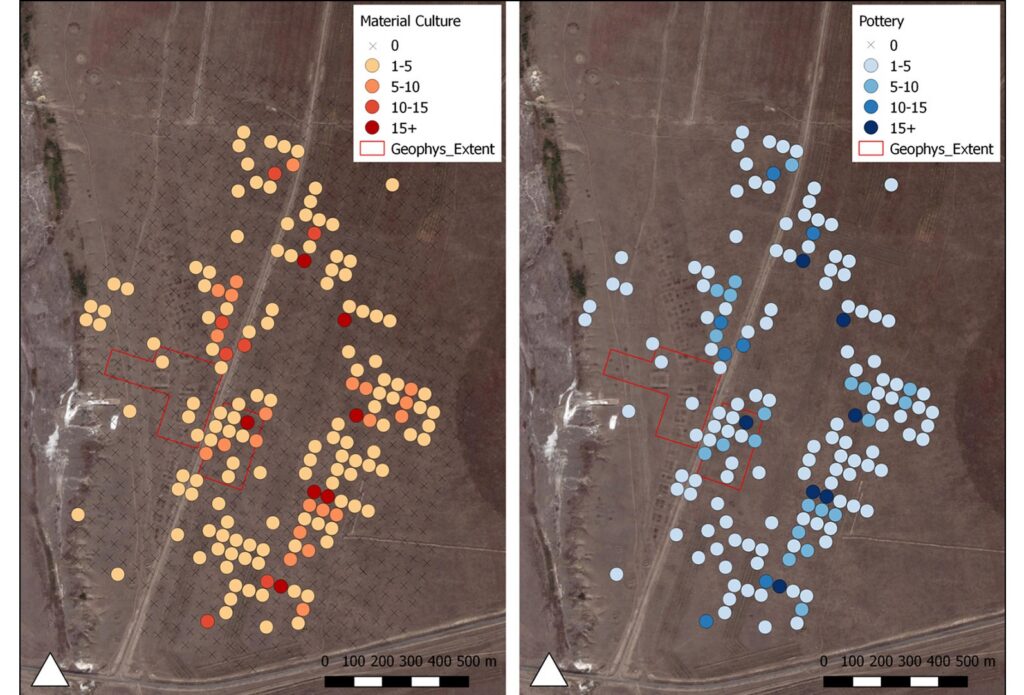
Note how the area where the artifacts were found extends beyond the visible outlines of the ancient buildings.
Radivojevic et al. 2025
Note how the area where the artifacts were found extends beyond the visible outlines of the ancient buildings.
Radivojevic et al. 2025
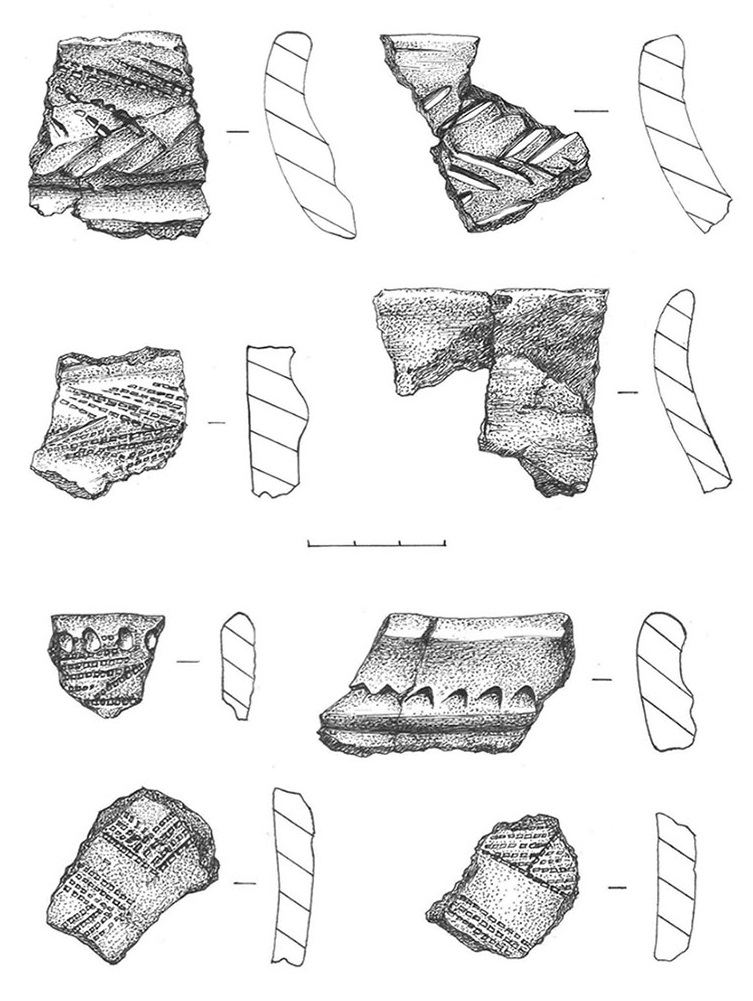
Fragments of broken pottery found in Semiyarka
Radivojevic et al. 2025
Fragments of broken pottery found in Semiyarka
Radivojevic et al. 2025
Note how the area where the artifacts were found extends beyond the visible outlines of the ancient buildings.
Radivojevic et al. 2025
Fragments of broken pottery found in Semiyarka
Radivojevic et al. 2025
Relations between nomads and city dwellers
To the east of the earthworks is an extensive area, where there is no trace of walls or foundations below ground, but ancient artefacts are scattered about, half buried in the grass. Long-forgotten objects may mark the sites of “more short-term, perhaps seasonal, occupation”, Radivojevic and colleagues suggest in their recent paper.
That area makes up a large portion of the city’s estimated 140 hectares, raising questions about how many people lived here permanently, how many stopped here along trade routes or pastoral migration, and what their relationships were.
Some broken pots provide evidence that Semiarka’s settled townspeople traded regularly with their more mobile neighbors on the steppe.
Within the city, most ceramics match the style of the Alekseevka-Sargari people. But some of the pottery found at Semiyarka is clearly the handiwork of nomadic Cherkassk potters, who lived on this same wide sea of grass from about 1600 BC to 1250 BC. It makes sense that they might have traded with the people of the city.
Along the nearby Irtysh River, archaeologists have found faint traces of several small camps dating back to Semiyarka’s heyday, and two burial mounds located north of the town. Archaeologists will have to dig deeper, literally and figuratively, to piece together how Semiyarka fits into the ancient landscape.
The city has stories to tell, not just about itself but about the entire vast, open plain and its people.
Antiquity, 2025 DOI: 10.15184/AQY.2025.10244 (About DOI).