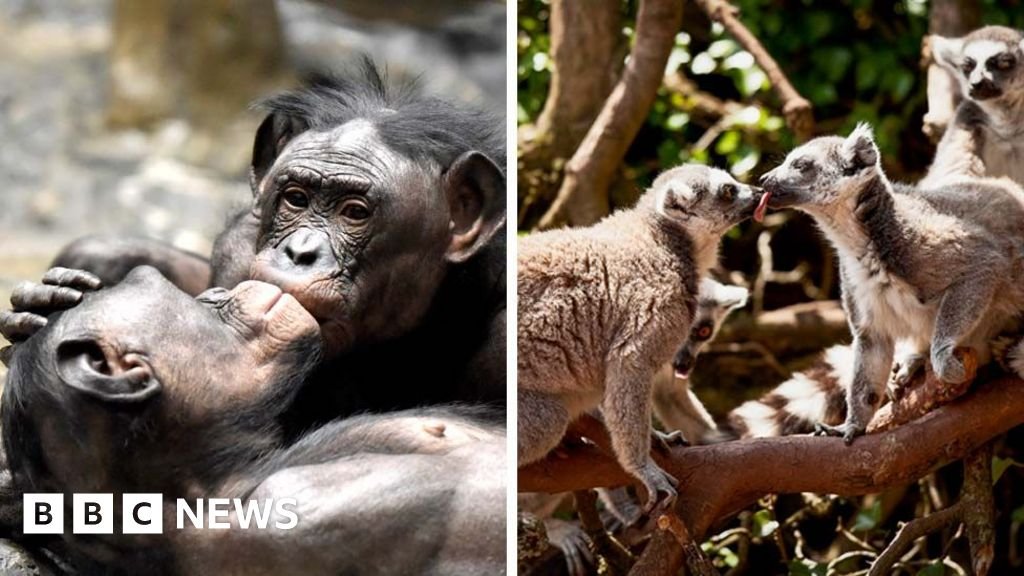

 getty
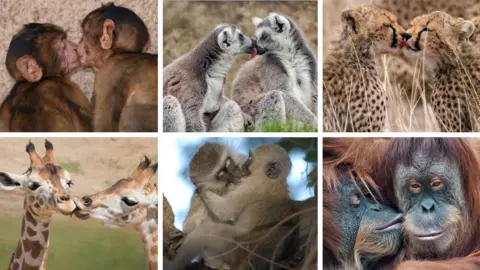
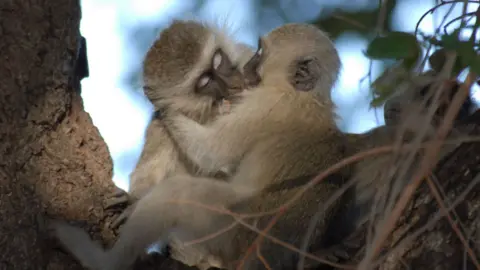
gettyHumans do it, monkeys do it, even polar bears do it. And now researchers have reconstructed the evolutionary origins of kissing.
Their study shows that mouth-to-mouth kissing evolved more than 21 million years ago, and was something that the common ancestor of humans and other great apes probably incorporated.
The same research concluded that Neanderthals may also have kissed – and that humans and Neanderthals may also have kissed each other.
Scientists study kissing because it presents something of an evolutionary puzzle – it has no obvious survival or reproductive benefit, and yet it is something that is seen not only in many human societies, but throughout the animal kingdom.
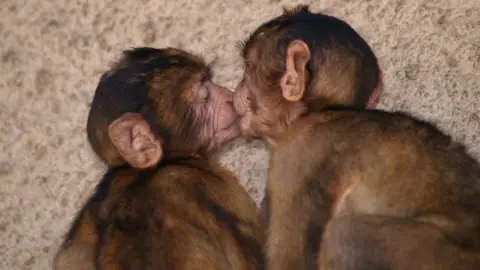 getty
gettyBy finding evidence of other animals engaging in kissing, scientists were able to build an “evolutionary family tree” to trace when it was most likely to have evolved.
To make sure they were comparing the same behavior across different species, the researchers had to come up with a very precise – rather unromantic – definition of “kissing.”
In their study published in the journal Evolution and Human Behavior, they defined kissing as non-aggressive, directed oral-oral contact “with some movement of the lips or mouthparts and no food transfer”.
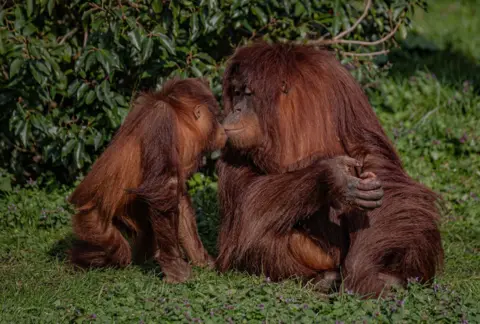
“Humans, chimpanzees and bonobos all kiss,” said lead researcher Dr. Matilda Brindle, an evolutionary biologist at the University of Oxford. From that, she concluded, “It is possible that their most recent common ancestor kissed.”
“We think kissing probably evolved in great apes about 21.5 million years ago.”
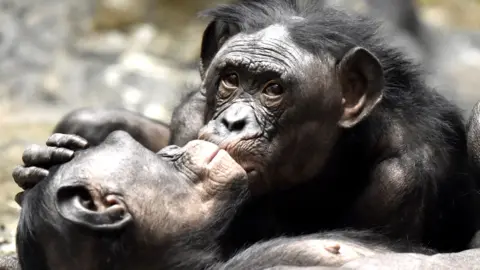 getty images
In this study, scientists found behavior matching their scientific definition of kissing in wolves, prairie dogs, polar bears (very sloppy – lots of tongue), and even albatrosses.
He focused on primates – and specifically apes – to build an evolutionary picture of the origins of human kissing.
The same study also concluded that Neanderthals – our closest ancient human relatives who died out about 40,000 years ago – also kissed.
Previous research on Neanderthal DNA has also shown that modern humans and Neanderthals shared an oral microbiome – a type of bacteria found in our saliva.
“This means that the two species may have been exchanging saliva for hundreds of thousands of years after they split,” Dr Brindle said.
 getty
gettyAlthough this study indicates when kissing evolved, it was not able to answer the question of why.
There are already several theories – that it originated from the grooming behavior of our ape ancestors or that it may provide an intimate way of assessing a partner’s health and even compatibility.
Dr. Brindle hopes this will open the door to answering that question.
“It’s important for us to understand that this is something we share with our non-human relatives,” he said.
“We should study this behavior, not dismiss it as silly because it has romantic connotations in humans.”
 Chester Zoo
<a href