
 PA media
Your party is not off to a good start.
The path to this weekend’s founding conference has been overshadowed by divisions in the party over everything from money, leadership to even its name.
The conference began with a round of expulsions of members and founding MP Zarah Sultana boycotted it on the first day in protest of a “witch hunt”.
But after months of speculation, the party now has a name and a constitution that will see it governed by a “revolutionary” new system – controlled by ordinary members rather than a leader.
At least some of the structural issues have been resolved, but a chaotic conference could set the direction and roadmap for where the start-up party goes from here.
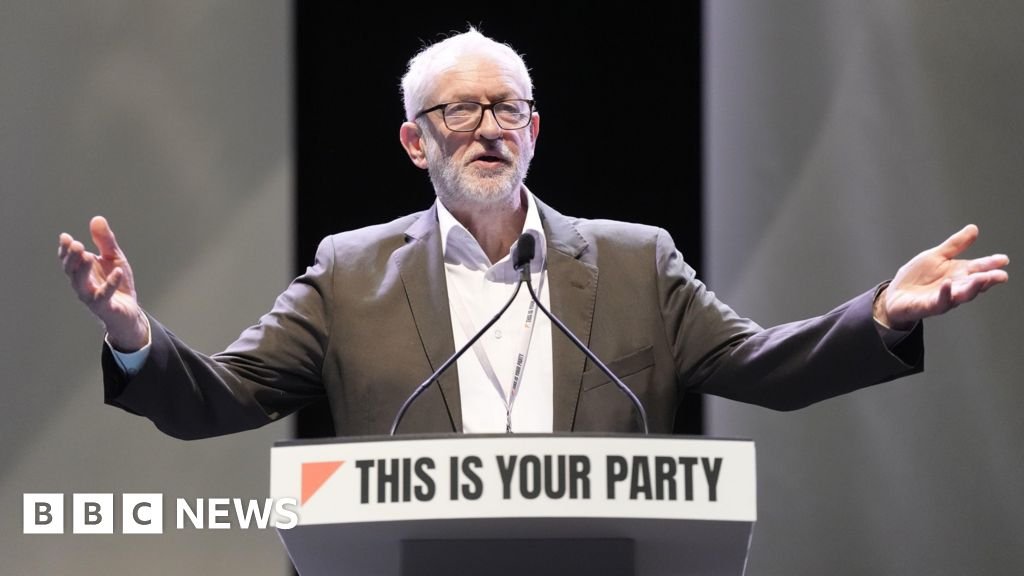
The last time Jeremy Corbyn spoke from the stage in the vast glass and steel complex of Liverpool’s ACC conference centre, he was leader of the Labor Party.
He then spoke to a party riven by infighting, just a year away from its historic defeat in the 2019 general elections.
A lot had changed when he came on stage on Saturday to address his start-up political party.
Not only is Corbyn no longer Labor leader, but he has been expelled from the party – an event that put him on the path to founding Your Party.
But he found himself once again addressing a party mired in factional infighting.
A quarter of the party’s parliamentary contingent was absent from the audience after Sultana refused to enter, angry that he had singled out Socialist Workers Party members as “faceless bureaucrats”.
Party officials said he had been expelled for apparent violation of rules that prohibit members from belonging to other political parties.
And he was not the only one missing. The ambition was to bring 13,000 delegates to Liverpool.
But this was revised to 2,500 – which left the conference centre’s cavernous halls feeling quite empty.
Outside the hall, as the wind blew in the Mersey, a small group of protesters tried to highlight the eviction.
Speaking into a megaphone, Mish Rahman – a former member of Labour’s ruling national executive committee who left the party claiming it had become “devoid of integrity” under Prime Minister Sir Keir Starmer – turned to his new party.
Paraphrasing American Black Panther activist Angela Davis, Rahman called on members to “no longer accept the things you can’t change – change the things you can’t accept”.
He was echoing many of the things said by fellow ex-Labour member Max Shanley, who had told a rally the day before that he needed to change the party “by any means necessary”.
Inside the Ikoyi conference hall, Corbyn called for unity in his opening speech, telling the audience that “division and disunity will not serve the interests of the people we seek to represent”.
He said the fledgling party had “a unique opportunity” to establish a “socialist party of mass appeal” that could rival the mainstream parties in parliament.
Despite Corbyn’s plea, much of the debate was dominated by discussion of a “purge” of expelled members for being members of other left-wing groups.
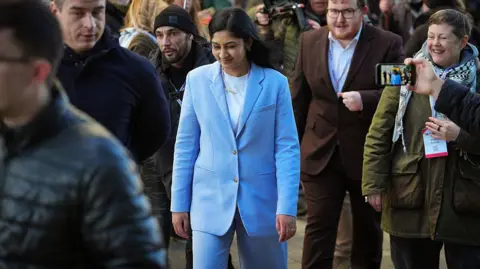
At some points it felt as if the conference was being held together by a dwindling pool of goodwill. Asking the exhausted organizers how the project was going in general elicited more tired laughter or frightened stares than answers.
 getty images
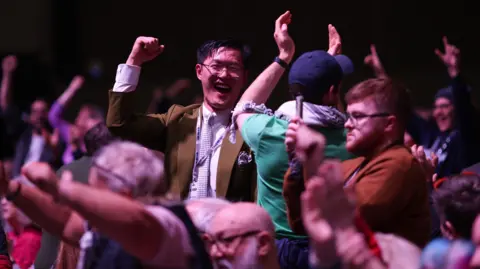
But if the drama has dampened the mood at the top, it hasn’t dampened the discussion on the floor.
During a pause in the proceedings, Nick Parker, a party organizer from Lincoln, said, “Disagreement is natural, because we all agree that this is a really important project that we’re trying to build”.
The fights were “a side issue” in a broader agreement on “a political program that fights against cuts, against privatization, against war, against racism,” he said.
Bonnie Ambrose agreed. There’s “no perfect way” to find a party, he said.
He added, “But by the grace of God, we needed it – and what came through strongly was that we were all committed to making a difference.”
Maybe this is what democracy looks like.
A deeply unpopular Labor government, seen by representatives here as mimicking the Reform UK message on immigration, has continued to lend more support to the left-wing alternative.
The Green Party, which reached record membership numbers under self-described eco-populist Jack Polanski, doesn’t fit the bill.
A group of young activists, who did not want to be named, say that while the Greens “talk the talk”, they fail to “put the working class at their heart”.
 EPA
EPAIt’s fair to say that your party leaves Liverpool different from the party that arrived.
It has a name, a constitution, a leadership model, and a clear promise that power will flow outward to members and communities.
There are no official policies yet, but the party’s political statement agreed at the conference defines it as a “member-led socialist party” with a “working class”.
We are told the party has 55,000 paid-up members. Asked whether his party was now clearly the largest socialist party in Britain, a coffee-stained party official replied, “You’re absolutely right”.
Branches would now be created across Britain, with local members given greater autonomy in choosing representatives and punishing those who failed to toe the party line.
The first-year strategy, also agreed at the conference, sets out plans to focus on training community organizers and rooting the party in trade unions.
That vision seems far away in the half-empty hall.
Polling once suggested 18% of the public would consider voting for a Corbyn-led party – potentially returning dozens of MPs in a fractured multi-party poll in the first past-the-post election.
After months of public outcry, this number has dropped to just 12%.
The party will now work to implement the new rules – including the selection of candidates for next May’s local elections.
She will also hope to put months of public discord behind her and prove to voters that she is a serious political force worth voting for.

<a href