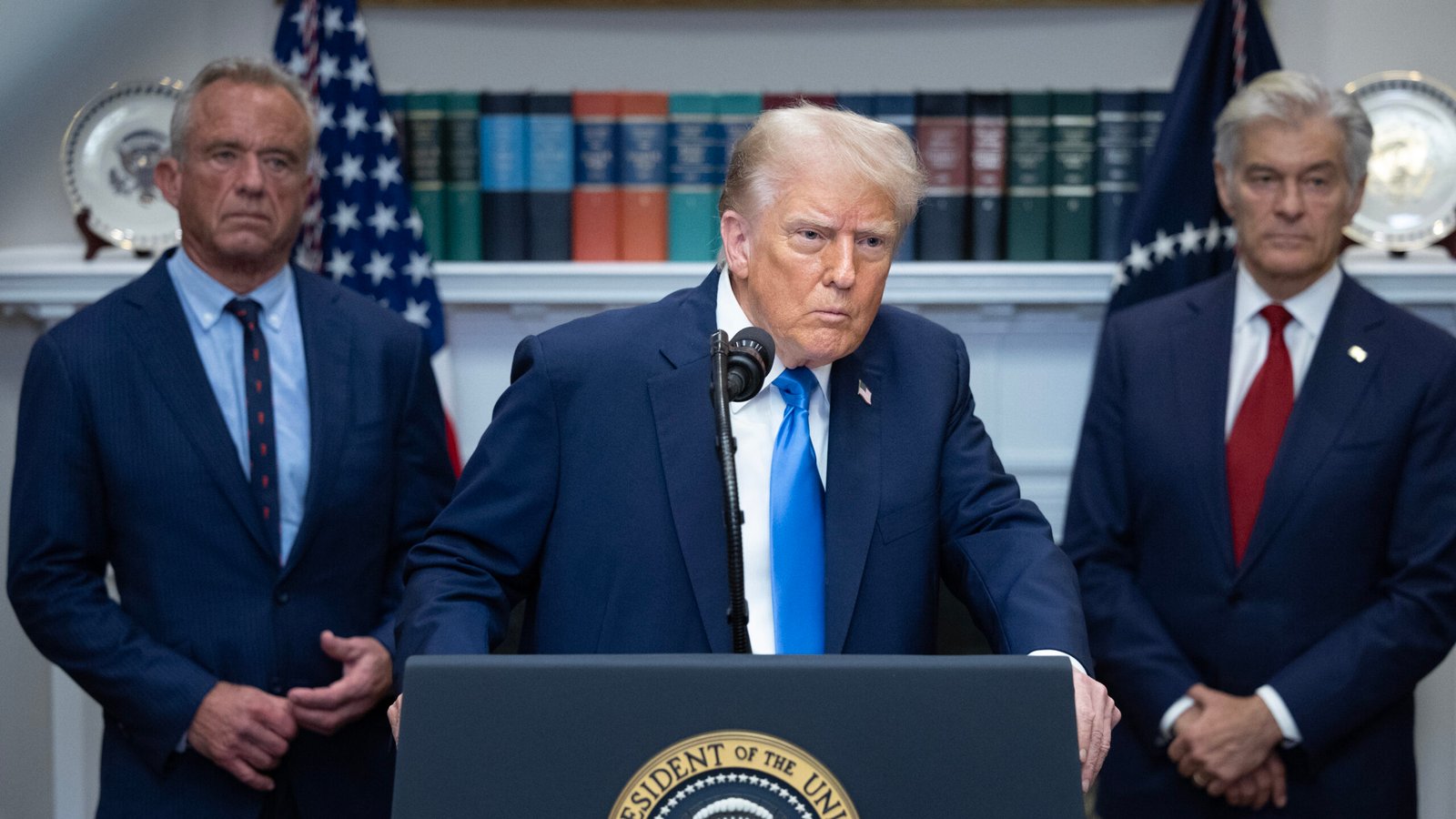

In September, the Trump administration took “bold action” on autism, including promoting the generic drug leucovorin as a promising treatment. In a news release, Marty Makary, commissioner of the Food and Drug Administration, claimed that “growing evidence shows” that the drug may be helpful. And at a White House press event, Makri suggested it could help “20, 40, 50 percent of children with autism.”
“In my opinion, hundreds of thousands of children will benefit,” he said at another point in the program.
The bold claims were clearly inspiring. A study published in The Lancet last week found that new outpatient prescriptions of leucovorin for children ages 5 to 17 increased 71 percent in the three months following the Trump administration’s moves.
But today it became clear that the rest of the FDA did not agree with the views of Macri and other administration officials. In an announcement, the regulatory agency said it had approved leucovorin for a rare genetic condition — but not for autism.
In comments provided to The Associated Press, senior FDA officials said they found little evidence to warrant expanding the drug’s use in autism and, thus, limited their review to the treatment of a rare genetic condition called cerebral folate deficiency (CFD) in adults caused by a genetic mutation in the folate receptor 1 gene (CFD-FOLR1).
<a href