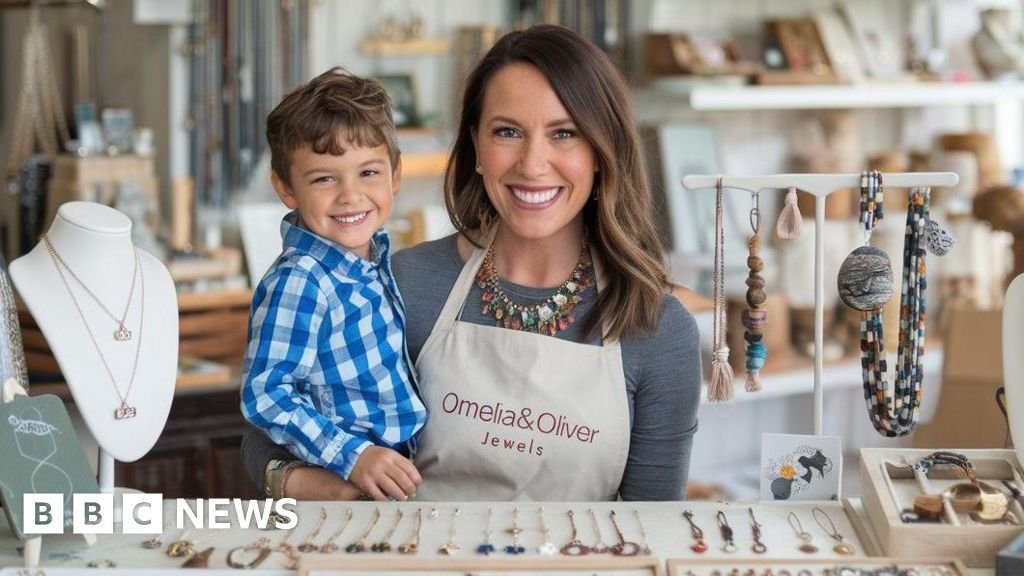

 Omelia and Oliver Jewels
Facebook owner Meta has been accused of allowing deceptive companies to “run rampant” on its platform, as dozens of people say they have become victims of sellers using AI-generated ads.
More than 60 people contacted the BBC after we revealed that unscrupulous foreign companies were using fake images and backstories posing as family-run businesses to lure buyers to Britain.
Some people said they have been targeted by ads on Facebook and Instagram and consumer guide Which? It said the businesses were using the platforms to “spread their lies more and more widely”.
Meta said it had removed content from six companies identified by the BBC as claiming to be based in England but shipping cheap goods from Asia.
The tech giant said it did not allow fraudulent activity and worked closely with Stop Scams UK to protect users.
One company removed from the platform is C’est La Vie, which claimed to be a longtime jewelry retailer run by Patrick and Eileen in Birmingham, but had a returns address in China.
Mabel & Daisy, which generated mother and daughter photos by AI and claimed to sell “timeless clothes” from a shop in Bristol, has also been removed from the platform after being exposed for selling cheap items from a base in Hong Kong.
Meta says other companies it is taking action against include clothing companies Sylvia & Grace, Chester & Claire, Harrison & Hayes and Olandra London, as well as accessories businesses Omelia and Oliver Jewels.
All reviews on Trustpilot are one star, with hundreds of customers saying they were duped into thinking they were buying from UK-based brands and got substandard goods.
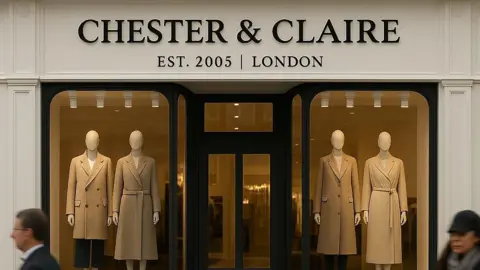 chester and claire
Harrison & Hayes claims to be a Manchester-based independent clothing store with “decades of experience”, but its return address is a central warehouse in China. It uses an AI-image of a shop front in a city that doesn’t exist.
Chester & Claire also uses an AI-generated image of a shop front to market its business, which it claims has operated in London since 2005 but is actually based in the Netherlands and sells clothes shipped from China.
Its terms of service state that imagery, stories, characters and boutique locations “may be created using generated AI” to “enhance the customer experience”.
The BBC contacted all businesses but received only automated responses.
‘It felt like a trusted brand on Facebook’
Claire Browne was persuaded to buy two dresses from Lux and Luna London for £73 each, after “constantly” seeing the company’s eye-catching adverts on Facebook.
When the dresses arrived a few weeks later they were made of poor material and “looked terrible”.
“After seeing it so much on Facebook it seemed like it was a trusted brand, you see all these clothing collections and I liked what I saw,” she said.
 claire brown
Ms. Brown, who works in technology marketing, said she reported the company to Meta but never received a response.
The company has now ceased operations, with a message on Facebook saying life had “taken a devastating turn” due to the death of a partner, an almost identical statement used by fake Birmingham jewelery business C’est la Vie.
Claire added, “It makes me feel really weird, because I hate scamming people and websites are things you would share with a friend.”
“There is a real lack of protection for consumers here.”
Another Facebook user, Stuart, said he had reported a number of questionable companies to the platform, but in response he was advised to “influence the ads you see by hiding ads and changing your ad preferences”. No other action was taken.
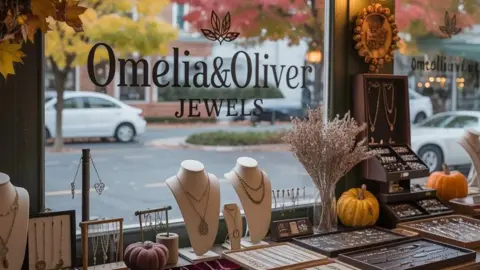 Omelia and Oliver Jewels
Some of the fraudulent companies discovered by the BBC appear to be controversial “dropshipping” schemes.
This is where a third party purchases products from a wholesaler and sells them with a significant mark-up, even though he has never seen the products himself.
The Advertising Standards Authority (ASA) recently banned advertisements for a so-called “British” clothing company that used images of roses, cobbled roads and the Union Jack while shipping goods from a warehouse in Asia.
The regulator said it was continuing to crack down on misleading advertising, but said platforms like Facebook played an “important role” in maintaining “responsible advertising” and continued to engage with them on how to stop those breaking the rules.
Which one? Said Meta had allowed fraudulent companies “to run on its platforms for too long” and said it should do “much more” to prevent scams and protect its users.
 sylvia and grace
Meta said it wanted users to report suspicious ads on its platform, which was an “important signal” to its review systems and could lead it to re-review advertising while improving policies.
Warning signs in social media ads
- Which one? It is advised to be wary of advertisements on social media that promote offers that are “too good to be true” and adopt pressure tactics such as closing sales with huge discounts.
- It says if you see an account recently created claiming to be a well-known company, you should be suspicious, especially if they only have a few followers.
- The guide also suggests reaching out to companies to see if the ads are genuine by searching for the company’s legitimate website rather than clicking on a link that appears to be a potential scam.
- Many companies claim to have thousands of positive reviews – but consumer website Trustpilot is often the best place to check legitimate experiences with fashion brands
- Experts who have verified some AI images used by companies say watchers beware Very Perfect – from the subject’s hair to their skin and teeth. And for those who have fabricated shop front photos, a quick Google can usually help find out whether they have a real address and presence on a UK high street.
<a href