
“The Federal Aviation Administration Air Traffic Organization had multiple opportunities to identify the risk of mid-air collision between airplanes and helicopters at Ronald Reagan Washington National Airport. However, their data analysis, safety assurance, and risk assessment processes failed to identify and mitigate that risk,” the board shared in findings.
The investigation revealed that the helicopter route was dangerously close to the route taken by civilian aircraft. NTSB Chair Jennifer Homendy said the FAA was supposed to conduct an annual safety review of helicopter routes, but the board did not find evidence that such a review occurred.
The NTSB also notified the FAA of 15,214 near-miss incidents, 85 of which were serious. Investigators said at a hearing Tuesday that such near-collisions were reviewed on a case-by-case basis.
“The data was in their own system,” Homendy told reporters. “This was 100% preventable.”
NTSB investigators said there was no positive safety culture in the FAA’s operational branch, the Air Traffic Organization, with some employees reporting facing retaliation for raising safety concerns.
Although safety concerns were raised about the mid-air collision in D.C. airspace, investigators said, the Air Traffic Organization failed to respond to these concerns. Homendy said tower personnel have also put together their own helicopter working group to “repeatedly” raise concerns and submit recommendations.
At the hearing, Homendy also said that “there were some concerns about the over-reliance on AI by the FAA”, but declined to make any connection between the incident and the use of AI.
“They have to be careful on their use of AI to pick up trends, to make sure it doesn’t miss some reports,” Homendy said. According to Loren Groff, the NTSB’s chief data scientist, the FAA is using AI to sort through large amounts of pilot reports.
“There really needs to be a human understanding of what all these things together mean,” Groff said.
The Chairman also indicated that the FAA still has to learn from its mistakes.
“Commercial airlines have called me to say the next plane will be in Burbank and no one at the FAA is paying attention to us,” Homendy said.
The FAA still does not have a standardized definition of a near-proximity incident, investigators said.
The report found that in addition to inadequate safeguards by the FAA, the military’s aviation security system was also riddled with failures. According to investigators, the Army failed to allocate adequate resources for aviation security management for DC area helicopter operations and also lacked a positive security culture.
The close call issue in aviation is something the NTSB has been sounding the alarm about for years. In 2023, Homendy told a US Senate panel that there had been an increase in serious aviation incidents, and was a symptom of a strained aviation system.
“We cannot wait until a fatal accident forces us to take action,” Homendy said at the time.
What happened on 29th January?
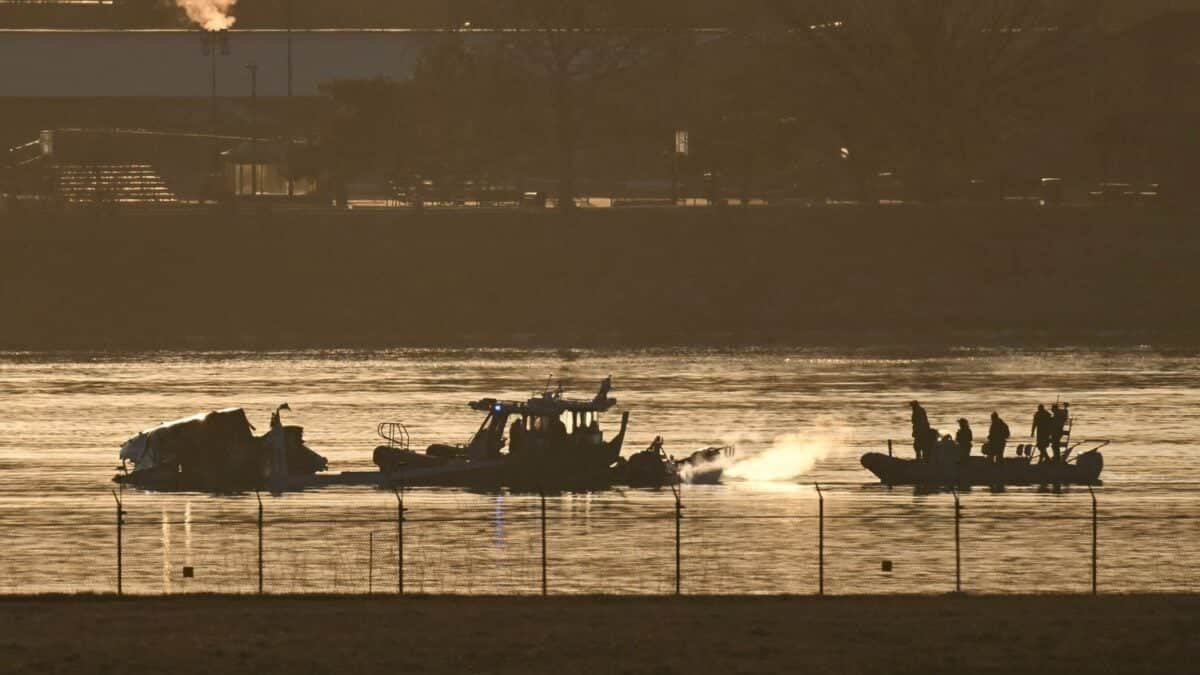
On January 29, 2025, over the Potomac River in Washington, DC, an Army Black Hawk helicopter crashed into an American Airlines regional flight from Wichita, Kansas, as it was about to land at Ronald Reagan National Airport in Washington, DC. The incident is considered to be the deadliest plane crash in the country since 2001.
The tower at Ronald Reagan National Airport was managing both helicopter and flight traffic simultaneously. The tower was understaffed at the time, but the Board found that there were still enough staff to man the control posts. The decision depended on the operations supervisor, who was actually working long shifts and investigators believe “the lack of a mandatory respite period for supervisory air traffic control personnel” may have led to the poor performance.
“Continually maintaining combined helicopter control and local control positions on the night of the accident increased the local control controller’s workload and negatively impacted his performance and situational awareness,” the report found.
Controllers informed the helicopter of the arrival of the passenger aircraft, but failed to warn the helicopter’s flight crew. The pilots could not see the helicopter approaching, and the airplane lacked an air collision avoidance system that could have alerted the pilots to the risk posed by the helicopter.
When warned, the helicopter crew said they had their sights set on the incoming flight, but they probably mistook the plane for another aircraft, as the controller did not specify direction or distance.
The helicopter was also flying approximately 100 feet above its maximum altitude, and it is possible that the crew may have seen an incorrect altitude reading. According to the NTSB’s findings, the FAA and the Army failed to identify “inconsistencies” between the error tolerances of barometric altimeters in the helicopters and the helicopter route, which meant that the helicopters were “routinely” flying higher than expected and even potentially crossing into the path of airplanes.
The Board concluded, “It is possible that inaccurate settings may exist on other aircraft used in the War Department’s armed services.”
<a href