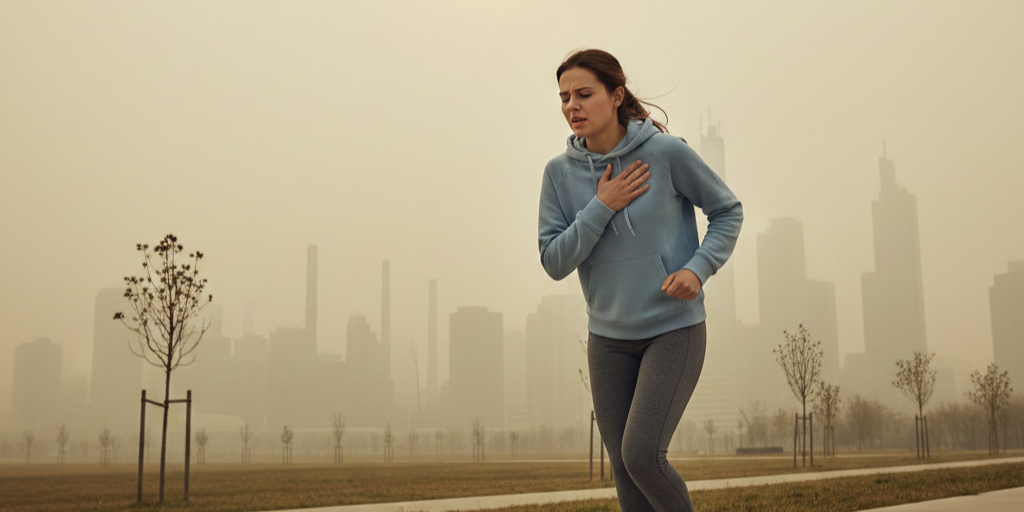
An international team, including researchers from University College London (UCL), analyzed health data from more than 1.5 million adults collected over more than a decade in countries including the UK, Taiwan, China, Denmark and the United States.
The researchers focused on fine particulate levels, particularly small particles known as PM.2.5These fine particles are smaller than 2,5 micrometers; They can become trapped in the lungs and enter the bloodstream, where they can cause inflammation and long-term damage,
Also read: Study found that humans have tilted the Earth 31.5 inches since 1993
The researchers found that adults who exercised at least two and a half hours a week — moderate to vigorous activity such as jogging or other sports — generally had a 30% lower risk of dying during the study period than those who were less active. But in areas where the annual average PM2.5 At more than 25 μg/m³, the protective effects of exercise dropped to only 12–15%.
The protective effects of exercise become even weaker in more polluted areas. on PM2.5 At levels above 35 μg/m³, where about a third (36%) of the global population lives, exercise offers even less protection, especially against the risk of death from cancer.
“Our findings emphasize that exercise remains beneficial even in polluted environments,” lead researcher Professor Po-Wen Kuo said in a statement. “But improving air quality could significantly increase these health benefits.”

Co-author Professor Andrew Steptoe said, “Our study shows that toxic air can, to some extent, block the benefits of exercise, although not eliminate them. The findings are further evidence that fine particle pollution can harm our health.
“We believe that both clean air and physical activity are important for healthy aging, and so we encourage greater efforts to prevent pollution levels that harm health.”
The study looked at data from seven existing studies, including three previously unpublished datasets, which included both summary statistics and raw participant-level data. The researchers carefully accounted for a wide range of other factors, including income, education, smoking and pre-existing chronic conditions.
Also read: Men need more exercise than women to reduce heart disease risk
However, the team says their data comes mostly from high-income countries, so the impact may be greater in lower-income areas, where PM2.5 Levels often exceed 50 μg/m³. They also cited a lack of indoor air quality data and limited information on participants’ diets as part of the study’s caveats.
“We don’t want to discourage people from exercising outside,” said co-author Professor Paola Zaninotto. “Checking air quality, choosing cleaner routes, or reducing intensity on polluted days can help you get the most health benefits from your exercise.”
This study reminds us of one of the world’s most pressing problems: air pollution. Staying active is not enough to protect your health if the air around you is toxic. Clean air and regular exercise go hand in hand, and tackling pollution isn’t just about the environment – it’s about our bodies too.
The study was published in bmc medicine,
<a href