Presented by Norton
For 39 days this summer, the planet will do almost the same thing at the same time. The 2026 World Cup will feature 104 matches in 16 cities across the United States, Canada and Mexico, with billions of people expected to watch during the tournament. This could be one of the largest sharing events ever held on the Internet.
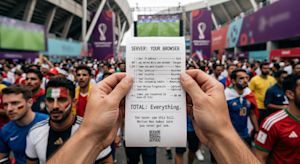
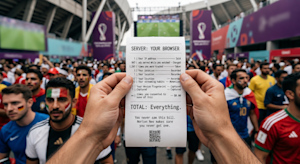
What has changed since the last tournament is not the scale, but the screen. For a growing share of the audience, the match will not be televised. This will come through a browser tab. The problem is that the browser you have today does not give you a seamless and reliable way to watch the World Cup for free.
In the US, most viewers now expect to stream tournaments digitally rather than watching on cable or satellite. This only works if you have a paid subscription. But there is a challenge – for example, fans coming from Europe who want to watch the game in the US like they are able to watch it for free in Europe.
Watching the World Cup is harder than it should be
Ask anyone who has tried to watch a tournament online and the answers are remarkably consistent every round. Streams stutter and buffer when it matters most. The “free stream” forwarded by someone turns out to be a series of similar-looking sites and dead-end links. And legitimate platforms will want a credit card, and maybe even a generous helping of personal data, before playing even a minute.
One company’s bet: Neo
Norton’s answer is Neo, a browser built on the premise that security and accessibility can live in the browser software itself, not in a pile of add-ons that the user has to find, install, and pay for. It’s less about adding features than removing friction. Remove the steps between someone and what they came for.
“The tournament is the kind of moment when the modern web was supposed to be great: everyone, everywhere, on the same thing in real time,” says Howie Xu, chief AI and innovation officer for its family of brands, including Zen and Norton. “Sometimes it takes a PhD to figure out how to watch matches correctly. Our view is that the browser should have done more. That’s why we’ve re-invented the browser to enable truly frictionless, secure and fast access to the content they deserve.”
This is a remarkable situation coming from a security brand that historically sold security as a separate thing that you bought and remembered to run. But Neo removes this separation. Now, they’re reinventing the model so that the browser is the complete solution for secure, frictionless, fast streaming.
Scams come even before the match starts
Before official ticket sales began, fraudsters were already at work on the tournament: creating fake listings, cloned resale sites, phishing messages designed to extract money and personal details. The methods are worn out. Fake “official” portals mimic the real branding behind similar-looking URLs; Phishing emails impersonate organizers and threaten exclusive access; Social ads promise guaranteed seats at suspiciously low prices and don’t provide a fake PDF or anything. Streaming fans follow the same logic, where the cheapest, most convenient link is often the most dangerous.
This is where Norton’s back catalog appears inside everyday browsing. Anti-phishing, scam-site detection and malicious-page blocking run in the background, flagging dangerous links as they appear after the card number has already been entered. Whether this is enough to change fan behavior is an open question. People are remarkably willing to click on the alert when a match is about to start. But moving the security measure into the browser, rather than a separate app, puts it where the risk really is.
Access without setup wizard
It’s also just a matter of accessing a valid stream. Finding officially licensed providers depending on the country, limiting connections at peak hours, and varying restrictions on platforms all get in the way. The usual solution is to configure a separate VPN with your own account and billing, which is its own kind of friction. Neo folds Norton’s award-winning VPN technology into the browser itself, and can be easily turned on or off. This matters most in the situations that the tournament actually creates: connecting to an unfamiliar hotel network, an airport layover, a one-time public Wi-Fi where a large portion of the fans say they will watch.
Neo also searches for legitimate streams directly in the browser. It has a dedicated widget with live game schedules, match reminders and direct streaming links for every game, offering the right licensed source for your market without having to search separately.
“Most people don’t want to manage their security or the validity of a link, they want to watch the game,” says Xu. “So we took the burden away from the individual. Security is on, the connection is private, and you never have to set up anything.”
cool by design
Underneath the tournament use case is the idea that Neo keeps coming back to: cool by design, privacy and security settings work together inside a clean interface rather than buried in menus. Because the browser can guess instead of waiting to be asked, it brings up what the fan wants next. A reminder about an upcoming match, a quick summary of the day’s results, a prompt to resume where they left off. Personal data remains on the device until the individual decides otherwise.
Whether this approach wins meaningful share in the market Chrome still dominates is undecided. But Norton Neo says they invented a browser to make the lives of 5.8 billion potential visitors easier.
Fans can find the streams available for their market at lp.neobrowser.ai/tournament_stream.
Sponsored articles are content produced by a company that is either paying for the post or that has a business relationship with VentureBeat, and they are always clearly marked. Contact for more information sales@venturebeat.com.
<a href