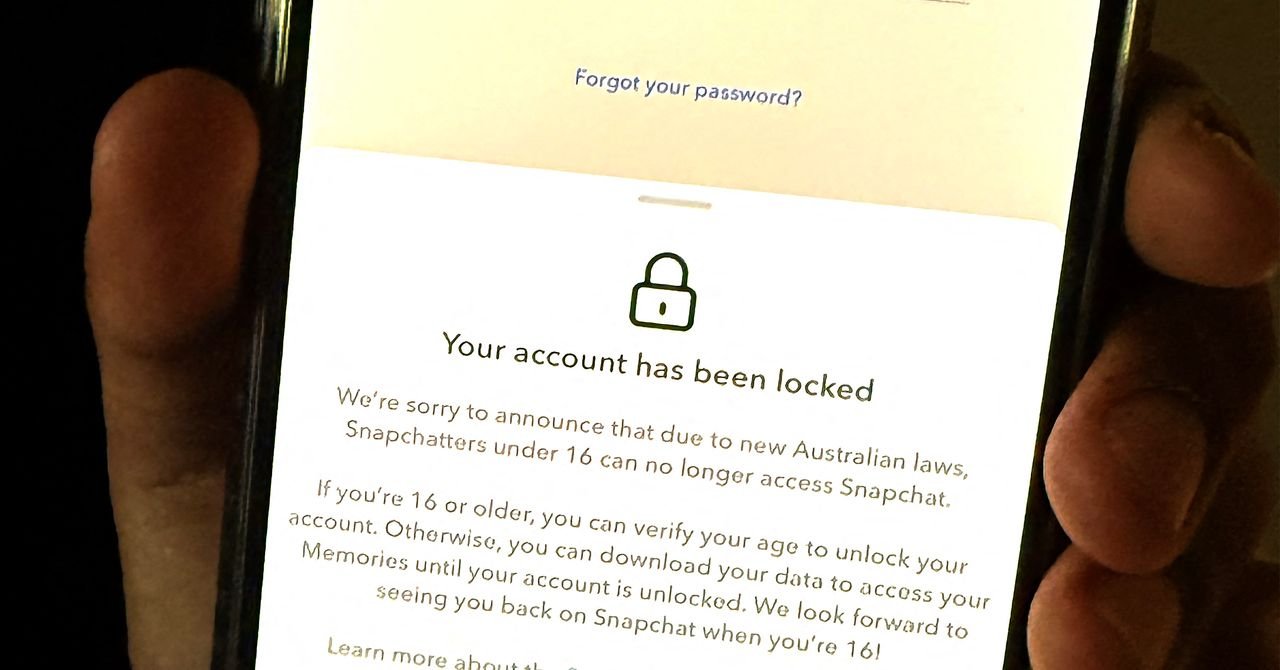
Five member states are already experimenting with solutions this year, but they don’t all seem to be on the same page. It was told in the press conference that France and Denmark are far ahead, while Greece, Spain and Italy are lagging behind. This is why some experts doubt that the digital wallet will be implemented within the established time frame.
An alternative to the American model
Players already visible in the European market for age verification include Yoti, which TikTok is using for this purpose in Europe along with other methods like credit cards and documents, and Persona, which is an identity- and age-verification provider used by platforms like Roblox, Discord, and Reddit.
The latter has a much more data-intrusive model, which the Commission says it wants to avoid. In fact, its services include fingerprint verification, facial recognition, screening a person’s face and comparing it with a person included in a particular list, and maintaining all such data for three years.
In February 2026, it was also revealed that Persona exposed thousands of files publicly online. The company responded by saying that it was an isolated test environment and the data was not actually exposed, and furthermore, it does not work with US government agencies to provide data on users.
In any case, the US model shows the risks of age verification based on large-scale collection and analysis of identity data. This highlights the need for a European option, which takes the concept to another level: not so much “prove your identity so I can check your age” but “just prove your age, without revealing anything else.”
Brussels is promoting an open source architecture, giving scope for both member states and market players to publish national or derivative versions. Skytel and T-Systems were mentioned during the press conference as services to watch in Europe. Whoever develops the system will still have to consider a “triangular” architecture, officials say: A third party certifies that the user meets the required characteristics, that is, being above a certain age, without the site obtaining documents or other personal data. To make the concept more understandable, the Commission cited the experience of Covid certificates.
an obvious loophole
However, there remains a clear distance between the technological promise and the social reality of the problem. As stated in the press conference mini wallet It seems designed primarily to prevent the site from learning too much about the user, but not at all to solve the most trivial bypass: a minor using an adult’s phone, credentials or ID. In other words, the system may perhaps reduce the amount of personal data in circulation, but it does not automatically eliminate the risk of age verification being bypassed in practice.
Despite this, mini-wallets appear to be the most promising solution at present. However, the Commission has clarified that this is not the only possible solution. The door remains open to alternatives, provided they are “equally effective”. Pornhub is already involved in the pilot phase, while other operators have been invited to participate.
In short, Europe could become the first major policy laboratory where age verification ceases to be a formality and becomes a real infrastructure, with all the promise and – not to be ignored – all the risks.
This story originally appeared on WIRED Italia and has been translated from Italian.
<a href