A unique thing is included in Forbes’ list of the world’s highest-paid female athletes of 2025.
Tennis star Coco Gauff tops the list, earning an estimated $33 million, followed by her counterparts Aryna Sabalenka ($30 million) and Iga Swiatek ($25.1 million), but followed by Elaine Gu. The leading trio are household sports names, the freestyle skier is not Gu, but his earnings? $23.1 million.
Every year since the 22-year-old won two gold medals and a silver in big air, halfpipe and slopestyle at the 2022 Beijing Winter Olympics, she has become the youngest Olympic champion in freestyle skiing at the age of 18 – ranking her among the top five highest-paid female athletes.
Forbes’ latest ranking puts her above tennis stars Naomi Osaka and Madison Keys and basketball’s Caitlin Clarke, while the next Winter Olympian on the list, tied for 18th, is Lindsey Vonn, 41, who earns $15 million less than Gu.
The all-time leader in freeskiing World Cup wins will defend her big air and halfpipe titles at the Winter Olympics in Milan Cortina this month. But despite the medals and wins, the 2026 Olympic torch bearer made $0.1 million from skiing last year — $23 million of which came from her lucrative off-field endorsements, which dwarfed every other athlete bar Gauff.
Gu is an IMG model and has walked the runway for brands such as Victoria’s Secret and Louis Vuitton. It is not surprising that the majority of her earnings come from off-field endorsements, as this is common in most women’s sports as exposure increases faster than salaries.
Earnings are highest on the courts in tennis as men and women are paid equal prize money at the four Grand Slam tournaments since 2007, but this does not apply to smaller tournaments. Gauff earned $8 million on the court, Sabalenka earned $15 million, matching her playing earnings, and Swiatek earned $10.1 million.
Most female athletes may have a lower base salary, but their marketability is higher.
“They have that same celebrity pull of being a big name in their sport and being the perfect brand endorser,” said Josh Harshman, global COO of London-based sports marketing agency Ten Toes. “If you compare the budget of the Arsenal women’s team versus the men’s team, they are not the same, but high-profile people tend to have a brand budget.”
Gu, who was born and raised in San Francisco but began representing his mother’s native China in 2019, is also known by his Chinese name Gu Ailing. In the skiing world, he is famous for scoring high and performing difficult corkscrew maneuvers that make your stomach turn just watching. But another interesting aspect is how she has become such a commercial force.
Her talent as a promising teenage skier made her stand out, but equally, at the age of 16, after one summer trip to China she was on the cover of six different fashion magazines.
Harshman, who works with major sports talents, brands and rights holders, describes them as, from a business perspective, a “perfect storm”.

Gu, who at the age of 17 became the youngest honoree on the Forbes China 30 Under 30 list after claiming two golds and a silver at the 2020 Winter Youth Olympics, says despite her success in skiing, there are several ingredients that contribute to her professional success.
Thanks to his American and Chinese heritage, Gu has appeal in two of the world’s largest markets. As of early 2026, Gu has over seven million followers on the Chinese social media platform Weibo account, five million more than his English-language Instagram page. Despite freestyle skiing not being a major sport in any of these countries, its commercial potential is huge.
“If you have an athlete with a real, authentic story in both markets, you’re on to a winner,” Harshman said.
In the lead up to the 2022 Beijing Olympics, their portfolio of sponsors, which extended beyond the world of skiing, was huge. He covered billboards throughout the Chinese capital, but since then, his portfolio has become more selective, focused on a core group of partners.
Gu has long-term advertising deals covering fashion and luxury with Western brands such as Porsche, Red Bull and Swiss watch maker IWC Schaffhausen, and Chinese brands including Anta Sports, Bosideng Jacket, Mengniu Dairy and most recently TCL Electronics. He recently told the American news magazine Time that financial considerations related to representing Chinese companies were never a factor in his decision to switch allegiances.
Chinese and American crossovers have not come without their difficulties. Gu has faced criticism for his decision to represent China. For example, ahead of the 2022 Beijing Olympics, right-wing commentator Tucker Carlson at Fox News described her choice as “dumb”, while the channel’s co-host Will Cain said she was “ungrateful” and had “betrayed America.” In June 2025, Gu said on The Burnouts podcast, hosted by two Stanford alumni, that hearing such comments initially made him feel hurt, misunderstood, and disappointed.
He added, “Then I felt very angry.” “Who are you to go online on this big platform? At least invite me to debate. Let me defend myself. At least let me tell my story. It’s inappropriate for you to unilaterally threaten me. I’m not a fan of that.”
Meanwhile, in the same year, the English-language newspaper South China Morning Post reported that Chinese Internet users described Gu as “unpatriotic” and “two-faced”.
“Over the past five years, I have represented China in 41 international competitions and won 39 medals for China,” he told his 20 million followers on Douyin, the Chinese version of video-sharing platform TikTok, in response to the criticism. “I have introduced three head coaches and donated freestyle skis to the national team, and have consistently advocated for China and women on the global stage. What have you done for the country?”
In a 2022 interview with The New York Times, Gu declined to comment when asked about his citizenship status. China prohibits dual citizenship but, according to the Times article, there were no official records to show that Gu had given up his US citizenship. His representative declined to comment when asked athletic Before the 2026 Winter Olympics. In several interviews over the years she has said: “When I’m in America, I’m American, but when I’m in China, I’m Chinese.”

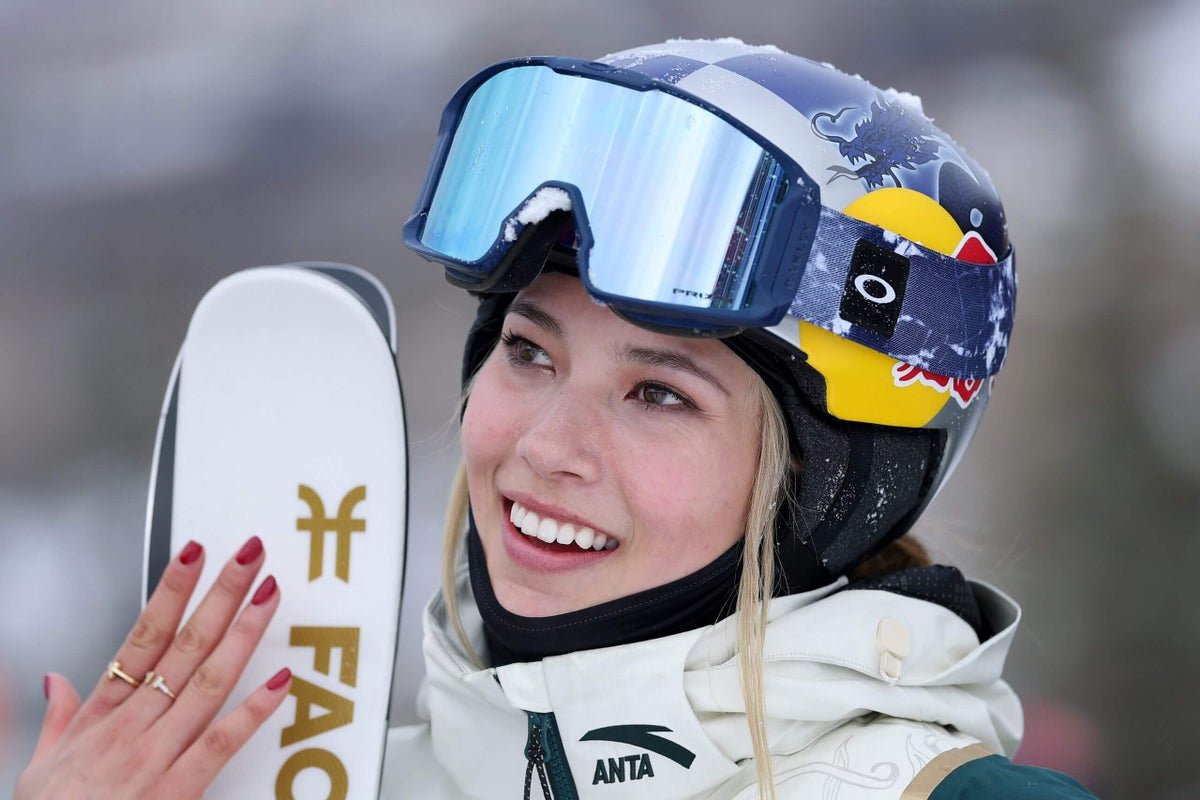
Eileen Gu Ailing competes at the Freeski Halfpipe World Cup at Genting Snow Park in Zhangjiakou, China on December 11, 2025. (Lintao Zhang/Getty Images)
It may sound cliché, but Gu has developed his profile in a way that makes him relatable to younger audiences. Plus there are the stunning Vogue and Elle photoshoot mirror selfies and journal entries written on social media. Sitting in the make-up chair and doing homework was once a normal thing for her.
A month after the Winter Olympics, the Life video shows her cooling off a day with dry ski training and a 5km run, along with photos of her eating in the car and reading while plugged into an oxygen therapy chamber.
Not every 22-year-old has studied at Stanford and Oxford, done backflips on ski slopes, posed for Sports Illustrated’s swimsuit issue and been named one of Time’s 100 Most Influential People, but Harshman said, “For so many young people, this would be aspirational.”
As a young athlete at the top of his game with East-West crossover, he is extremely marketable, even without a compelling backstory.
When she was young, skiing for Gu – her mother Yan was a part-time ski instructor – was nothing more than a weekend hobby. A professional career began when she was a teenager. At the age of 15, she won her first Junior World Cup competition in Italy in 2019, representing the United States.
Fast forward six years and Gu, going into the final race in second place with poor condition, went out with her moves and claimed her 19th World Cup victory in the first halfpipe event of the FIS Freestyle Ski 2025-26 season at China’s Secret Garden in December, making a triumphant return after suffering an injury last January and being forced to sit out the Asian Winter Games and World Championships.
She told the media after her Secret Garden win, “I’ve been training a lot, I’ve been working very hard, and every time I stay extra hours, run extra, it’s proof to me, it’s proof to me that I’m a winner and I deserve to win.” “I train like I’ve never won, and I compete like I’ve never lost.”
It is his work ethic that drives his ambition. After all, she can’t afford to be thinking about her endorsement deals while performing unprecedented stunts more than 20 feet in the air.
Harshman believes that, even if Gu stopped skiing tomorrow, his commercial value would remain intact.
“In the modern world, people are increasingly drawn to celebrity culture and being able to connect to a person more than a brand, team or league,” Hershman said. “…Now that she has a public profile, she’s doing a great job of maximizing it.”
As part of one of his handwritten journal entries, a photo of which he posted on his Instagram in January, Gu wrote: “My work is meaningful because of the positive impact it not only has on me – mind and body – but also with the added privilege of reaching out to other people and contributing to the legacy of the game.
“To get lost in its vastness is the greatest luxury.”
Most people want money, but for Gu, medals matter most.
<a href=