In 2010, the Deepwater Horizon oil rig exploded in the Gulf of Mexico, causing the largest marine oil spill ever recorded. After the disaster, whale scientist Ian Kerr traveled to the area to study how the spill had affected sperm whales, aiming special darts at the animals to collect tissue samples the size of a pencil eraser.
It was not going well. Every time his boat approached the whale at the surface for air, the animal would disappear beneath the waves before he could reach it. “I felt like I was playing whack-a-mole,” he says.
As darkness fell, a whale dove in front of Kerr and covered him with whale snot. That unpleasant experience gave Kerr, who works at the conservation group Ocean Alliance, an idea: What if he could somehow fly over the whale and collect that same snot? Researchers can glean a lot of information from whale snot, including the animal’s DNA sequence, its sex, whether it is pregnant, and the composition of its microbiome.
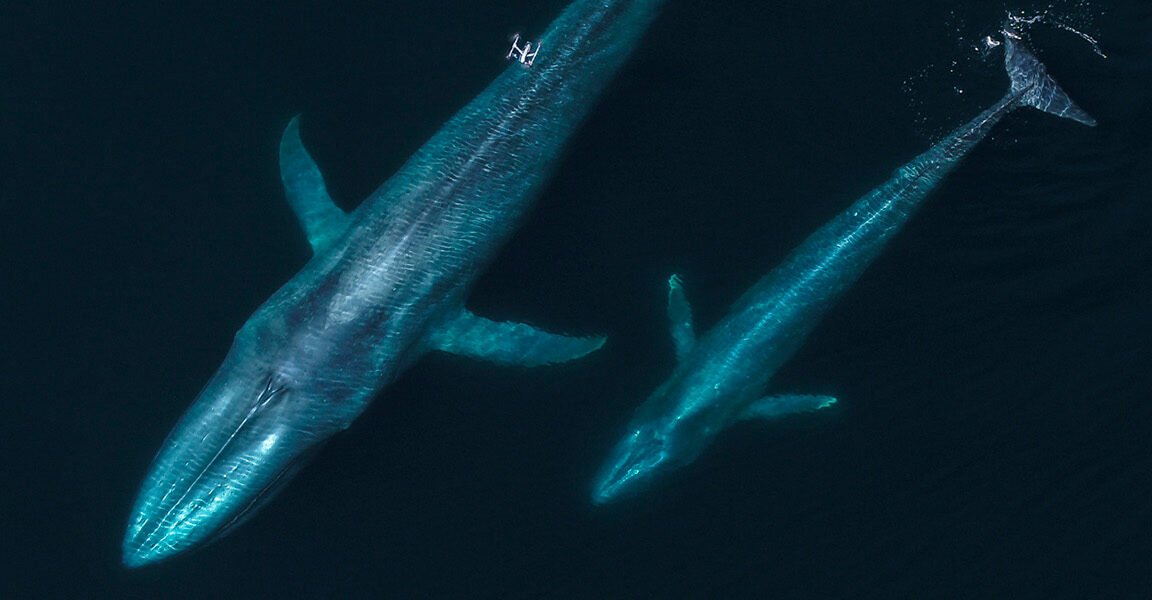
After several experiments, Kerr’s idea transformed into what is known today as the Snotbot: a drone equipped with six petri dishes that collects the whale’s snot as it flies over the surface and exhales through its blowhole. Today, such drones are deployed to collect snot not just from sperm whales, but all over the world: They’re also collecting scientifically valuable mucus from other species like blue whales and dolphins. “I would say drones have changed my life,” says Kerr.
It’s not just mucus
Collecting snot is one of many ways drones are being used to study whales. Over the past 10 to 15 years, drone technology has progressed significantly, becoming affordable and easy to use. This has been a boon for researchers. “Scientists are finding applications for drones in nearly every aspect of marine mammal research,” says ecologist Joshua Stewart of Oregon State University’s Marine Mammal Institute.