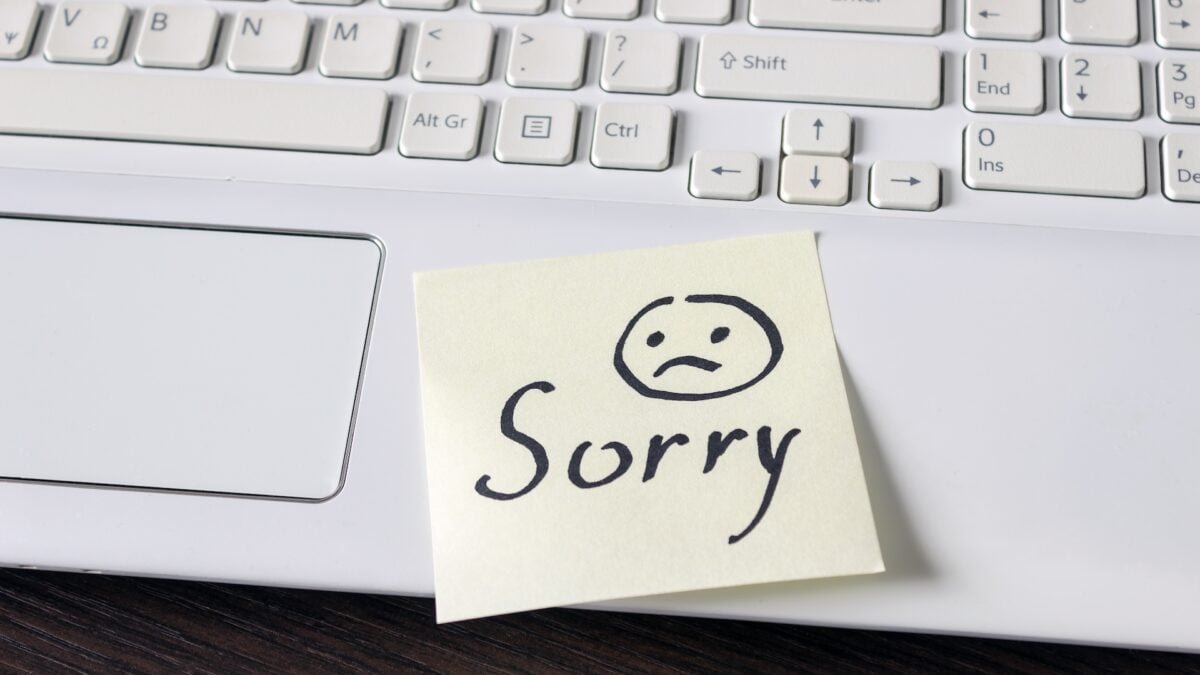

According to a report in the New Zealand Herald, Mieke Ngaire Winn was being sentenced last week for arson, theft, assault and resisting police when Judge Tom Gilbert became “unimpressed” with the apology letter he gave to the owner of the house he burned down as well as assaulting first responders. Winn bit a policeman and reportedly “felt pleasure” after telling the officer that he had AIDS.
“Out of curiosity, I used two AI tools and prepared a letter for a judge in which I expressed remorse for my crime,” the judge reportedly said, according to a transcript read by The New York Times. “It immediately became clear that these were two AI-generated letters, albeit with variations around the edges.”
The judge reportedly seemed open to the idea that using AI is not a bad thing. But he raised the point that “when one is considering the genuineness of a person’s remorse, as far as I’m concerned, simply producing a computer-generated letter doesn’t really get me anywhere.”
Of course, the question is whether a human can ever take ownership of something produced by an AI chatbot. Some people argue that you can do this, especially if you tell the robot a lot of specific things about what you’re looking for. Some people compare it to photography, where the human is getting substantial assistance from a machine to create an image, and to the more “pure” art of drawing or painting.
But many others would argue that you’re not actually producing something that would allow you to take ownership with signs alone. The US Copyright Office agrees with those in this camp, given the fact that AI-generated works cannot be registered under US copyright law.
Obviously the world is still trying to figure out how to properly assess the validity of AI-generated work. Children are increasingly using tools like ChatGPT to do their homework, raising questions about what literacy might look like in the near future.
The ubiquity of generative AI makes it feel like the genie is out of the bottle. But we still have a ways to go until we figure out the social norms around its use. In the meantime, it’s probably a good idea not to rely too heavily on consumer-available AI for important things like writing legal documents or giving medication to a loved one.
Court pardons probably seemed like a safe use for this woman in New Zealand, but you also have to consider what would happen if you got caught. Because “sorry” doesn’t sound quite the same if the judge knows you didn’t write it yourself. According to the New Zealand Herald, a pre-sentence report suggested the woman should not serve prison time for her arson and would instead be placed on home detention. The judge sentenced him to 27 months in prison.
<a href