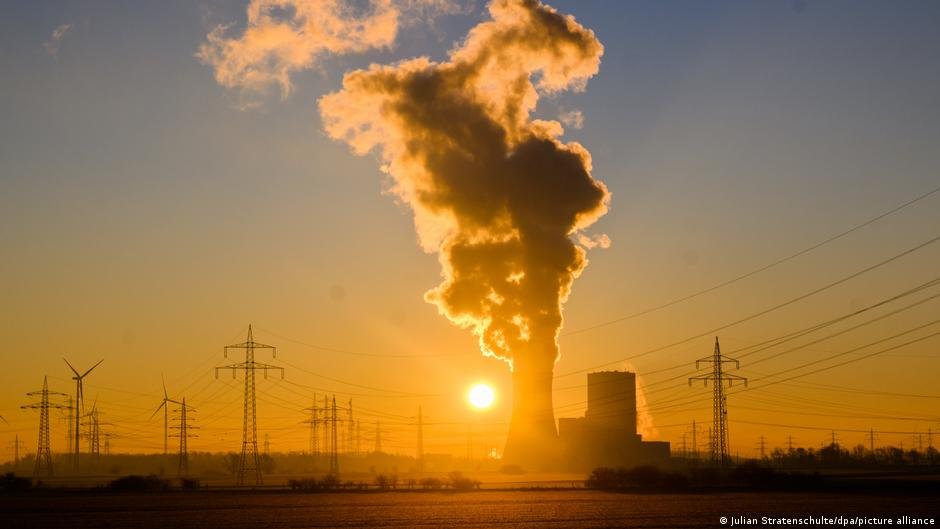
The latest text omits mention of a road map to move away from burning fossil fuels that are altering Earth’s climate and exacerbating droughts, floods, storms and deadly heat.
Although this transition beyond oil, coal and gas was mentioned in a draft document earlier this week, the latest version instead includes proposals to increase finance for adaptation and trade and accelerate emissions reductions in national climate plans.
Yet it is the topic of accelerating the world’s transition away from fossil fuels that has sparked heated conversation over the past week. Deep differences have emerged between countries supporting the roadmap and a significant faction, including petro-states such as Saudi Arabia and Iran, which are strongly opposing it.
“We are disappointed by the text currently on the table,” EU Climate Commissioner Wopke Hoekstra said in a statement to AFP.
Push for quick deal foiled by fire
Host Brazil has pushed negotiators hard to reach a quick agreement at the summit, which traditionally takes extra time. This year’s talks have been marked by indigenous protests, the notable absence of the US and deep rifts over finance, trade and fossil fuel phaseout, but there was some hope that an agreement would be officially reached late Friday.
But on the final day, talks were disrupted after a fire caused by an electrical fault broke out in part of the official UN negotiation area. No serious injuries were reported, but the venue was closed for hours, disrupting talks.
Negotiations are now underway in response to the latest text, which requires unanimous approval for adoption.
At the same time, the stakes of this year’s UN climate summit on the edge of the Amazon rainforest are higher than ever. Record-breaking emissions and temperature extremes are exacerbating weather and pushing the world into an increasingly uncertain future.
Despite all the challenges, Brazil began the summit with unabashed optimism, and called on countries to unite in the spirit of mutirao – a Portuguese word of indigenous origin meaning collective effort – of the COP promises of “implementation” and “truth”.
Fossil fuel road map in the spotlight
Whether negotiations deliver on a fossil fuel roadmap is proving to be an important litmus test for delivering on these promises.
Two years ago, a historic agreement on transitioning away from fossil fuels was reached at COP28 in Dubai.
Yet with no set targets or deadlines to get there and emissions at record levels, more than 80 countries, including France, Germany, Kenya and Colombia, have used the conference in Belém as a platform to push for progress in turning words into reality.
Brazilian President Luiz Inácio Lula da Silva made a surprise second visit to the talks this week in a bid to lend political importance and put the roadmap back on the agenda.
“We are serious – we need to reduce greenhouse gas emissions,” Lula told reporters. “We have to start thinking about how to live without fossil fuels.”
The latest draft text has disrupted that momentum.
Supporters of the plan have reportedly indicated that they would block any agreement that does not include a commitment to phase out fossil fuels.
In a letter to the COP30 presidency drafted by Colombia, nearly 30 countries said, “We cannot support an outcome that does not include a roadmap to implement a fair, orderly and equitable transition away from fossil fuels.”
Monique Barbat, France’s ecological transition minister, told AFP eliminating the word fossil fuel from the new text was “an incomprehensible omission at a time of climate emergency”.
As talks approach the final stages, tensions over the issue are likely to increase.
Climate finance: the billion dollar question
Friday’s draft text proposes nations triple adaptation finance by 2030 from 2025 levels, another issue that has proven to be a central issue in Belém this year.
Climate-vulnerable developing countries have called on industrialized countries to significantly increase aid to transition to clean energy and deal with the consequences of extreme weather resulting from planetary warming.
At COP29 in Azerbaijan last year, a target of $300 billion per year by 2035 was agreed. That money is meant to help countries cut emissions as well as deal with drought, heat, hurricanes and other extreme weather. But many countries consider it much less than required.
Strengthening finance specifically targeted at adaptation is a particular challenge.
“We need to leave Belém here with real commitments in adaptation finance. We need partners to keep our commitments,” Steven Victor, environment minister of the Pacific island nation of Palau, told DW. “Unfortunately we have been challenged in our drive to increase adaptation finance, which surprises us when our demands are based on what we are seeing on the ground.”
The new text does not make clear whether the threefold adaptation finance will come from rich developed countries or the private sector and other sources such as development banks.
Poorer nations, which have insisted on stronger guarantees of public funding, may again be disappointed by the draft text this year.
Private finance investment in adaptation – which can include projects such as strengthening buildings and infrastructure from storms – is often difficult to attract. While important in saving lives, it brings little financial benefit.
More space in future COP for thorny trade issue
The latest proposed text also includes a proposal to launch a “dialogue” on trade at the next three annual climate conferences that would involve governments and other actors such as the WTO.
This is likely to be viewed positively by China, which has pushed for greater prominence for trade in climate talks.
The EU has faced criticism from countries such as South Africa and India in Belem for its proposed carbon border levy, which would put a price on carbon-intensive imports. Critics say this would make products more expensive and less competitive in developing countries that are slow to move to renewable energy.
What about rising emissions?
The latest text also stressed the need to strengthen efforts to cut emissions in line with the Paris Agreement.
A decade ago, the landmark Paris Agreement set a goal of limiting temperature rise to 1.5 degrees Celsius (2.7 Fahrenheit). But today, scientists predict temperatures will rise more than 2 degrees Celsius by 2100.
National climate action plans – known as NDCs, which the UN asked countries to submit ahead of COP30 – have been criticized for falling too short of meeting the target agreed in 2015.
The draft text proposes a voluntary initiative to accelerate the implementation of national climate plans and encourage international cooperation to keep the 1.5C target alive.
It also details the launch of the “Belém to 1.5 Mission”, which will encourage investment in NDCs and climate mitigation and adaptation plans.
Edited by: Tamsin Walker
<a href