
MPSharwood/WikiCommons
hide caption
toggle caption
MPSharwood/WikiCommons

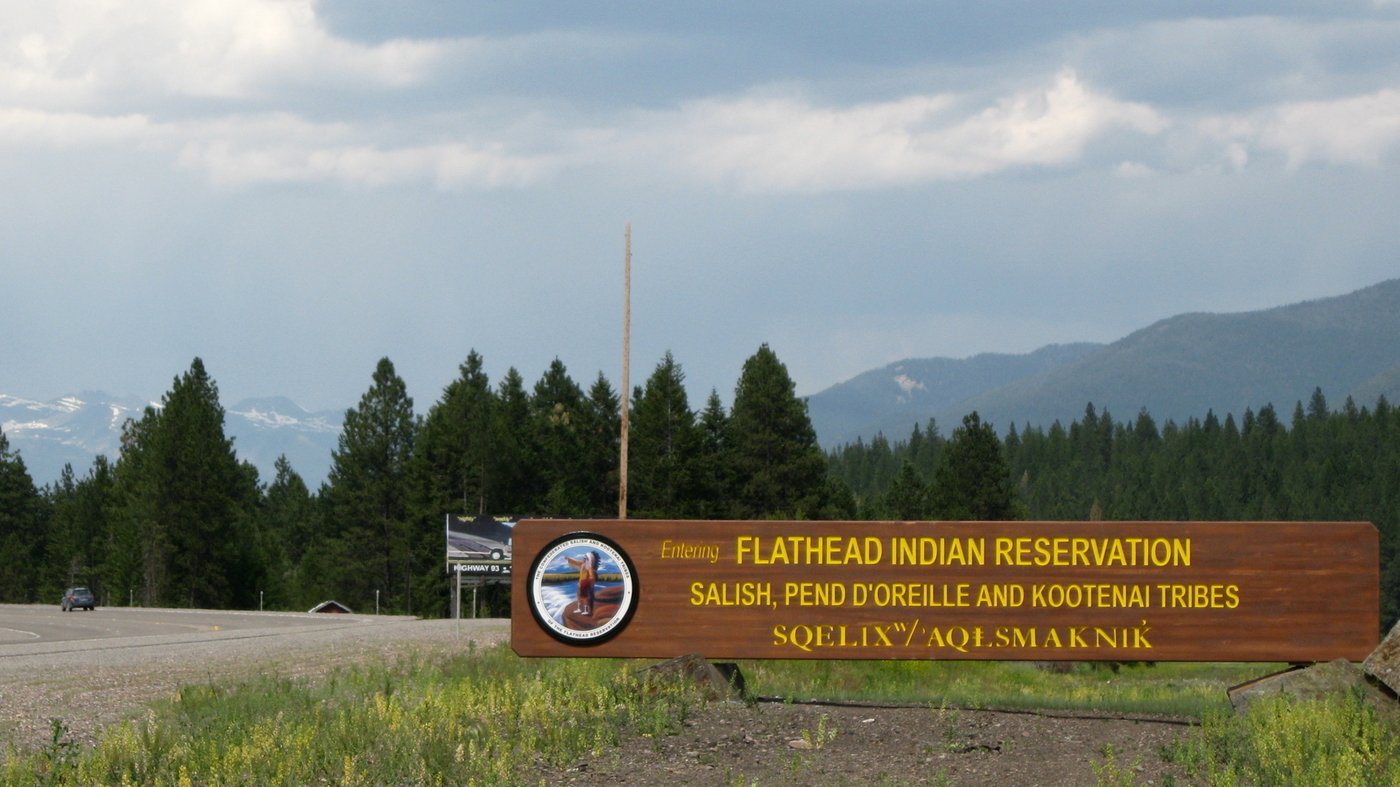
The snow-capped mountains around the Flathead Reservation in northwestern Montana are a sign that winter is coming.
Mary Lefthand pulls her truck down to a warehouse in the valley below.
she has been driven to it To receive free food from a commodity program run by the City of St. Ignatius, the Confederated Salish and Kootenai Tribes.
Tribal commodity food programs are federally funded, but were not affected by the federal government shutdown.

Mary Lefthand watches workers load food into their trucks at a commodities warehouse in St. Ignatius, Montana.
Aaron Bolton/Montana Public Radio
hide caption
toggle caption
Aaron Bolton/Montana Public Radio
Unlike SNAP (Supplemental Nutrition Assistance Program), which was in great danger.
During the government shutdown, 41 million SNAP recipients did not know whether they would receive benefits for November.
Lefthander receives the snap. She prefers it to the commodity program, because with SNAP she can go to the grocery store and pick out her own items.
But during the shutdown, she became more concerned amid uncertainty over SNAP payments.
He decided to switch to the Tribal Goods Programme.
“Because I have three growing grandchildren who eat a lot,” she explained.
Lefthand relies on food assistance for its entire grocery budget. But often this is still not enough for him and his three grandchildren.
“At the end of the month, I feed them plain rice and whatever else I can find,” says Lefthand.
When the Trump administration said it would not send SNAP payments for November, tribes scrambled to fill the gap. Any disruption in food aid could hit American Indian communities particularly hard.
“More than 60% of Native people are completely dependent on that source of food as their primary source of food,” says Valerie Blue Bird Jernigan, a professor of medicine and rural health at Oklahoma State University.
Research indicates that forty six percent Native Americans struggle with food insecurity every year, compared to about 10% of the general US population.

Fall produce is available at the Commodity Warehouse of the Confederated Salish and Kootenai Tribes.
Aaron Bolton/Montana Public Radio
hide caption
toggle caption
Aaron Bolton/Montana Public Radio
SNAP has resumed regular payments, but tribes and their members may face financial strain due to the disruption to the program.
For some tribes, commodity food programs provided a partial backstop. Tribal members living on reservations are allowed to enroll in the Commodity Program, or SNAP, but not both.
Many people on the Flathead Reservation, like Lefthand, couldn’t wait to see how the SNAP payments would play out, said Nicholas White, who manages the Salish and Kootenai Tribes Commodity Program.
“I got a pretty good stack of people,” he says, looking at a thick stack of applications. “That’s how many people are coming to our program.”
Tribal communities that do not participate in the commodity program have struggled to prevent families from going hungry.
The Blackfeet Nation in northwestern Montana declared a state of emergency and killed 18 buffalo from their herd. Tribes throughout the West also killed far more bison than they otherwise would have.
However, many tribes are in the early stages of increasing their herds. Any animals they kill now could slow down that growth significantly.

The Tribal Commodity Food Program served as a backstop for residents of the Flathead Reservation when SNAP payments were delayed due to the federal government shutdown.
Aaron Bolton/Montana Public Radio
hide caption
toggle caption
Aaron Bolton/Montana Public Radio
Tescha Hawley runs the Day Eagle Hope Project, a non-profit organization in Ft. Belknap Reservation in northeastern Montana.
She was able to use some of the grant money to help purchase cattle, and shipped that meat to temporary food banks throughout the reservation, which was home to the Assiniboine and Gros Ventre tribes.
The grant money was originally meant to help tribal farmers and ranchers sell their food locally. Many tribal communities are food deserts, so tribes and the nonprofit organizations working with them are trying to increase access to local food sources.
During the shutdown, many tribes also increased the amount of food they provide through their self-funded food assistance programs.

Commodity food warehouse of the Confederated Salish and Kootenai Tribes in St. Ignatius, Montana.
Aaron Bolton/Montana Public Radio
hide caption
toggle caption
Aaron Bolton/Montana Public Radio
Yadira Rivera, director of native agriculture and food systems investments at the First Nations Development Institute, says tribes and nonprofits will not be reimbursed for the additional money and resources they spend.
“This will cause them problems in the future,” she says.
Rivera says some tribal food programs will continue through the holiday season, traditionally the busiest time of the year.
Tribal families may still be feeling a raft of financial impacts following the disruption, even though the SNAP program ultimately received a full year of funding in the deal that ended the shutdown.

Canned goods are available through the commodity program on the Flathead Reservation in St. Ignatius, Montana.
Aaron Bolton/Montana Public Radio
hide caption
toggle caption
Aaron Bolton/Montana Public Radio
Rivera says that during weeks of uncertainty, families may have skipped rent or another bill to keep food on the table.
Studies have shown that when people lose access to food assistance, they suffer other financial consequences.
“There are a lot of people who get evicted when they lose food assistance, because they spend their money on food, you get to eat,” said David Super, a Georgetown Law professor who studies welfare law.
Another example: According to Super, losing SNAP could force people to choose between buying their medicines or food.
Lefthand was grateful that she was able to quickly switch to her tribe’s commodity program. This, she says, kept her from falling behind on her bills.
“I’m going to hold off on the items for a while. When they get food stamps back, I’ll probably get back to it,” she says.
But there’s a bureaucratic hurdle he must overcome first.
To re-enroll in SNAP, Lefthand must leave the Tribal Commodity Food Program for at least one month to qualify.
This story comes from NPR’s health reporting partnership Montana Public Radio And kff health news,
<a href